Seaweed forests around the world are disappearing, but not all are gone for good.
Off the east coast of mainland Australia, scientists have accidentally stumbled upon a vast underwater forest of Sargassum macroalgae – a species not seen in its mature form for nearly a century.
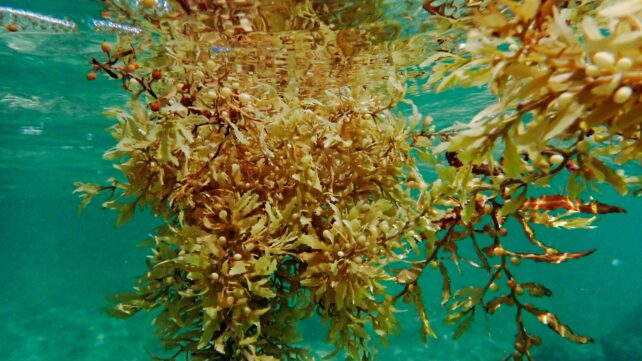
In 1933, this copper-colored seaweed (Sargassum howeanum) was discovered (and later named) by botanist A.H.S. Lucas near Lord Howe Island, a small volcanic landmass off the east coast of Australia.
It would be the first and last official sighting of the island's eponymous seaweed in its adult form for a long while.
Over the decades, scientists would find immature specimens wafting in the island's shallows, but never a large adult with reproductive receptacles.
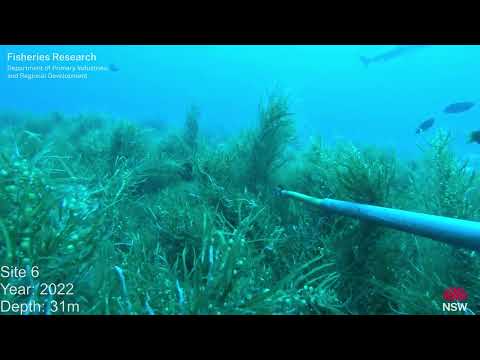
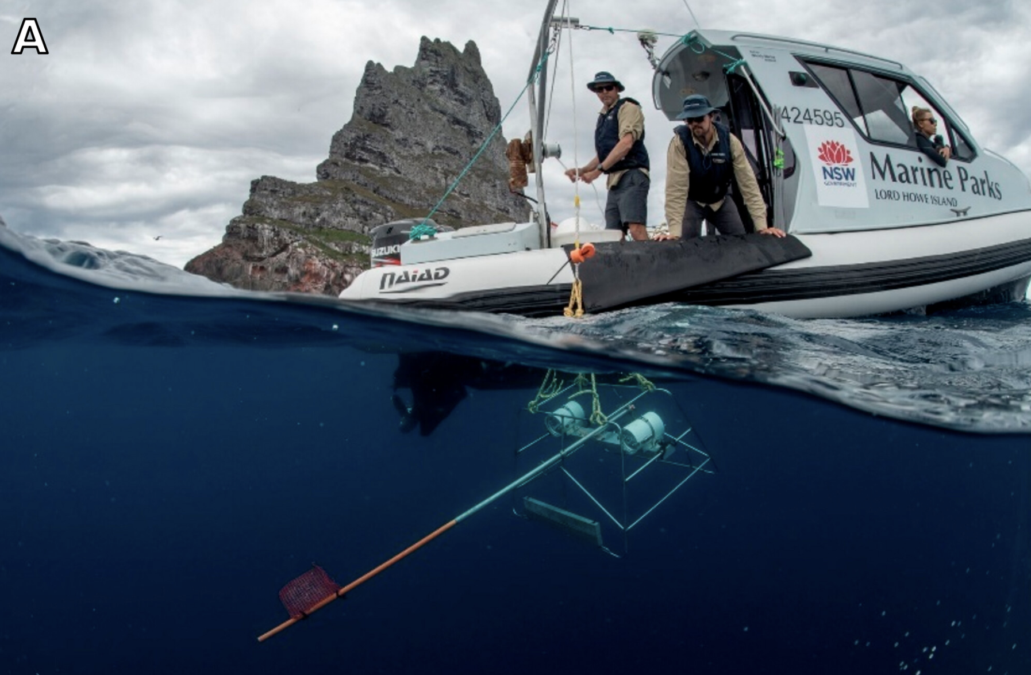
Then, in 2022, nearly 90 years after Lucas' discovery, researchers conducting a fish survey off the island using a baited underwater video camera stumbled upon a surprise.
When the team reviewed the footage, they found a green mass emerging from the blue.
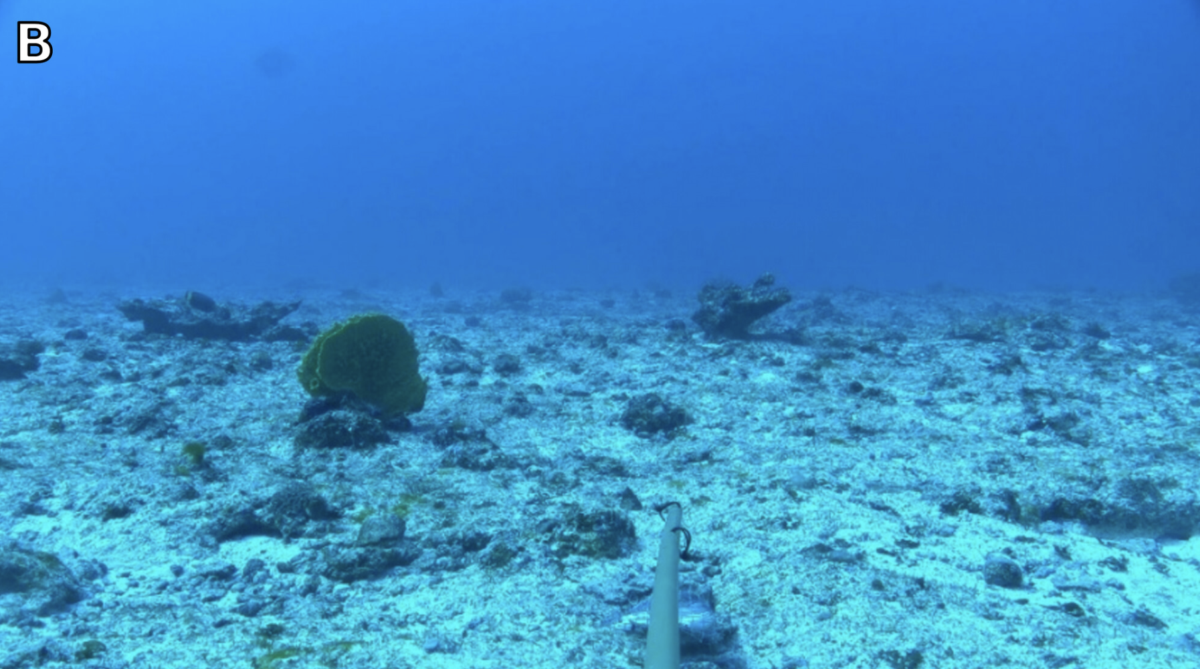
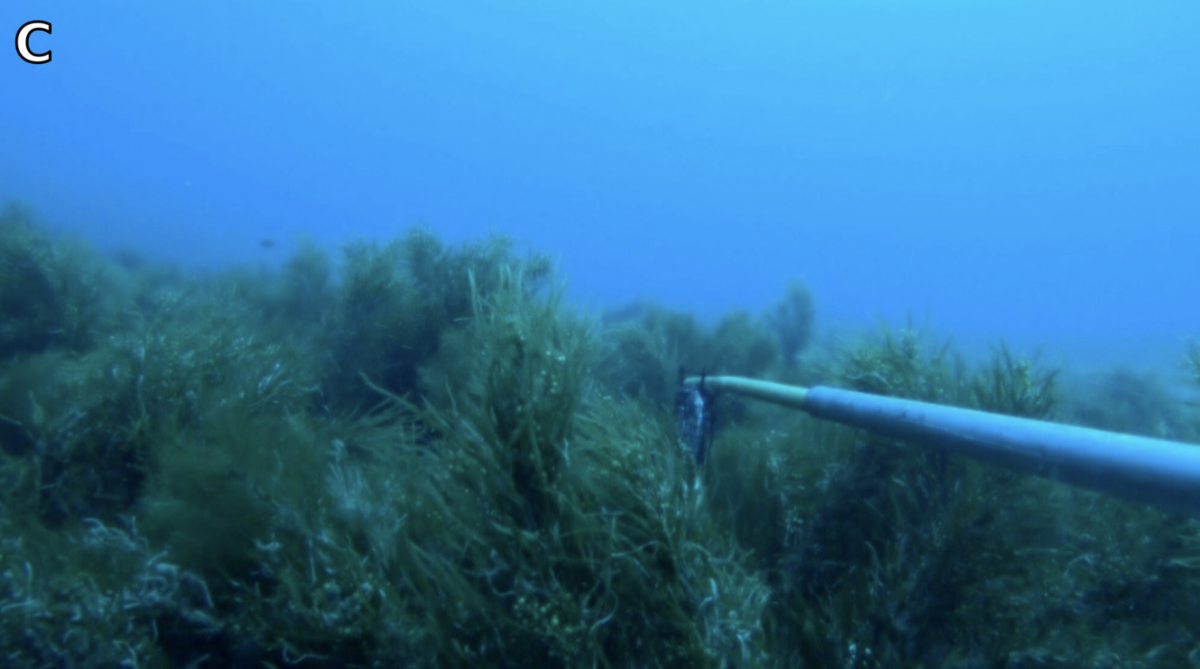
A patch of seafloor that had been all but barren just 13 years before was now home to a dense seaweed forest.
Not only that, but when researchers sampled the seaweed, they found that some specimens belonged to the species Sargassum howeanum, the very one that Lucas named all those decades ago.
The serendipitous discovery, published in Ecology, suggests that some seaweed forests may be coping with changing climate conditions by seeking refuge in darker, cooler waters.
When researchers went back and reviewed survey footage from 2009, 2013, 2017 and 2022, they found that several underwater forests surrounding the island, up to 38 meters (125 feet) deep, had expanded their coverage by 22-fold over the years.
The findings are preliminary, but they are a hopeful sign for this zone of the ocean, where Sargassum seaweed has mostly been found incidentally.
The samples of Sargassum howeanum collected by researchers off Lord Howe Island in 2022 were accidentally brought to the surface after becoming entangled in the video recorders.
The specimens were 53 and 72 centimeters long.
"There is growing recognition that the mesophotic zone may serve as a depth refuge for benthic Sargassum under ocean warming, making deeper water monitoring a key research priority," the study authors write in their paper.
Similar to kelp forests, Sargassum seaweed traps vast amounts of carbon dioxide and plays a foundational role for marine ecosystems, supporting a huge diversity of biological life.
This genus, comprised of over 350 species, is among the most widespread and ecologically significant canopy-forming macroalgae in the world.
If these seaweed forests struggle to cope with rising ocean temperatures in tropical and warm-temperate regions, it could have "severe consequences" for local ecosystems, argues a 2025 research review.
Compared to kelp, however, Sargassum seaweed forests receive far less attention from conservationists.
"Numerous studies have reported the negative effects of global warming on kelps in cold-temperate regions," the 2025 review explained.
"In contrast, although native benthic Sargassum species are impacted by rising temperatures in warm-temperate and tropical regions, monitoring or management initiatives tended to neglect these and other globally important fucoids."
To know how a species is faring over time, however, scientists need long-term data.
Without that information, it's hard to predict how this type of seaweed will fare in the coming decades, under various global warming scenarios.
It's possible that seawater temperatures could impact seaweed photosynthesis, growth, and reproduction, but in cases like Sargassum howeanum, researchers are only just learning about the species.
"Repeat surveys may provide the opportunity to test the mesophotic depth refugium hypothesis," the authors explain, "as the region experienced a severe marine heatwave in 2024 causing widespread mortality of coral and algae in the Lord Howe Island lagoon."
That year, average spring sea temperatures reached 19.88°C (67.8°F) up to 50 meters deep.
That's roughly 0.53°C warmer than in 2009.
In a recent piece for The Conversation, the study authors and ecologists Matthew Rees and Nathan Knott raised their concerns.
"To understand these deepwater habitats, we must invest in long-term monitoring programs," they wrote.
"This is particularly urgent as extreme weather becomes more frequent and severe."
The research has been published in Ecology.
This article was fact-checked by Fiona MacDonald and edited by Fiona MacDonald. While we pride ourselves on our process, we are only human. If you spot a mistake, please let us know.