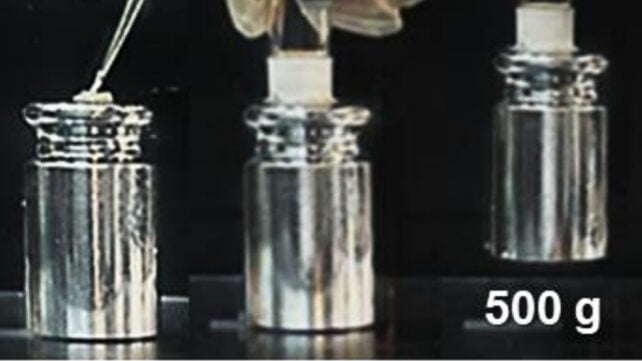
Although much of what we own is glued together, we don't think much about modern adhesives – until a shoe sole comes loose or our sofa collapses.
But engineers think about adhesives a lot, and they've got a sizable problem: adhesives don't work well underwater, complicating attempts to maintain oceanic infrastructure like pipelines.
This is because water molecules coat surfaces, forming a repulsive barrier. They also erode and wash away adhesives.
In a new study published in Nature Communications, researchers have developed a uniquely strong, reusable underwater adhesive that works through a sci-fi-sounding principle.
It's what's known as a supramolecular ionic liquid, functioning through solvent-exchange-mediated self-assembly – phew!
The first part, supramolecular chemistry, is also known as "chemistry beyond the molecule" because it deals with many molecules combining into complex structures.
The second part means that subjecting this adhesive to water makes it re-assemble its atoms, bonding underwater surfaces in the process.
The researchers combined flexible and rigid molecular components into a supramolecular ionic liquid designated BP16TPB.
They then mixed it with the strong solvating solvent dimethyl sulfoxide (DMSO), meaning that the DMSO favorably dissolves BP16TPB and splits some of its molecules into mobile, charged particles.
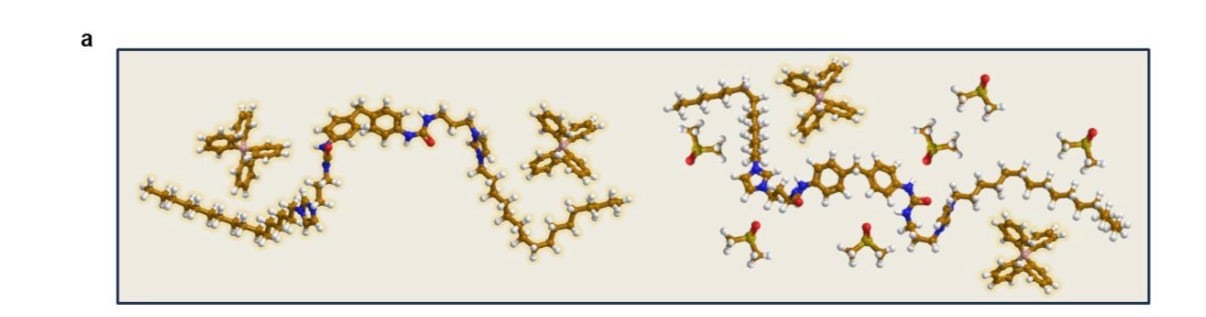
In the presence of water, these split particles reorganize themselves, locking into a stable new structure.
This works due to the rejoining particles forming hydrogen bonds, as well as another type of bond with a mouthwatering name: π-π stacking.
It also leverages the Marangoni effect, which dictates how different fluids react to changes in surface tension. This causes the 'tears of wine' effect.
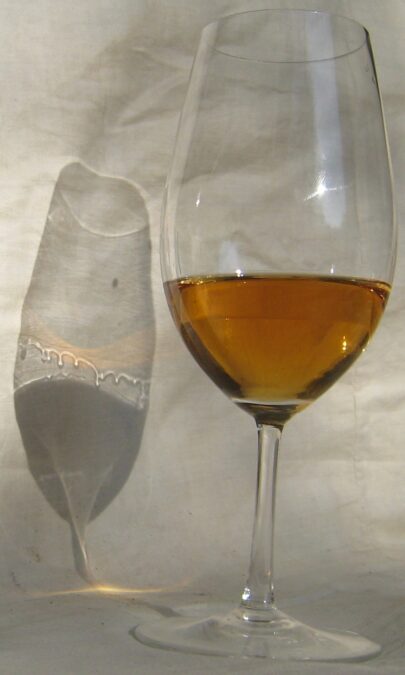

In addition to the trippy wine trick, the Marangoni effect is integral for coating surfaces, creating swimming actuators, and moving fluids through channels smaller than a human hair, leading to the microfluidics field that powers pregnancy strips and inkjet printers.
Importantly, the researchers' new adhesive has extreme hydrophobic properties, which expel the layer of water that forms on underwater surfaces and typically acts as a barrier against adhesion.
The synergistic combination of the hydrophobicity and non-covalent bonds of the supramolecular structure reportedly "drives the in-situ transition from a flowable precursor to a dense, water-resistant network" that turns the pre-adhesive substance from sloppy to sturdy.
The researchers tested their adhesive on a range of material surfaces submerged in water, including ceramic, epoxy, and plastics.
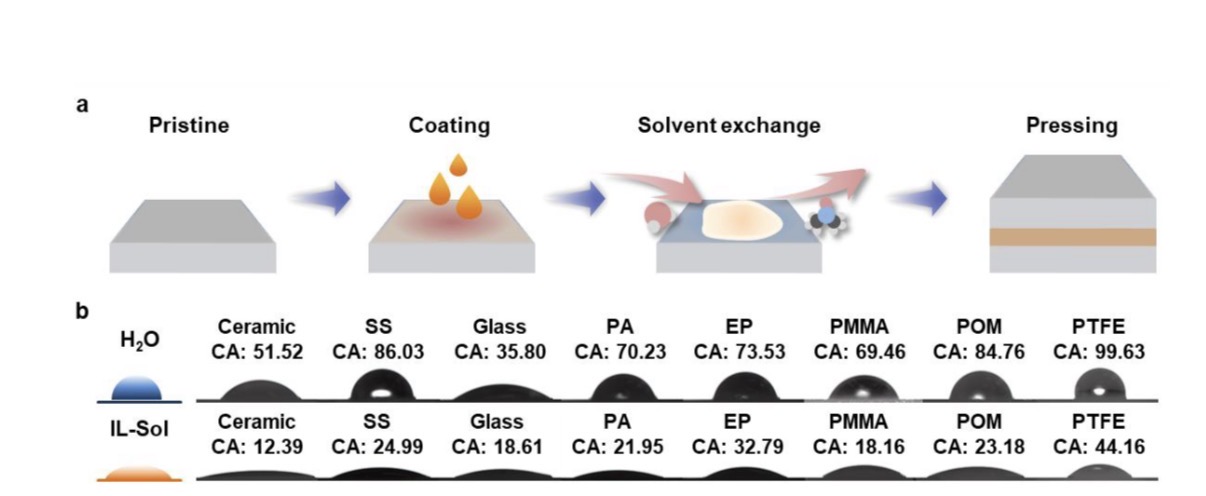
It proved strong and quick-setting, displaying an adhesive strength of 1.1 million pascals after only 10 seconds of underwater curing, "significantly exceeding that of traditional underwater adhesives".
Additionally, it's long-lasting: it has supported a 2 kilogram (4.4 pound) weight throughout more than 3 years of continuous underwater immersion.
"This long-term static load evaluation serves as a definitive proof-of-concept, highlighting the material's resistance to interfacial water degradation and structural creep over multi-year timescales," the researchers point out.

It's also reusable up to a point. Detaching and reattaching it in underwater conditions demonstrated that it could just as reliably retain its adhesive properties throughout 8 cycles.
Related: World-First 'Super Alloy' Could Transform The Way Metals Are Made
And it works in varying electrolyte solutions, whether acidic, alkaline, or salty. However, it is sensitive to temperatures exceeding 70 degrees Celsius (158 degrees Fahrenheit).
"This study not only introduced a high-performance underwater adhesive," the researchers conclude, "but also presented a strategy for advancing environmentally responsive smart materials" with global consequences.
This research was published in Nature Communications.
This article was fact-checked by Clare Watson and edited by Rebecca Dyer. While we pride ourselves on our process, we are only human. If you spot a mistake, please let us know.