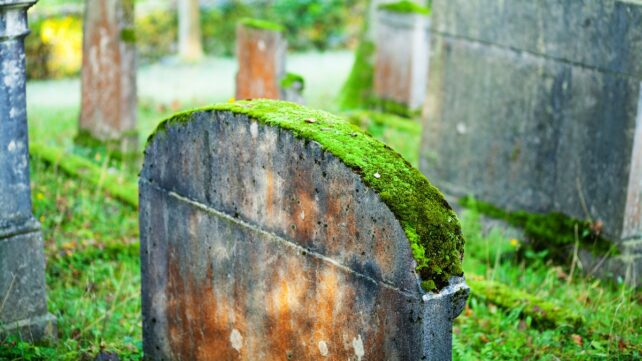
In a courtroom-TV-worthy twist, FBI agents and scientists used a tiny clump of moss to help convict four cemetery workers of their grisly grave-robbing crimes.
The scandal at Burr Oak Cemetery, located just outside of Chicago, Illinois, began in 2009 when investigators accused the workers of exhuming old graves, dumping the bodies elsewhere in the cemetery, and reselling the burial plots.
After forensic investigation, the prosecutors asserted that approximately 1,500 bones from at least 29 individuals had been illegally disinterred and redeposited in an unused portion of the cemetery's 150-acre grounds.
Now, the first full scientific account of the case has been published, and it finally reveals how an unassuming clump of moss helped foil the dastardly scheme.
"One day in 2009, I answered the phone, and it was the FBI, asking if I could help them identify some plants," explains Matt von Konrat, head botanist at the Field Museum in Chicago and the study's lead author.
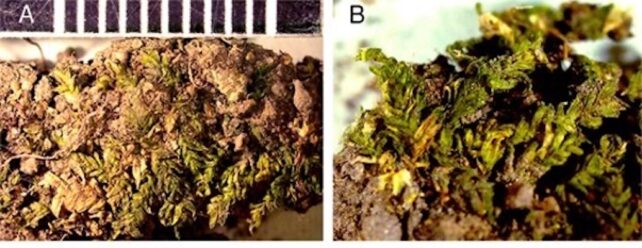
The FBI presented von Konrat with a piece of moss found eight inches below the surface of the soil, alongside human remains they suspected had been reburied.
Von Konrat and his colleagues-turned-gumshoes identified it as common pocket moss (Fissidens taxifolius). They did not find this type of moss growing where the bones were buried, but did find a colony growing elsewhere in the cemetery – in the area where investigators suspected the bones had been removed from.
This discovery provided a link between the two main sites of desecration, but any crime-show fan knows that prosecutors need a timeline. Specifically, the investigators needed to know when the moss was disturbed, to counter the defendants' classic "these grave-robbings occurred before we were hired" defense.
Fortunately for justice, mosses have a sort of half-life, like radioactive sludge.
"Moss is a little bit freaky," says von Konrat. "Mosses have an interesting physiology, where even if they're dry and dead and preserved, they can still have an active metabolism, a few cells that are still active. The amount of metabolic activity deteriorates over time, and that can tell us how long ago a moss sample was collected."
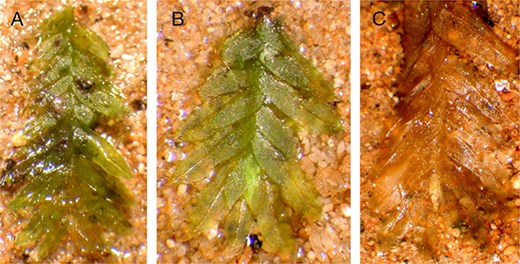
To construct a timeline, the researchers examined the moss' chlorophyll, the green pigment that absorbs red and blue light to power photosynthesis.
Chlorophyll degrades as moss decays, so the researchers compared how much light moss samples of known ages absorbed, and used those results to estimate how old the moss from the crime scene was.

The tests showed that the moss sample was only a year or two old – meaning it was disturbed during the defendants' time working at the cemetery, contradicting their alibis and chronology. As a result, in 2015, the cemetery employees were convicted of desecrating human remains.
It's not unusual for the FBI to call in experts to help secure a conviction – but how often does moss serve as the star exhibit? To find out, in 2025 von Konrat and colleagues scoured crime files to see how many times mosses or similar plants had been used to reveal relevant details in other criminal mysteries.
Related: The World's Largest Experiment Simulating Dead Bodies in Suitcases Is Underway
The search came up thin, revealing that moss-family plants served as evidence in only a dozen-odd cases over the past century. But as this case shows, moss could be an underappreciated clue.
"We hope this encourages an increased awareness of bryophytes and similar microscopic plants when undertaking forensic investigation, ensuring critical plant evidence is not overlooked in the future," the researchers conclude.
It will be interesting to see whether this case becomes a benchmark for solving crimes in future – or simply the inspiration for Law & Order: Forensic Botanicals Unit.
This research was published in Forensic Sciences Research.