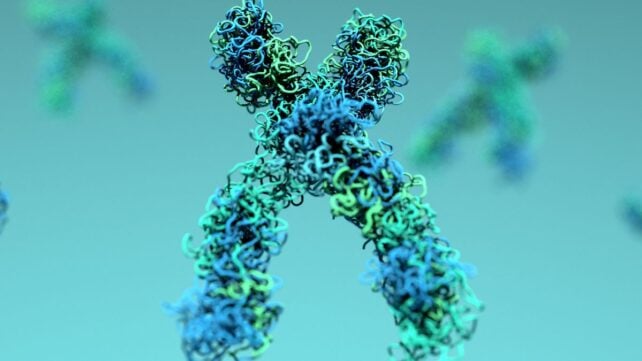
The slow march of time is inexorable and irreversible, but that doesn't mean its effects on our bodies have to be etched in stone.
One of the more intriguing ideas in aging research is that growing old isn't just a matter of damage accumulating over the years.
It may also be a story of lost information – the gradual breakdown of the molecular instructions that tell cells which genes to use and which to keep quiet.
If this is correct, aging may not be an entirely one-way process. If some of that lost information could be restored, then aged tissue might, theoretically, return to a more youthful state.
Now, we have new evidence that this might be possible.
In the livers of aging mice, researchers have found that increasing levels of a protein linked to longevity restored patterns of DNA organization usually seen in younger animals.
That doesn't mean the same technique will work in humans – but it does suggest that at least some age-related changes may be more flexible than once thought.
"As we age, the genome loses its proper organization," explains geneticist Haim Cohen of Bar-Ilan University in Israel.
"Genes that should remain silent become activated, especially inflammatory genes, while genes required for normal liver function begin to shut down."
Cohen and his colleagues focused their studies on a protein called SIRT6 and the structural 'unraveling' of DNA with age.
"What we found is that SIRT6 can help rewind this process," Cohen says.
"In simple terms, we took an old liver and restored its DNA organization toward a much younger state."
Aging is a complicated, bumpy process that affects every single system in the body, often in different ways and at different rates.
There's unlikely to be a one-size-fits-all approach to slowing or mitigating its effects, but by examining aspects of aging one step at a time, scientists are piecing together the bigger picture of the mechanisms at play and what works to alleviate them.
To understand why SIRT6 caught the researchers' attention, it helps to look at one of the ways scientists think aging unfolds at the molecular level.
Previous research has shown SIRT6 to be involved in slowing age-related changes in mice.
It plays a role in DNA repair and regulating mitochondrial function, and in humans, dysregulation of SIRT6 has been linked to neurodegenerative diseases such as dementia.
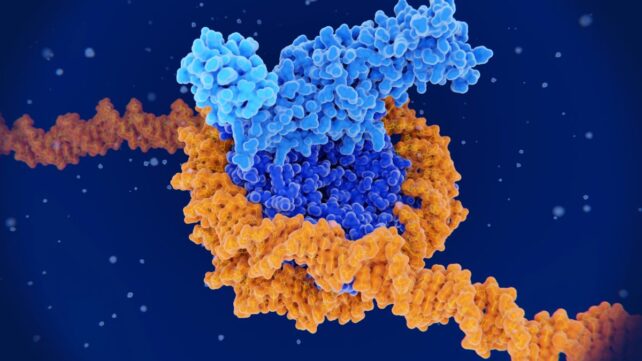
It also helps maintain chromatin, the tightly packed and folded structure in every one of our cells that organizes DNA and controls which genes are switched on or off.
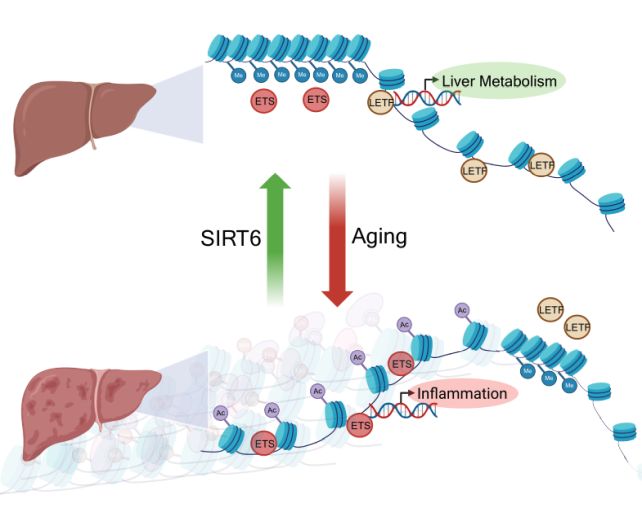
As we age, changes to the structure of chromatin impair its ability to switch off specific genes, leading to a gradual loss of cellular function.
In fact, one influential theory suggests that the gradual loss of chromatin organization may help explain many of the diverse changes associated with aging.
The researchers wanted to know whether SIRT6 could prevent – or even reverse – that process.
They took male mice that had been genetically engineered to produce more SIRT6. They focused on changes in the liver because it is a major metabolic organ whose function is known to degrade with age.
When they compared the liver tissue of these genetically engineered mice to that of similarly old and younger mice with normal SIRT6 levels, they found that overexpressing SIRT6 meant chromatin maintained its youthful, densely packed form into old age, even though other age-related changes were taking place.

That single change was enough to preserve the programs that control gene expression in the liver, inhibiting both age-related inflammation and loss of metabolic function.
But the researchers didn't stop there.
To see whether SIRT6 could do more than simply protect against age-related decline, they increased its levels in already elderly mice.
A month later, many of the age-related changes in chromatin organization had shifted back toward a more youthful state, suggesting some aspects of the process may be reversible rather than merely preventable.
Related: Scientists Reveal Turning Point When Your Body's Aging Accelerates
"This is exciting because it suggests aging may be more plastic than we once believed," Cohen says.
"If we can restore healthy chromatin organization, we may eventually be able to preserve tissue function, reduce inflammation, and improve health during aging."
These results aren't transferable to humans; there are good reasons we can't just mess about with the human genome. But they do widen a promising door to better understanding what aging does to our bodies – and looking for ways to change it.
The paper is available under early access stipulations in Nature Communications.