
Dementia research has reached a profound turning point.
Alzheimer's disease was once considered 'untreatable', but that is not the universal rule any longer, according to this year's World Alzheimer Report.
In the past five years alone, novel drugs have been shown to modestly slow decline in early Alzheimer's, while growing evidence suggests some dementia cases could potentially be delayed or prevented through risk reduction.
Today, hundreds of clinical trials worldwide are now investigating possible medicines, new diagnostic options, and lifestyle interventions to identify, treat, or delay cognitive decline.
The possibility of a cure is still far away, but it "feels like a more palpable prospect than ever before," according to the 2026 World Alzheimer Report, coauthored by Alzheimer's Disease International (ADI) and leading health journalist Paul Gallagher.
"After decades during which dementia was widely regarded as an inevitable consequence of old age and neurodegeneration with few therapeutic options beyond symptom management, research has entered an era of unprecedented activity," reads the report.
"Alzheimer's disease is no longer universally described as untreatable; instead, it is increasingly viewed as a condition for which earlier diagnosis, better understanding of disease biology, and a wider range of interventions may collectively improve outcomes."
ADI calls itself the 'global voice of dementia'. It is a worldwide federation of dementia associations in official relations with the World Health Organization (WHO).
Every year since 2009, the ADI has published a report on dementia research, and each year, it covers a different topic.
This year's report is titled 'A New Era in Dementia Clinical Trials', and it argues that dementia research has now entered a period of remarkable scientific momentum.
This moment is akin to oncology in the 1990s, argue the authors, when the first generation of cancer therapies, while imperfect, opened the door to effective drug combos, precision medicine, and earlier intervention.
"For now, there is no single breakthrough to rival the discovery of penicillin or the advent of statins," argues the report.
"Instead, there is something quieter… It is a shift from cure to prevention, from molecule to lifestyle, from inevitability to possibility."
As populations age worldwide, some estimates predict there will be 139 million people living with dementia by 2050.
Even modest delays in the onset of cognitive decline could translate to millions fewer cases.
Just recently, for instance, WHO published new guidelines on how to reduce the risk of dementia.
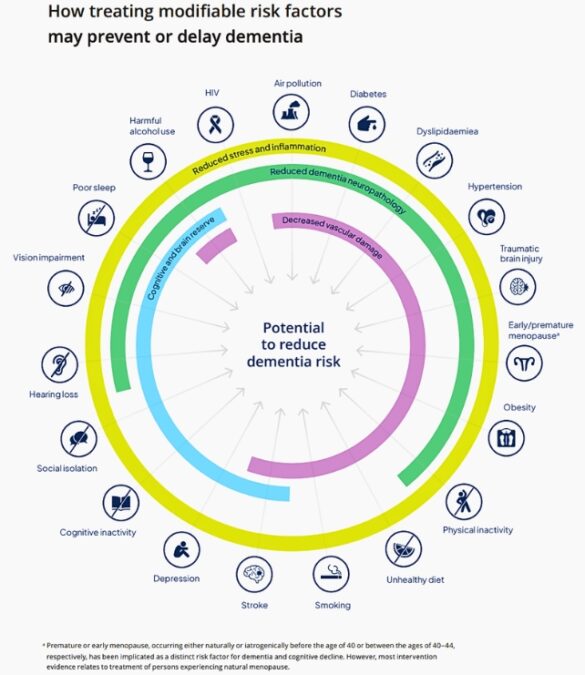
According to emerging research, as many as 45 percent of dementia cases could potentially be prevented or delayed by addressing 14 modifiable risk factors across the lifespan.
These include hypertension, depression, physical inactivity, smoking, diabetes, excessive alcohol use, and high cholesterol.
Dementia clinical trials also stand at an important moment in history, according to the report.
Between 2000 and 2020, more than 99 percent of experimental drugs failed in clinical trials.
The recent arrival of the drugs donanemab and lecanemab was a huge moment, argues Cath Mummery, director of the UK's Dementia Trials Network.
These were the first fully approved drugs shown to modestly slow the progression of early Alzheimer's disease, rather than merely treating its symptoms.
"What you really hoped for was a bigger effect [on patients], but it was a huge moment because it showed you could change the course of the disease," says Mummery in the report.
"That's the foundation. It's the first brick, and there's an awful lot to build on."
Today, not all researchers are convinced that donanemab and lecanemab lead to clinically meaningful benefits; for instance, they don't seem to work the same for every patient or in every part of the brain.
But the approval of these two drugs represents a positive turn of events, which has changed our expectations for what dementia research may achieve, argues the new report.
Over the past decade, the number of candidate medicines under investigation for dementia has increased by around 40 percent.
Currently, researchers are evaluating 158 potential therapies across 192 clinical trials worldwide.
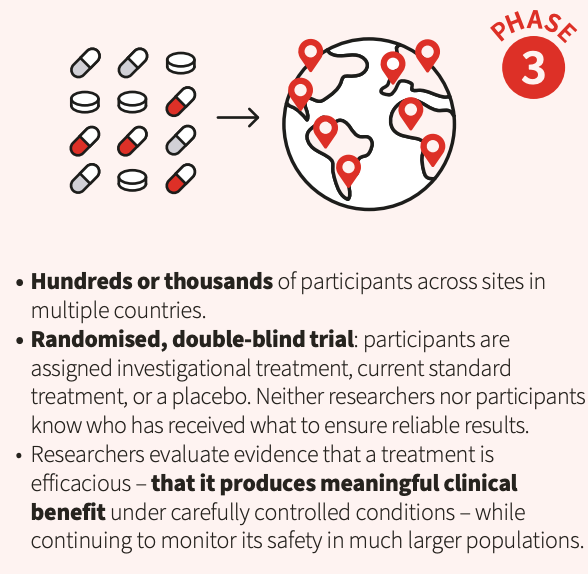
This year alone, we should get results from eight Phase III trials – which rigorously test treatments on a large number of people in comparison to standard care.
A lot of these drugs are already approved for use in humans. In fact, more than a third of dementia drugs currently in the pipeline were originally developed for other conditions.
Unfortunately, however, many patients in the early stages of cognitive decline do not know these possibilities exist.
Neuroradiologist Emer MacSweeney told ADI: "The biggest mistake that's happening at the minute is people who are clearly, obviously, most likely in the early stages of Alzheimer's, being ignored and completely missed… because that window of opportunity is really small for treatment."
MacSweeney says patients are often uninformed about clinical trials or how to access new medications.
"This is a pandemic," MacSweeney emphasizes. "We need a change in mindset in the medical profession to ensure more people are told about clinical trials and supported to join them. We need action, not rhetoric."
One of the biggest potholes in the road is diagnosis.
A new generation of treatments that can potentially slow the decline of memory and thinking is all well and good, but these medicines are only useful if they actually get to patients.
In the United Kingdom, for instance, only about 2 percent of people diagnosed with Alzheimer's have access to a gold-standard diagnostic test, according to a study co-led by Jonathan Schott, Chief Medical Officer at Alzheimer's Research UK.
Blood tests that look for biomarkers of dementia could be a solution.
While these new tools look promising in initial studies, they still need to be tested at a population level to see if they can accurately identify those individuals with early signs of cognitive decline.
"A breakthrough drug means little if the majority of people living with dementia are never identified in the first place," argues the ADI report.
"In that sense, the future of dementia care may depend as much on family doctors in Havana, Lima, or Bangalore as on billion-dollar laboratories in California."
According to the report, there is genuine cause for optimism. Now we just need to make sure that scientific progress is matched by clinical progress.
"The challenge for the next decade is to ensure that taking part in dementia research no longer depends on persistence or good fortune," concludes the report, "but becomes a realistic opportunity for everyone who wishes to consider it."
The report is published on the ADI website.
This article was fact-checked by Peter Dockrill and edited by Peter Dockrill. While we pride ourselves on our process, we are only human. If you spot a mistake, please let us know.