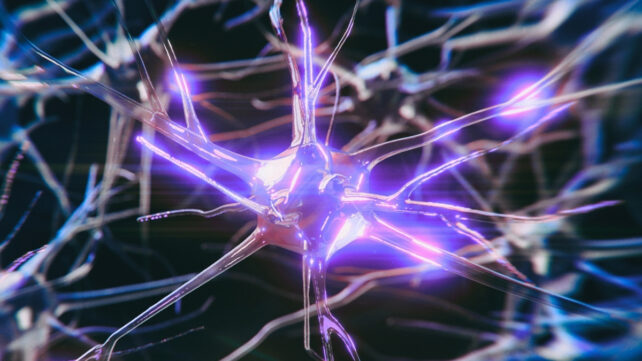
Carrying one or two copies of the APOE4 gene variant significantly increases the risk of developing Alzheimer's, and a new study reveals how APOE4 can change neuron activity – potentially many years before symptoms such as memory loss start showing.
In young mice bred to have the APOE4 gene, researchers found specific neurons were smaller and more hyperactive in parts of the brain's memory center, the hippocampus.
What's more, they were able to identify a protein, Nell2, contributing to the disruption – and a potential pathway to reverse the damage in advanced cases.
"To the best of our knowledge, this is the first study that has directly examined what APOE4 does to the function of neurons at different ages," says senior author Misha Zilberter, neuroscientist at the Gladstone Institute of Neurological Disease in the US.
"We found fundamental changes in brain circuits occurring in young mice that still had normal learning and memory, and importantly, that those changes predicted the development of cognitive deficits at older ages."
Previous human brain imaging studies have connected APOE4 to hippocampus hyperactivity in people with mild cognitive impairment or at risk of Alzheimer's disease. Here the researchers were able to scrutinize that relationship in greater detail than ever before, using animal models.
Using a variety of analysis techniques, the team observed overexcited neurons in young APOE4 mice. The neurons in parts of the hippocampus in these animals had shrunk down, making them more excitable and easier to stimulate.

The team also compared the neurons of APOE4 mice to those with the APOE3 gene variant, which carries a lower risk of developing Alzheimer's.
The researchers found that in the APOE3 mice, neurons also became more active – but not until old age. What's more, the APOE3 mice didn't develop cognitive problems like the APOE4 mice.
Further investigation revealed the role of protein Nell2, which was abundant in the neurons of APOE4 mice. The researchers think this is the molecular mechanism through which APOE4 might make brains age before their time.
When the researchers intervened to block Nell2 production in the mouse models, the neurons recovered: They returned to a normal size and went back to their regular patterns of firing activity. That's a good sign for potential treatments further down the line.
"What's exciting about Nell2 is that we were able to reverse the disease manifestations in adult mice by lowering its level," says Yadong Huang, neuroscientist at Gladstone.
"That tells us the damage is not irreversible, and that there may be a window for intervention even after disease processes have been triggered."
These findings tie in nicely with previous Alzheimer's research as well. High levels of the Nell2 protein have been spotted in the brains of Alzheimer's patients before, for example, but this is the first time that it's been connected to APOE4 in animal models.
Alzheimer's is a complex condition, with multiple risk factors, and there are major challenges in trying to identify how these risk factors influence each other, as well as how the causes driving Alzheimer's progression differ from the consequences of the disease.
With APOE4 carriers accounting for up to three quarters of Alzheimer's cases, the genetic angle is one that researchers are repeatedly returning to, in order to understand what exactly malfunctions when the disease starts taking hold.
Related: Insomnia Can Be an Early Alzheimer's Warning Sign. New Research Explains Why.
"[This study] opens the door to a better understanding of how APOE4 alters the function of neurons at a young age to increase risk of cognitive decline, and to the development of therapies that could block the detrimental effects of APOE4 early on," says Huang.
The research has been published in Nature Aging.