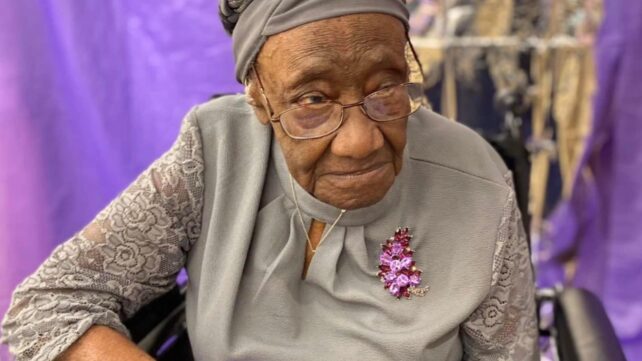
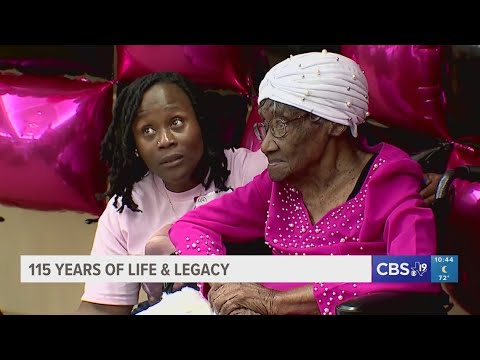
The oldest known person in the United States and the second-oldest person in the world just celebrated her 116th birthday.
Naomi Whitehead is only the 33rd person in recorded history to reach this ripe old age.
She is the last surviving American to be born in 1910.
Long before scientists understood DNA, hers was quietly shaping an exceptional life.
When Whitehead was born, scientists did not yet know that DNA was structured like a double helix or that it carried hereditary genetic information.
They didn't even know how many chromosomes humans had.
Now, in 2026, we know that genes can shape our health and longevity. In fact, emerging research suggests that the genes we are born with can explain as much as 50 percent of the variability in our lifespans.
That's far more than previous estimates suggested.
Some of us, like Whitehead, may have unknowingly struck genetic gold.
The study combined more than a century's worth of data from three Scandinavian twin cohorts to find that current estimates of longevity heritability are much too low.
Previous estimates suggested that genes explained around 20 to 25 percent of differences in survival to the mid-80s.
But according to new evidence, published in Science, when you rule out accidental deaths or deaths due to infections or violence, the genetic influence on human longevity nearly doubles.
Some researchers have contested these results, arguing that death due to infections can be genetically heritable.
But generally, evidence shows that genes play a progressively larger role in lifespan as a person ages into their 90s, 100s, and 110s.
Last year, for instance, a study found that those who live past 110 show greater genetic protection against Alzheimer's than those who only live past 100.
Our genomes, however, are not crystal balls. These are population studies, and it's impossible to say how an individual's genes will impact their lifespan.
That's why scientists are on the hunt for markers of longevity among centenarians and supercentenarians (who live past 110).
In 2025, a study on one of the world's oldest people uncovered what looked like an exceptionally young genome.
Before Maria Branyas passed in 2024, she volunteered samples of her blood, saliva, urine, and stool for research.
For her age, she had excellent cardiovascular health and very low levels of inflammation.
She also had rare genetic variants associated with longevity, immune function, and a healthy heart and brain.
In fact, her immune system and gut microbiome resembled those of people decades younger.
"These findings provide a fresh look at human aging biology," the research team concluded, "suggesting biomarkers for healthy aging, and potential strategies to increase life expectancy."
Whether Whitehead also has an exceptionally young-looking genome is unknown.
Her father lived into his 90s, and it's possible that some of his beneficial variants were passed on.
Still, the particular mix of DNA inherited by each descendant can vary considerably, as can their potential lifespans.
Recently, a study found that children of centenarians had a 32 percent lower risk of hypertension at any given age.
They also had a 33 percent lower risk of cardiovascular disease, and a 42 percent lower risk of death.
As of her 110th birthday, Whitehead had 12 grandchildren, 28 great-grandchildren, 49 great-great-grandchildren, and three great-great-great-grandchildren.
On average, her grandchildren would be expected to carry about a quarter of her DNA, but her great-great-great-grandchildren would carry just over 3 percent.
Even if one of them lucked out and got a mix of all her best genes, this doesn't mean they are certain to live as long.
Genes are not destiny. They may improve the odds of living longer, but they can't ensure that outcome.
Lifestyle choices and external factors beyond a person's control can quickly undermine them.
Branyas, for instance, lived a social, physically active life with a Mediterranean diet. She didn't drink alcohol or smoke tobacco.
Neither does Whitehead.
People who live to 100 tend to have lower levels of fatty acids, fatty alcohols, and other key metabolites in their blood compared to older and middle-aged participants.
But whether and to what extent that is due to healthy lifestyle choices, good genes, or a bit of both is uncertain.
In a single human lifetime, the world's knowledge of genetic heritability has gone from knowing almost nothing of DNA to figuring out how to copy it, sequence it, cut it, and edit it.
The lives of centenarians and supercentenarians could reveal some of the secrets we're still missing.
This article was fact-checked by Fiona MacDonald and edited by Fiona MacDonald. While we pride ourselves on our process, we are only human. If you spot a mistake, please let us know.