Babies are exposed to many more 'forever chemicals' before they're born than previously thought, new research suggests, as the potential harms of these substances continue to be investigated.
Per- and polyfluoroalkyl substances (PFAS) have been used extensively in industry and manufacturing over the past decades and have seeped into our environment and bodies. They've been given the nickname 'forever chemicals' because they take a long time to break down and disappear.
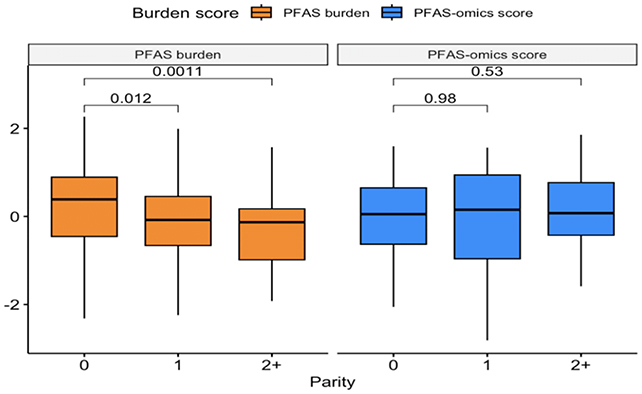
Researchers from the US and Canada wanted to investigate previous findings that more PFAS are present in the placenta delivered with a mother's first-born child than with any subsequent children.
In the new study, the team analyzed samples from newborns' umbilical cord blood, rather than placental tissue, as a proxy for infant PFAS exposure. At first, their results reiterated the first-child effect.
When they broadened the analysis technique to detect more PFAS types, that first-born child difference disappeared.
"Our findings suggest that how we measure PFAS really matters," says biostatistician Shelley Liu, from the Icahn School of Medicine at Mount Sinai in the US.
"When we look more comprehensively, we see that babies are exposed to far more PFAS chemicals before birth than we previously realized – and some of the patterns we thought we understood may change."
The researchers analyzed blood samples collected from the umbilical cords of 120 babies between 2003 and 2006, using a newer, non-targeted chemical scanning technique.
This updated approach scans for a broader range of PFAS and PFAS-like chemicals in the blood, rather than a predefined, well-established list. The broader analysis found evidence of 42 PFAS, compared to the 8 detected by targeted analysis, and only 4 overlapped. That's a lot of extra chemicals.
While it's logical that looking for a greater variety of chemicals would lead to more of these PFAS being found, the researchers suggest our understanding of how these substances can affect children before birth needs to be updated.

That the differences between first- and subsequent-born children disappeared when the new technique was used indicates that we may have underestimated the seriousness of the PFAS problem.
"Our study helps show that prenatal PFAS exposure is more complex and widespread than earlier studies suggested," says Liu.
"Understanding the full picture is essential if we want to protect child health and reduce preventable environmental risks."
PFAS are found everywhere, from food packaging to furniture fabrics, and while some countries place increasingly tight restrictions on their use, when one chemical type is removed from circulation, it's often replaced with a compound that has a similar chemical structure.
That was one of the motivations behind the current study: to quantify prenatal exposure to PFAS compounds, some of which haven't been properly studied or even identified at this stage.
Related: Second Pregnancy Does Something Unique to The Brain, Study Reveals
There's also some uncertainty over how PFAS actually impact health. This particular study didn't measure any health outcomes, but there's growing evidence for how these substances can be dangerous: They've previously been linked to reduced kidney function and to a higher risk of cancer, for example.
Last year, researchers found a link between PFAS levels in mothers' blood and differences in their offspring's brain structure, and earlier findings have also linked these chemicals to reduced fetal growth.
The researchers are keen to expand this new PFAS analysis technique to assess the true levels of exposure to these forever chemicals and to track how that exposure could affect health over the longer term.
"For now, this work helps lay the scientific foundation," says Liu.
"Our goal is to move toward earlier identification and prevention, especially during sensitive windows like pregnancy."
The research has been published in Environmental Science & Technology.