It's been a fraught summer in terms of extreme weather events.
Heatwaves have set new records. Canada has burnt, Europe is currently on fire.
If you're anything like us, you're likely already fatigued and anxious from the barrage of bad news, so we're not going to go on about it.
But one important graphic to share has come out of the European Commission Joint Research Centre (JRC).
As bad as things have been, the coming few days (from 29 July through to 2 August) may be among the worst for fire risk.
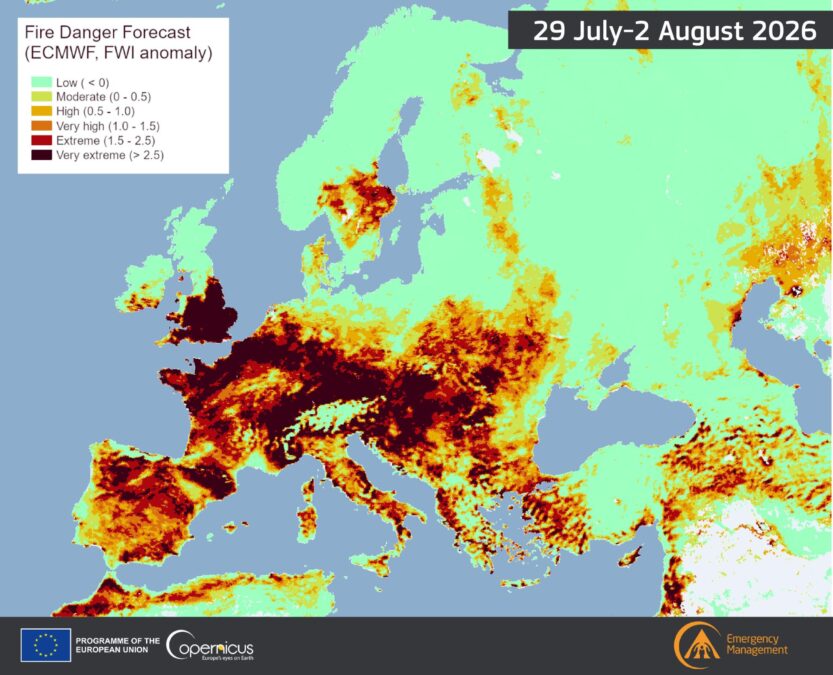
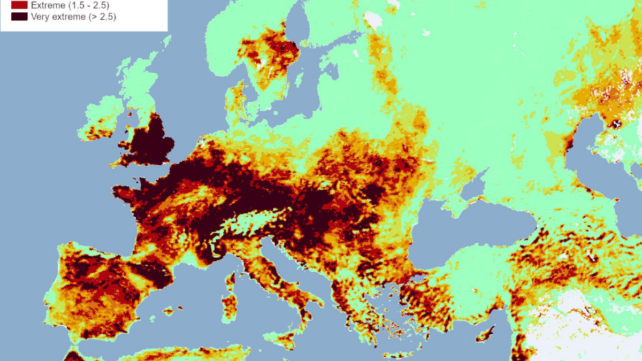
"Very extreme conditions dominate a large area of western and central Europe, with the heaviest concentration across France and the Alpine arc extending into northern Italy, along with the British Isles and Ireland," the JRC explains.
"Extreme conditions surround these areas, covering the wider Iberian Peninsula, the Balkans, and parts of North Africa. Very high danger stretches across southern Scandinavia, parts of eastern Europe, and further pockets in North Africa. High to moderate danger covers scattered patches of eastern Europe and Türkiye."
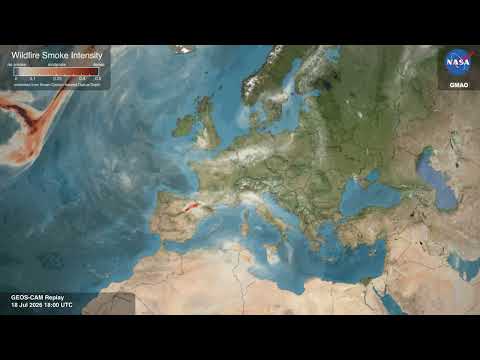
Already, the smoke from these wildfire has had a massive impact. Below, this NASA visualization shows the spread of the fires and the associated smoke so far.
Not only is this a major threat to health that goes beyond the lungs, it also causes further environmental damage.
"Wildfires emit thick blankets of smoke containing toxic gases and fine particulate matter (PM2.5)," a NASA Scientific Visualization Studio blog explains.
"PM2.5 aerosols are small enough to penetrate the lungs and enter the blood stream, thereby inducing and exacerbating pulmonary and cardiovascular health impacts. Though concentrations of PM2.5 are highest close to the wildfire source, smoke can travel thousands of miles to impact the air quality elsewhere."

In a milestone move in response to the fires, ministers from the UK and Spain have directly linked these fires to climate change, and issued a joint statement strengthening their resolve on taking climate action.
Related: 'Tremendously Grave': The First US City Is on Track to Run Out of Water
"This summer's wildfires demonstrated that climate change was now a national security emergency facing Europe and threatening our way of life," they wrote.
This article was fact-checked and edited by Michael Irving. While we pride ourselves on our process, we are only human. If you spot a mistake, please let us know.