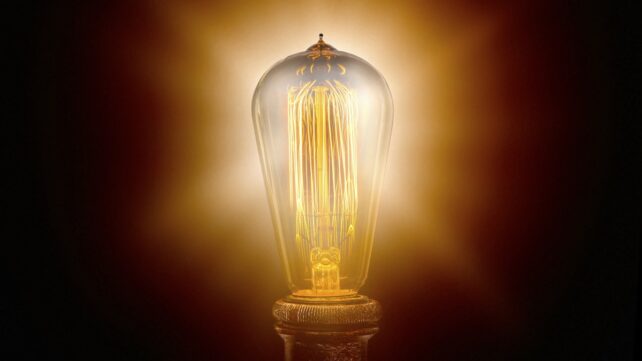
Inventor Thomas Edison is known for being ahead of his time, and a new study could add another notch to his overachieving belt.
Researchers at Rice University suggest Edison may have inadvertently created graphene in 1879 – a "wonder material" that wasn't officially made until 125 years later.
Being a sheet of carbon just a single atom thick, graphene is deceptively simple. But it's super strong, lightweight, and flexible, and it boasts properties that can make it a superconductor and a playground for exotic quantum states.
Graphene was first theorized in 1947 by Canadian physicist Philip Wallace, and successfully isolated in 2004 by physicists Andre Geim and Konstantin Novoselov. The breakthrough won the pair the 2010 Nobel Prize in Physics.
But according to the new research, they might have been beaten to the punch by Edison – though he wouldn't have noticed.
Related: Hidden Detail in Crotch Solves a 500-Year-Old Leonardo Da Vinci Mystery
Ironically, the discovery that Edison may have made graphene accidentally also emerged by accident. One of the main ways to produce graphene is a process called flash Joule heating – basically, zapping a resistive carbon-based material to heat it to over 2,000 °C (3,632 °F).
"I was trying to figure out the smallest, easiest piece of equipment you could use for flash Joule heating, and I remembered that early light bulbs often used carbon-based filaments," says Lucas Eddy, materials scientist at Rice University.
To test whether Edison may have unwittingly created graphene during early testing of his stable light bulbs, the Rice team sourced similar-styled bulbs, complete with carbon-rich bamboo filaments.
These bulbs were hooked up to a 110-volt DC power source and switched on for 20 seconds at a time, before the filaments were examined closely.
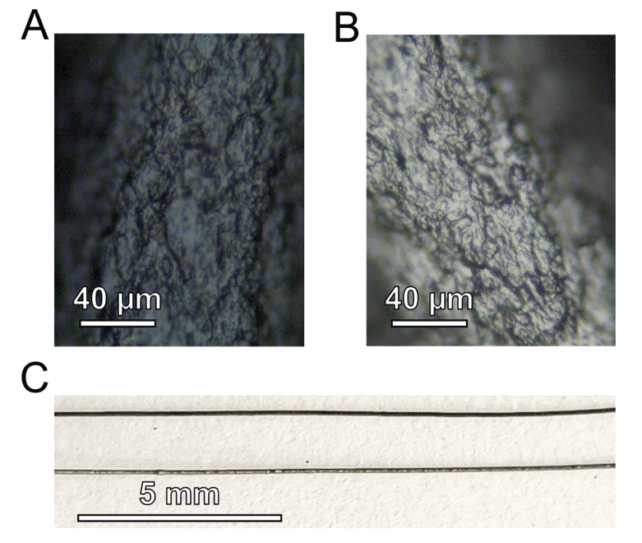
Under a microscope, the team could see that the filament had changed color, from gray to silver. Spectroscopy confirmed that parts of the filament had transformed into graphene.
That graphene would have been short-lived though: Unless it was scraped off the filament after short bursts of use, the material would have been converted into boring old graphite with continued use of the bulb.

Even if Edison had realized what he'd made, graphene probably wouldn't have been much use to him at that point in history. But it does raise some interesting questions.
Related: Scientists Discover New Class of Quantum States in Graphene
"Finding that he could have produced graphene inspires curiosity about what other information lies buried in historical experiments," says James Tour, chemist at Rice University.
"What questions would our scientific forefathers ask if they could join us in the lab today? What questions can we answer when we revisit their work through a modern lens?"
The research was published in the journal ACS Nano.