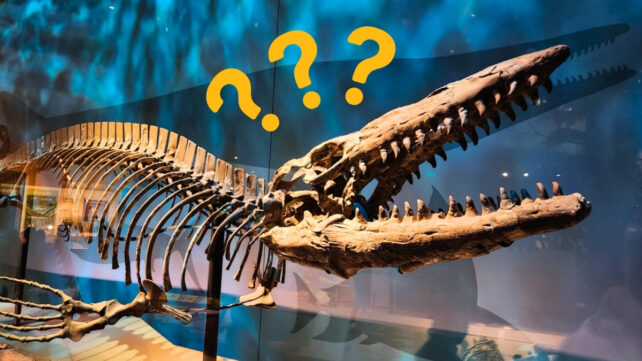
A prehistoric predator to rival the most fearsome giant of them all has just been discovered lurking half-forgotten in a museum collection.
No name is associated with Cretaceous terror as much as Tyrannosaurus rex; now, paleontologists have found a mosasaur that would have been its equal in size and position at the top of its respective food web in the untamed oceans around 80 million years ago.
Its name is Tylosaurus rex, or "king of the tylosaurs", and here's the exciting part: Multiple other fossils assigned to a different species of mosasaur may have been this new giant all along, right under our very noses.
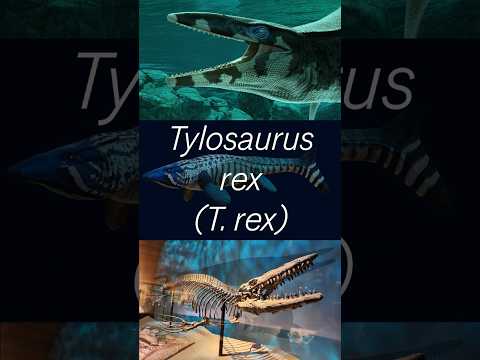
It measured up to around 13.2 meters (43 feet) in length, and damage on at least one specimen suggested it sometimes fought viciously with its own kind.
"Besides being huge, roughly twice the length of the largest great white sharks, Tylosaurus rex (T. rex) appeared to be a much meaner animal than other mosasaurs," says paleontologist Ron Tykoski, vice-president of science and curator of vertebrate paleontology at the Perot Museum in the US.
"Through our study and examination of well-preserved fossils collected throughout the north Texas region, we have evidence of violence within this species to a degree not previously seen in other Tylosaurus specimens."
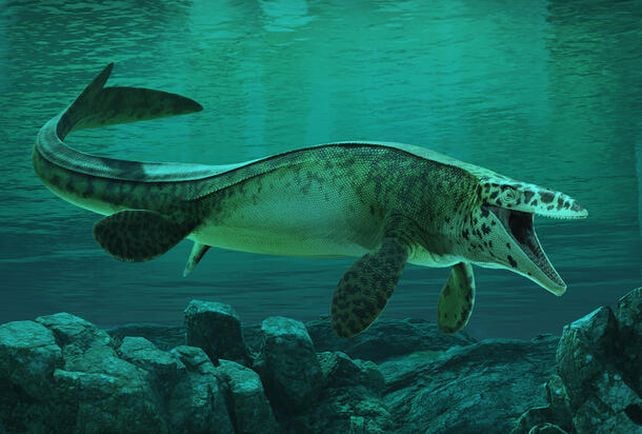
During the latter half of the Cretaceous period, mosasaurs rose to ocean dominance – giant marine lizards unlike any species alive today. Imagine a giant saltwater crocodile crossed with a komodo dragon and an orca – but with lengths up to double what a saltwater crocodile or killer whale could reach.
We know a lot more about mosasaurs than some other ancient beasts for a few reasons. They lived in water, which is one of the best places for fossil preservation. A dead animal sinks to the bottom, where it becomes buried in silt.
The combination of low oxygen and relatively little disturbance – from the scavengers that might disarticulate a terrestrial carcass, for example – means the remains are able to lie quietly long enough for fossilization processes to take place.
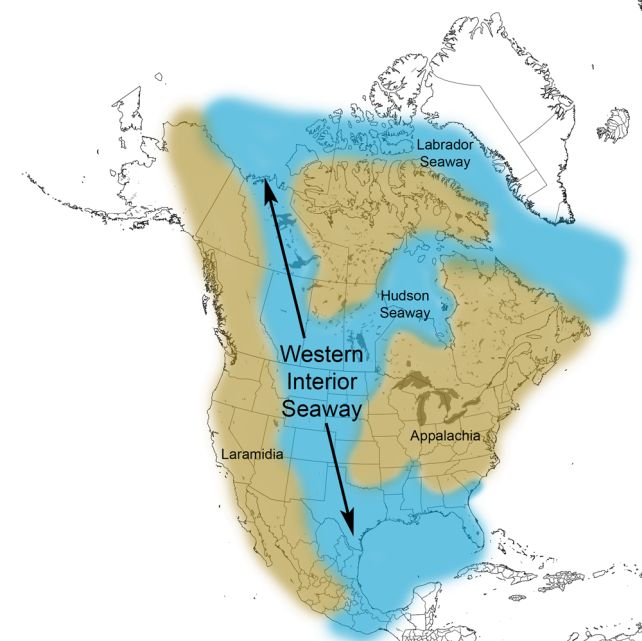
And there's a fair bit of luck involved. During the Cretaceous, North America was divided by a shallow inland sea that has since disappeared, leaving all the fossil beds on dry land for easy human access.
For this reason, there are a lot of mosasaur specimens in museums and personal collections around the world. American museums alone house hundreds of tylosaur specimens, and that's just one mosasaur clade.
The specimen that has now been used to describe the new species T. rex was actually discovered nearly 50 years ago, in 1979, in Texas.
It has been sitting in the collection of the Perot Museum of Nature and Science (formerly known as the Dallas Museum of Natural History), classified as a specimen of a different species – Tylosaurus proriger, nicknamed the Heath Mosasaur.
Paleontologist Amelia Zietlow of the American Museum of Natural History started to notice something awry when examining the Heath Mosasaur specimen as part of her PhD in comparative biology.
Physical traits of the almost-complete skeleton did not match descriptions of T. proriger. Previous work had attributed these differences to the changes a species might undergo as it matures, but the more Zietlow looked, the less likely this seemed.
In particular, there were major differences in the skull, jaw, mouth, and teeth.
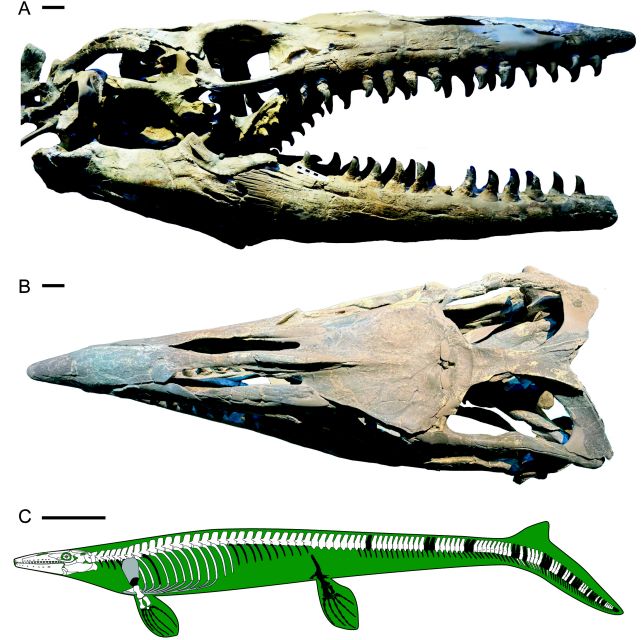
These differences suggest that the jaw and neck were particularly powerful, making it a fearsome predator. And the teeth were finely serrated – a trait not commonly found in mosasaurs, and which would have given T. rex's bite a nasty ability to shred and shear.
The researchers also took a closer look at other large mosasaurs that had been classified as T. proriger, and found a total of 12 specimens that they could confidently reclassify as T. rex.
One of these, known as the Black Knight and also housed in the Perot Museum, has significant damage to its snout and jaw that, the researchers say, shows evidence of the species' powerful bite: Only another T. rex could have inflicted that much damage.

Several other famous mosasaurs have now been reclassified as T. rex, including Bunker, discovered in 1911 and now on display at the University of Kansas, and Sophie, on display in the Yale Peabody Museum.
This new classification also elucidates the mosasaur family tree.
Related: Scientists May Finally Know Why T. Rex Had Such Tiny Arms
Most of the true T. proriger specimens were found in Kansas and date back to about 84 million years ago. Meanwhile, T. rex finds are concentrated in Texas, and came along about 4 million years later.
It's a discovery that raises questions about what other ancient species might lie yet undiscovered in museums, hidden by decades of assumption and familiarity.
"This discovery is not just about naming a new species," Zietlow says. "It highlights the need to revisit long-standing assumptions about mosasaur evolution and to modernize the tools we use to study these iconic marine reptiles."
The research has been published in the Bulletin of the American Museum of Natural History.