
Superconductivity, the ability for materials to conduct electricity with zero resistance, is a valuable scientific treasure.
Researchers have now discovered a new haul of this exotic phenomenon, hidden away inside a special kind of rhombohedral graphene.
This naturally occurring form of graphene is made up of several ultra-thin layers, each one positioned at a specific angle relative to its neighbors.
It's something of a favorite among scientists, because of its unusual properties.
For this new set of discoveries, published in Nature, researchers led by a team from MIT experimented with rhombohedral graphene stacked to four and five layers, manipulating them to create differing electron densities (controlling the specific form that superconductivity takes).
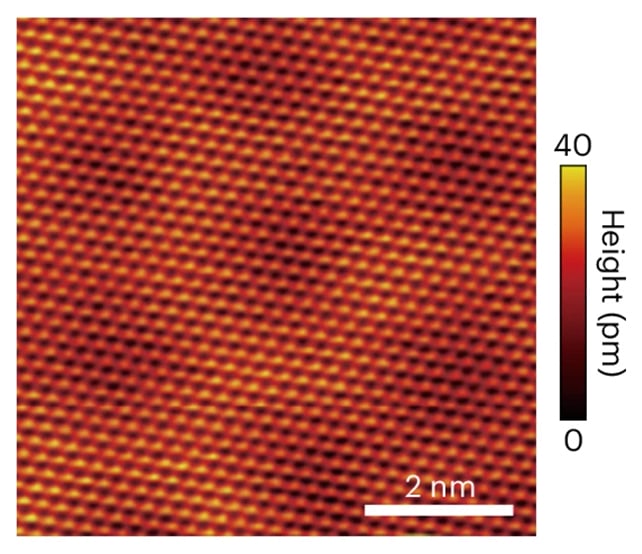
Not only did the tests at ultra-low temperatures reveal that the graphene could host multiple superconductivity states – which is itself a rarity upon a rarity – they also showed that some of these states actually get stronger when exposed to magnetic fields that would normally zap the superconductivity out of them.
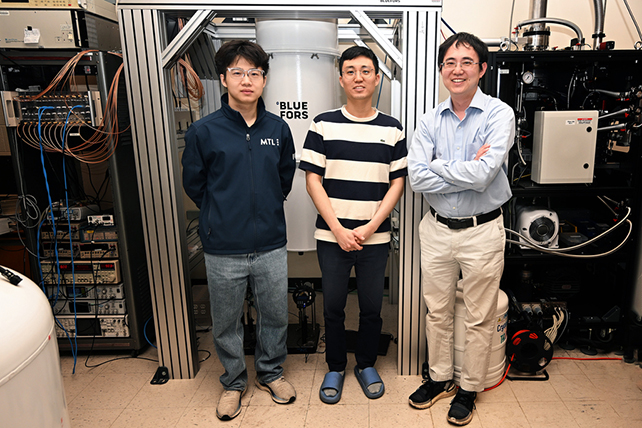
"From a fundamental physics point of view, it's very exotic that a magnetic field doesn't kill superconductivity, and instead it boosts it," says physicist Long Ju from MIT.
"We have provided a lot of experimental results and provided the nutrition that people can absorb to try to think about what's going on here."
It's not the first time members of this team have discovered unconventional superconductivity states in rhombohedral graphene; this latest work adds three more to their tally.
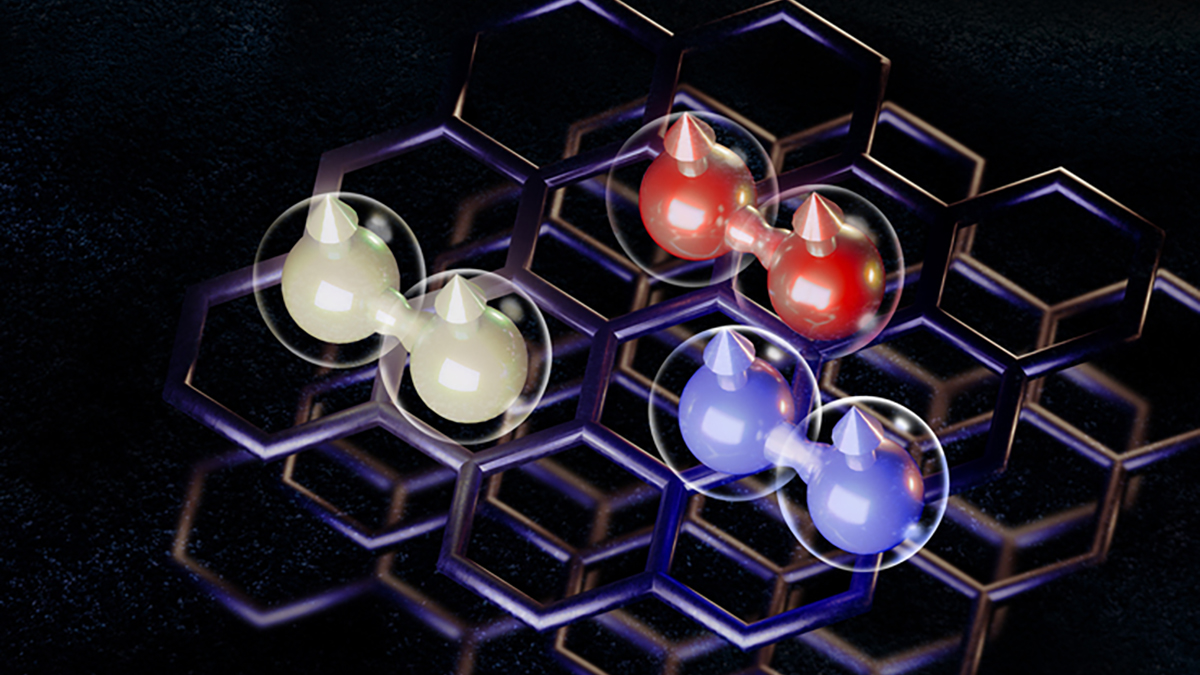
Superconductors rely on electrons matching up in pairs with other electrons of opposite magnetic spins (Cooper pairs), and then gliding through materials without interference. Normally, adding a magnetic field unifies the spins of these electrons enough to break up the pairings, and the superconductivity.
Not so here. As the researchers changed the electron density and the magnetic field strength and orientation, strange results appeared.

In one case, the superconductivity didn't emerge until the magnetic field was enabled. In two others, the magnetic field enhanced the superconductivity – essentially, making it more robust and able to survive a wider set of scenarios.
"The superconductivity actually is enhanced, as in, the transition temperature goes from 55 millikelvin to probably 90 millikelvin," says Ju.
"At the same time, the material can take another 50 or 60 percent extra current before superconductivity gets destroyed. And that is very unusual."
The next question is why these superconductor states are the exceptions to the rule as far as magnetic fields go – and it's something the researchers aren't sure about yet.
They do have one working theory: that in these specific conditions, electrons are able to match up with others that have the same spin alignment.
The magnetic field still pulls on the electrons, but they're already aligned in the same way, preserving their superconductivity.
"People might assume that this is a simple, boring carbon material, but we can control this material by tuning certain experimental knobs, such as electrical voltages," says Ju.
"This is how a simple physical material can exhibit so many different superconducting properties."
Next, the researchers want to take a closer look at each superconducting state in turn, figuring out how it is generated and how it interacts with magnetic fields (here, fields up to 180,000 times stronger than Earth's magnetic field were used).
It's worth bearing in mind that the superconductivity here still relies on ultra-cold temperatures and specific lab setups, but there are potential uses in the field of quantum computing, in improving the stability of notoriously unstable qubits.
That's a long way down the line though.
For now, the study is further evidence of the exotic states that can be teased out of naturally forming materials like rhombohedral graphene – with a few tweaks to their properties.
Related: Scientists Discover New Class of Quantum States in Graphene
"We can control the simplest chemical and structural material – crystalline carbon – as part of the fun," says physicist Junseok Seo, from MIT.
"We're not only dealing with what nature gives us, but we're applying additional controls to change it to something that nature does not give us, but that can exist in the same material."
The research has been published in Nature.
This article was fact-checked by Clare Watson and edited by Peter Dockrill. While we pride ourselves on our process, we are only human. If you spot a mistake, please let us know.