
Evolutionary theory has revolutionized the way we understand humans – yet more than a century after Darwin's ideas reshaped biology, the female form of our species remains largely a mystery.
Compared to the rest of the animal kingdom, human women are downright exceptional, and scientists are still trying to figure out why. While every body is different, many women's lives are shaped by these unique features of female anatomy.
Although sex and gender are distinct concepts, much of the science surrounding women's bodies focuses on the reproductive biology associated with the female sex – the physiology behind pregnancy, menstruation, and menopause.
Some researchers now argue that these evolutionary quirks aren't just side effects of human evolution – they may be crucial forces that helped shape our very species.
Human Birth is Unusually Dangerous
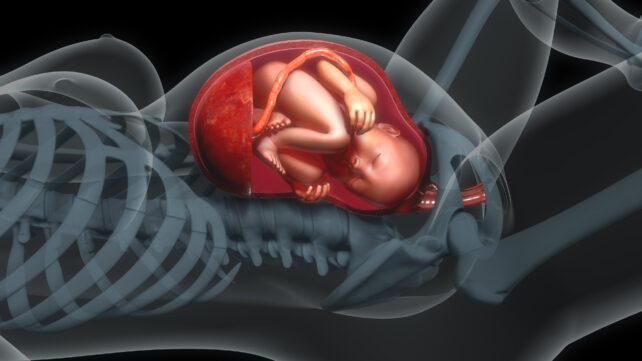
From the very start, humans are confronted with an unusually dangerous prospect: childbirth. Compared to other primates, humans go through labor for an astonishingly long time (for many hours or even days), and complications and risks are common.
Our species' birth canal is seriously twisted, which means that during a vaginal birth, a baby's head needs to turn nearly 90 degrees, like slipping a foot into a boot. Often, a mother needs help from others to give birth.
While it's difficult to compare all of human history to life in the modern world, obstructed labor is estimated to be directly responsible for up to 30 percent of maternal morbidity in developing countries today.
Why human birth comes at such great risk to the mother remains a mystery.
Compared to other primates, humans are born with the smallest brain relative to its eventual adult size, so it can't just be that we have big noggins.
Because we are the only living mammal to habitually move about on two legs, some scientists have hypothesized that a narrow pelvis makes it easier to walk or stand upright.
This biological trade-off between complex anatomy and ease of birth is known as the 'obstetrical dilemma'. It's a controversial hypothesis that has faced a lot of scrutiny and doubt in recent years, on biomechanical, metabolic, and biocultural grounds. Some think this dilemma overlooks the nuances of anatomy, diet, genes, hormones, or medical practices.
At this point, the only certain conclusion we can draw is that human birth is uniquely complex and curiously inexplicable – so remember to thank the women who got you here.
Human Menstruation is Heavy and Overt
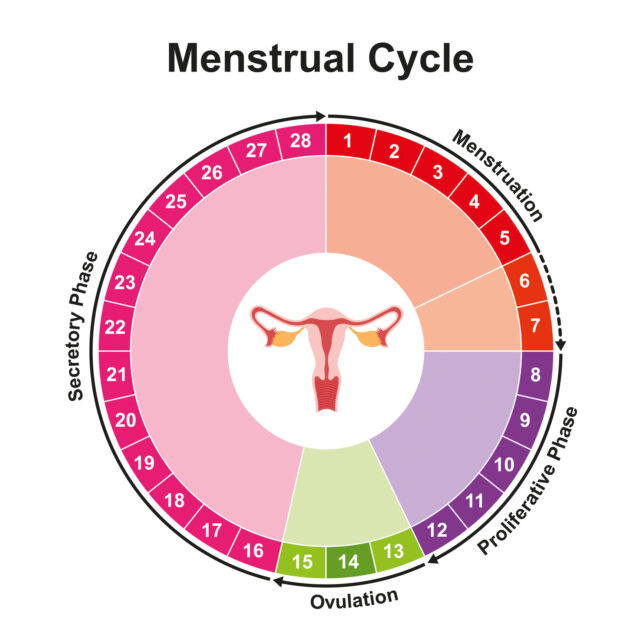
As the female form matures, it only grows more puzzling. Human menstruation seems to be heavier and more overt than that of any other mammal. In fact, more than 98 percent of mammals don't menstruate at all.
So why is it that during our reproductive years, humans menstruate monthly, with widespread changes to the brain and body? What is the adaptive value, if any?
Over the years, scientists have put forward many hypotheses to answer these questions, but each has its flaws, and the field is, in general, relatively under-researched.
There's a chance, for instance, that the 85 or so mammals known to menstruate (including chimps, bonobos, and us) are doing so to prime their uteruses for implantation.
The way that human embryos implant, for instance, is quite aggressive compared to what scientists have seen in lab mice, and this may require a thicker, more differentiated tissue that is harder for the body to 'resorb'.
The uterine lining may even mature and differentiate enough to 'decide' whether to accept an embryo or not, although that idea remains controversial.
Similar to humans, menstruating bats and elephant shrews also face risks of their placenta attaching too deeply into the uterine wall, indicating a highly mature and extensive system.
Perhaps menstruation evolved merely as a by-product of the uterus preparing itself for offspring. For now, however, we can only guess.
Menopause is an Enigma

Even once menstruation stops, the evolutionary enigma that is the female form lives on.
Humans are among just a few species in the world to experience menopause. This stage of life is extremely rare in the animal world, and to this day, no one really knows why it even exists.
Most other mammals are reproductively active throughout their adult lives, but humans can live for decades after their last period.
Toothed whales, like orcas and pilot whales, are some of the only animals we can relate to, and figuring out what unites us could reveal the secrets of menopause.
One of the most popular explanations for why menopause evolved in some species is called the grandmother hypothesis. Essentially, older females stop having offspring of their own, and redirect energy and resources into helping raise their grandchildren instead.
Some evolutionary scientists argue that this occurs in toothed whales – they evolved menopause to extend lifespan without extending reproductive years.
To demonstrate that adaptation in humans, scientists would need to show that preagricultural societies contained a significant number of women who lived past personal reproduction and assisted with descendants.
That evidence, however, is hard to come by. In the past, some models based on modern hunter-gatherer groups have failed to show a sufficient benefit that would "offset the evolutionary cost of ceasing reproduction," according to evolutionary theorists.
One scientist even argues that menopause is explained not by the matriarch but by the patriarch. The patriarch hypothesis posits that "once males became capable of maintaining high status and reproductive access beyond their peak physical condition, selection favored the extension of maximum life span."
If these longevity genes were on the X chromosome, instead of the Y chromosome, life span would also increase in females, allowing them to possibly expend all their viable eggs in a lifetime.

In other words, menopause may have been a byproduct of longer life expectancies in males. What this doesn't explain is why female animals, on average, seem to live much longer than males. It also relies on an assumption that we have yet to prove: that key longevity genes don't exist on the Y chromosome.
Related: Second Pregnancy Does Something Unique to The Brain, Study Reveals
Without menstruation and pregnancy, humans would not exist; and without menopause, it's possible that our species may not have been nearly as successful.
More than 150 years after the theory of natural selection was first put forward, the evolution of the female body remains one of the greatest unfinished puzzles.