
Diet and exercise are both factors that can influence how long you live, but they're not the single greatest predictor of your longevity, research suggests.
According to a recent study, there's something else that might have more of an effect in terms of curtailing your lifespan.
While poor sleep has been previously linked to a host of health issues, this latest investigation found that getting enough shut-eye had a stronger connection to living longer than diet and exercise – factors that are known to add years to your life.
Researchers from Oregon Health & Science University (OHSU) crunched the numbers on survey data from across the US, covering the years 2019 to 2025.
Measures of life expectancy were compared against self-reported evaluations of sleep duration, with less than seven hours per night considered a threshold for insufficient sleep.
They then factored in other variables that can affect life expectancy, including physical inactivity, employment status, and educational level. The association between insufficient sleep and lower life expectancy still held. Only smoking had a stronger link.
"I didn't expect [insufficient sleep] to be so strongly correlated to life expectancy," said OHSU sleep physiologist Andrew McHill.
"We've always thought sleep is important, but this research really drives that point home: People really should strive to get seven to nine hours of sleep if at all possible."
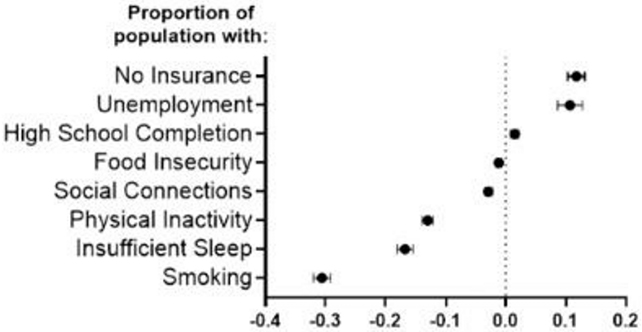
As a purely observational study, the research, published in 2025, can't prove that less sleep knocks months or years off your life.
A study like this also can't untangle the complex interactions between sleep, diet, and exercise. The results do suggest the amount of sleep you get each night is a significant indicator of long-term health.
Adequate sleep is vital for almost every aspect of our well-being: missing a single night of slumber can impact brain circuitry and the body's immune system, for example.
It's not unreasonable to suggest that such health issues may contribute to mortality in the long run. In particular, the researchers highlight obesity and diabetes as two conditions linked with poor sleep that could reduce life expectancy.
Related: Your Gut Could Be Quietly Controlling Your Sleep, Research Shows
"It's intuitive and makes a lot of sense, but it was still striking to see it materialize so strongly in all of these models," said McHill.
"Getting a good night's sleep will improve how you feel but also how long you live."

The good news is that our sleep routines are, at least to some extent, modifiable within the limits of our caregiving and work commitments.
It might be worth quitting that habit of doomscrolling in bed, or squeezing in a session of yoga or tai chi now and then.
Both the American Academy of Sleep Medicine and the Sleep Research Society recommend banking at least seven hours of sleep a night, although there is some evidence that you might be able to catch up on the weekends if you need to.
"This research shows that we need to prioritize sleep at least as much as we do what we eat or how we exercise," said McHill.
"Getting a good night's sleep will improve how you feel but also how long you live."
The research has been published in Sleep Advances.
An earlier version of this article was published in December 2025.