
People with prediabetes have blood glucose levels that are higher than normal, but a simple dietary change could help.
In a recent clinical trial, when refined white bread was swapped out for a whole wheat option, researchers noticed a significant change among participants.
On average, blood sugar spikes were 27 percent smaller.
Some participants included in the trial saw large improvements from this one dietary change, while others saw only small improvements.
But the overall effect remained significant even when researchers took into account differences in body weight, inflammation, insulin concentration, cellular stress, or the presence of short-chain fatty acids in the gut.
The results, published in Frontiers in Nutrition, support the idea that prediabetes can be treated with healthy diet changes.
"Food really is medicine in many respects," says co-senior author Jiangjiang (Chris) Zhu, professor of human nutrition at Ohio State University.
He and his colleagues are interested in how certain diets affect the gut microbiome and whether this has an impact on glucose control.
"We still need to get as much information as possible to generate stronger and precise predictive machines that can really tell you what to eat, what not to eat, which food is good for you, which food is not," Zhu explains.
Based on their exploratory results, he and his colleagues at Ohio State suspect that some individuals are 'super responders' to whole wheat bread.
"And we believe that some of that difference lies in the unique signatures of the bugs in the gut and the distinct metabolites that they generate," explains co-senior author and nutritionist Richard Bruno.
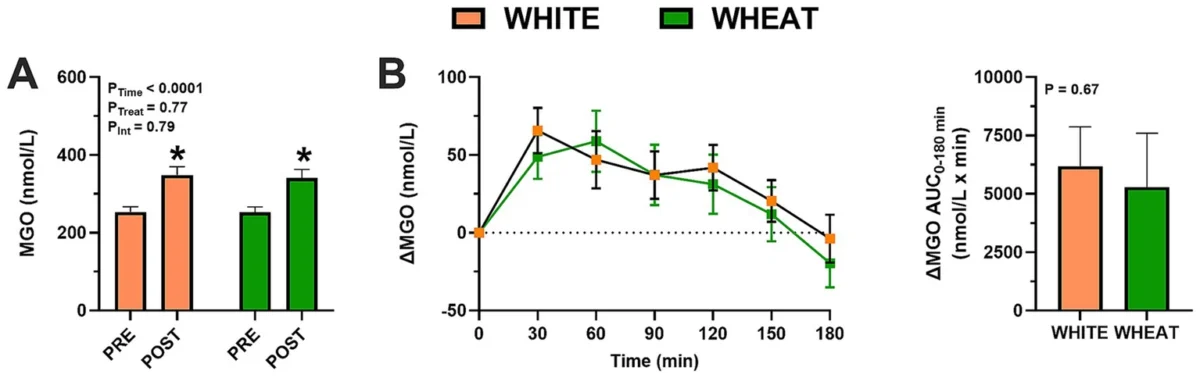
In the randomized, controlled crossover trial, 39 adults with prediabetes consumed fully controlled diets differing only in one aspect.
For two weeks, participants either ate whole wheat bread or refined white bread. Then, after a two-week break, they ate the other type of bread for a further two weeks.
Fasting blood and stool samples were taken before and after the interventions, and participants also underwent glucose tolerance tests after each phase of the trial.
Eating whole wheat did not significantly alter the global diversity of the gut microbiome; however, some types of gut microbes capable of breaking down complex carbohydrates became enriched.
These coordinated shifts suggest that the gut is responding to the fiber in whole wheat bread.
While these results are preliminary, these patterns could somewhat explain which individuals would be 'super responders' to whole wheat.
"Collectively," the authors conclude, "these findings demonstrate that whole wheat improves postprandial glucose tolerance while exhibiting microbiome-associated variation in response, consistent with a role for gut microbial features in precision nutrition."
'Precision nutrition' is an emerging field that aims to optimize dietary advice by taking into account the individual's health, demographic, nutritional, and psychosocial factors.
But nutrition research is notoriously difficult.
Foods contain thousands of compounds, and they are rarely eaten in isolation. Instead, they are mixed together, cooked, processed, dried, and prepared in an endless number of ways.
Then, there's the individual to consider. Each one of us comes with a unique gut microbiome, one that can shift and change over time, and as a result, we all respond to foods differently at different points in our lives.
Clinical trials that try to test the health benefits of food in rigorous ways often struggle with blinding participants to what they are eating, as flavor and appearance can be dead giveaways.
What's more, it's hard to account for every lifestyle factor that may influence health outcomes and muddy the results.
The recent trial from Ohio State was also not blinded, but its focus on the gut microbiome could help explain why previous studies on whole-wheat substitutes have yielded mixed results regarding glucose tolerance.
Perhaps some individuals are more sensitive to whole wheat than others.
The glycemic improvements observed in the Ohio State clinical trial were not tied to metabolic changes or inflammatory changes. The researchers therefore suspect gut microbes are playing a role.
Participants with a greater abundance of Lachnoclostridium microbes at the start of the trial were more likely to suffer poorer glucose tolerance when eating white bread, but showed improved responses when eating whole-wheat bread.
"Lachnoclostridium is frequently associated with more of a pro-inflammatory state – such as that from a less healthy diet," explains first author Jillian Pierson, a graduate fellow in Bruno's lab.
"And there are other studies demonstrating that it's diet-responsive, so improving certain diet parameters helped to decrease this bug."
That's an interesting discovery that could lead to more personalized dietary recommendations for those with prediabetes, but as these results are only exploratory, they will need to be confirmed in larger, longer trials.
For now, we have general recommendations.
"These findings support whole wheat as an effective dietary strategy to improve postprandial glycemic control in individuals at elevated risk for type 2 diabetes," the study authors conclude.
The research has been published in Frontiers in Nutrition.
This article was fact-checked by Peter Dockrill and edited by Peter Dockrill. While we pride ourselves on our process, we are only human. If you spot a mistake, please let us know.