
The iconic 'Doomsday Vault' – aka Norway's Svalbard Global Seed Vault – is perhaps the world's best-known seed bank.
Holding over a million seed samples from plants from almost every country, the monolithic fortress is like a global insurance policy, ensuring the world of tomorrow has vital seed backups to grow food and other essential crops in an uncertain future.
But for all the Doomsday Vault's impressive collection, nature has it comprehensively beat.
The world's biggest seed bank is actually hidden beneath your feet, in what's called the soil seed bank – nature's own vast repository of seeds lying in wait on the ground, in the dirt, or scattered among leaf litter.
Unlike Svalbard's meticulously coordinated donations, deposits in the soil seed bank are a chaotic affair, with seeds falling randomly onto the ground, carried on the wind, or dispersed via floods.
Despite the randomness, it amounts to a staggeringly large reserve of seeds, new research shows.
In a study published in Nature Communications, scientists analyzed a global database of the soil seed bank, containing 3,096 records of soil samples collected from 94 countries across all seven continents.
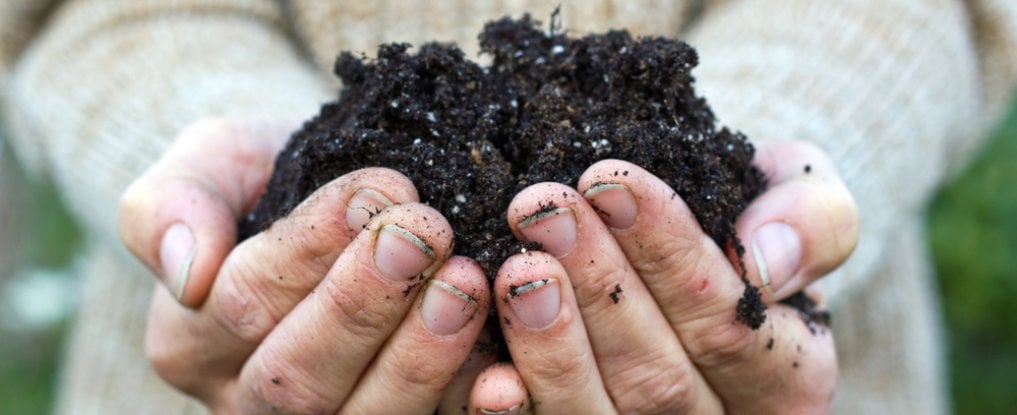
Millions of seeds and seedlings were counted and identified in those samples, as part of some 1,400 studies.
Those seeds are an immense reservoir we can now put some numbers to.
The team's calculations suggest that globally, there's an average of more than 5,000 seeds hidden in the soil for every square meter of surface, across land, wetland, and aquatic environments worldwide.
"In the broadest sense, if you put your finger to the earth, you are likely to be pointing at a seed," the researchers explain in their paper, led by co-first authors and ecologists Alistair Auffret from the Swedish University of Agricultural Sciences and Emma Ladouceur from the University of Prince Edward Island in Canada.
"The high density of seeds in the soil is a testament to the formation of soil seed banks as an important component of plant population and community dynamics, and a valuable strategy for many plant species to facilitate establishment following disturbance."
Be that as it may, the researchers uncovered a pattern in the data, and it's one that could limit the effectiveness of the soil seed bank's vital role in regenerating vegetation after disturbances such as severe weather, which can wipe out plants on the surface.
While it's long been known that different habitats support differing levels of plant diversity and density – deserts are sparse, and rainforests are packed – less is known about how this extends to the soil seed bank, especially on a global scale, as most studies of the soil seed bank are limited to specific regions.
Using their global database, assembled by some of the same team and first published in 2024, the researchers found a surprising contrast in seed populations across different regions.
"Across the world's biomes and ecosystems, patterns in species richness in the seed bank often diverged from patterns of seed density," the team reports.
In other words, soils that contained seeds from a wide variety of plant species did not have high numbers of seeds themselves – and areas with high seed density often didn't show a great diversity of species.

One example of this is tropical ecosystems, which show high species richness in the soil seed bank, but low seed density. On the other side of the scale, arable (farmland) ecosystems had low species richness, but a high density of seeds.
More concerningly, the researchers found evidence that human activity could be negatively impacting the soil seed bank, especially with regard to the diversity of seed species present in the environment.
"Strikingly, we also found that the richness of soil seed banks appeared higher in undisturbed compared to degraded habitats, suggesting how across the world's ecosystems, soil seed banks also reflect the ongoing depletion of biodiversity as a result of anthropogenic activities," the researchers write.
"This indicates that the potential for seed banks to contribute to the recovery and restoration of degraded ecosystems might be limited."
Related: Scientists Studying Earth's Trees Issued a Stark Warning to Humanity
If further research confirms this, it's a new perspective on the biodiversity crisis already evident in plant life at the surface – only now mirrored in their seed precursors hidden underground.
"Our findings are concerning," the researchers explain, "matching general trends of reduced biodiversity in the established vegetation over time, and have consequences for the potential of passive restoration to reverse biodiversity losses."
The findings are reported in Nature Communications.
This article was fact-checked by Clare Watson and edited by Clare Watson. While we pride ourselves on our process, we are only human. If you spot a mistake, please let us know.