One of science's defining aspects is that its findings and ideas are open to empirical debate.
But with plate tectonics and feathered dinosaurs firmly entrenched, the next point of debate may hinge upon the possibly revolutionary suggestion that light can evaporate water – but not by heating it.
Discovering a new type of evaporation after all this time would be startling. Yet scientists have reported multiple lines of evidence for this "photomolecular effect", with ostensibly major applications in climate forecasting and water desalination.
However, a new paper in the journal PNAS suggests these findings may stem from the methods used in those studies, rather than an innate physical property of light and water.
Molecular physicists from the Max Planck Institute for Polymer Research in Mainz, Germany, recreated some of the conditions of past studies and directly quantified the results at both the macroscopic and microscopic levels to explore what interfacial water – the boundary between the water's surface and the air – really does when it's bombarded with light.
First, the researchers subjected a pure water sample to blue, green, and red visible light, using a confocal displacement sensor to track the water's surface height under "light on" and "light off" conditions across two humidity environments.
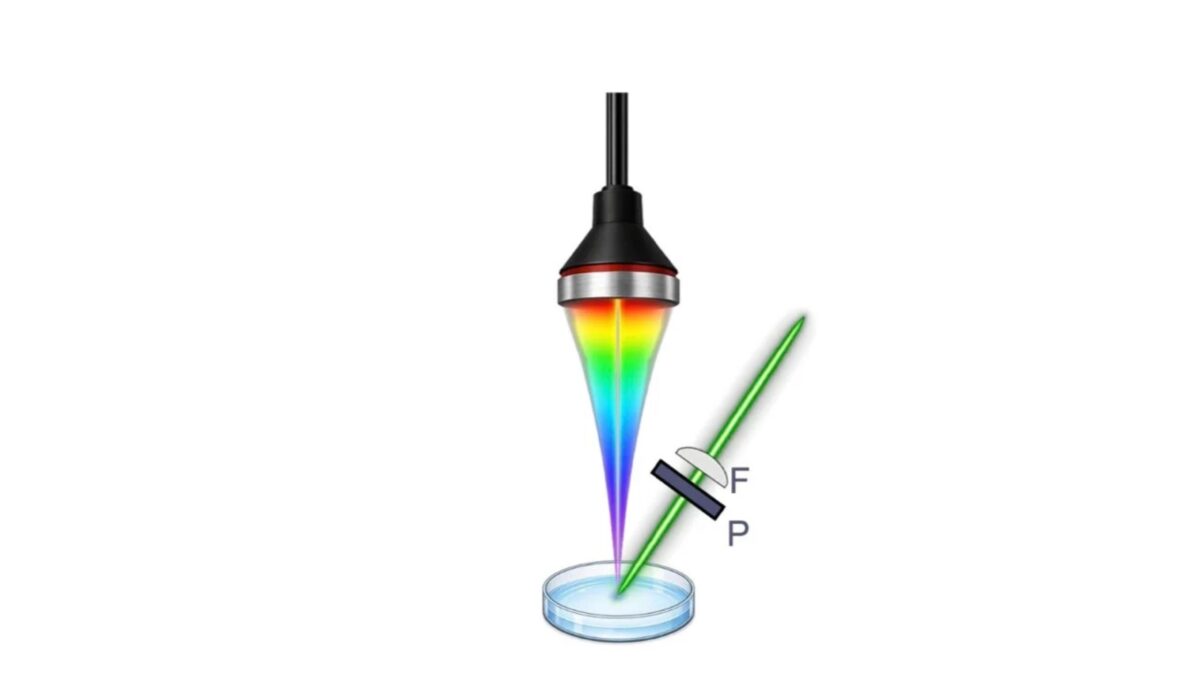
By measuring how far the water's surface receded, they could directly determine its evaporation rate. In contrast, past experiments may have used more indirect measurements.
These wavelengths of light, and the angle at which the diode lasers impacted the water sample, were consistent with such photomolecular experiments.
Surprisingly, they found no change.
"Taken together, these measurements show that visible illumination at intensities comparable to solar flux does not measurably enhance evaporation at a flat air–water interface," the researchers say.
With these macroscopic evaporation measurements in hand, they turned their observations to the microscopic level to see what was happening to water molecules at the air-water interface; would this match the macroscopic evaporation observations?
To find out, they used the same illumination conditions as above and observed the effects via a surface-specific vibrational probe.
This technique is sensitive to the vibrations of oxygen-hydrogen bonds in water molecules at depths of just a few angstroms (a few ten-billionths of a meter, or around a hundred-millionths of an inch), comprising the uppermost two or three layers of water.
Because this technique is sensitive to the orientation, bonding strength, and local field environment of oxygen-hydrogen groups, it probes the very essence of the photomolecular effect.
Intriguingly, the spectra (light signatures) from this experiment again showed no measurable changes, suggesting that visible light left the hydrogen bonding of water molecules at the surface untouched, consistent with the unchanged evaporation rate.
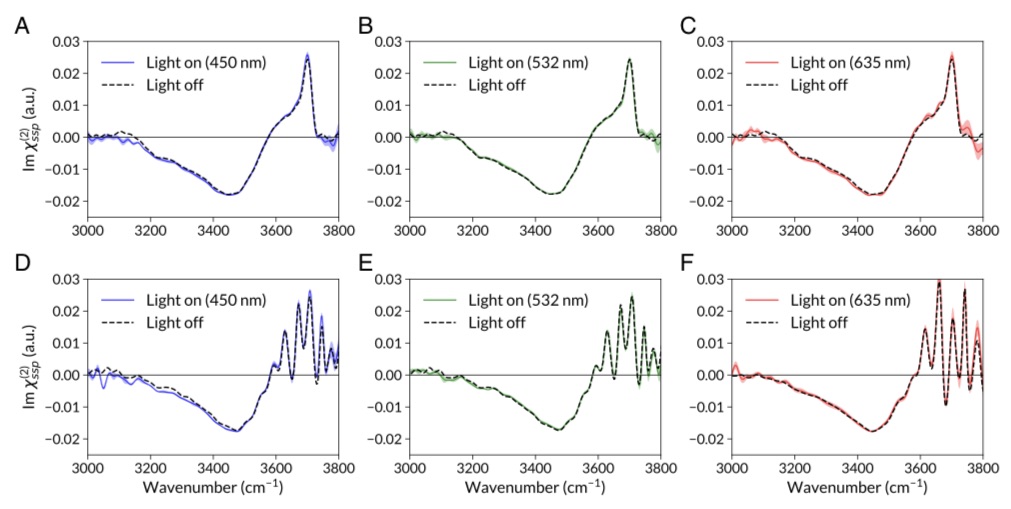
Importantly, the experiments showed no modifications at 532 nanometers, the wavelength of green light that facilitated the strongest response in previous studies, the researchers note.
"Within the experimentally accessible regime investigated here, no evidence is found for a nonthermal visible light–driven modification of interfacial water or evaporation dynamics," they add.
But wait, what would happen if one ratchets up the power? The resulting buffed-up electric field may still produce the sought-after photomolecular effect, which is thought to be field-dependent.
So, the researchers performed a "we're not playing around anymore" experiment in which they increased the peak intensities by more than ten orders of magnitude for short periods.
They blasted the water surface with visible and near-infrared light pulses lasting one to a few trillionths of a second (about 1 to 3 picoseconds); after all, they wanted to maximize peak power, not boil spaghetti.
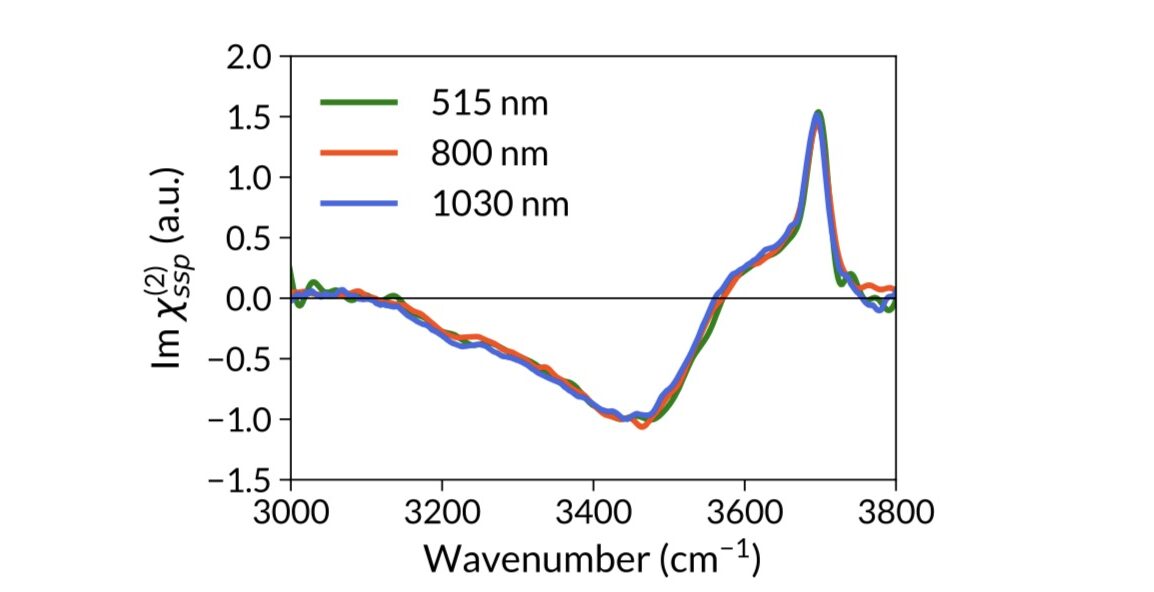
But even these extreme photon fluxes could not measurably perturb the hydrogen bonds at the air-water interface.
To contextualize these findings with those of past studies, one may consider the medium used.
Previous research may have utilized hydrogels, porous matrices, water droplets, or other potentially mechanically sensitive configurations.
As a result, the signals associated with these experiments could have been influenced by the absorption and scattering of light, heat transport within the materials, the concentration of vapor near the surface, or the physical push exerted by the photons – solar sails, anyone?
These processes can also affect indirect measurements tracked in previous studies, including changes in mass, light spectra recorded above the water, or droplet shape.
So, for one, this work highlights the stability of hydrogen bonds at the air-water interface, providing a reference for testing other chemical or environmental scenarios.
Finally, the researchers explain that, across the wavelength, intensity, humidity, and time ranges explored here, visible light does not alter evaporation or molecular kinetics as would be expected of the photomolecular effect.
"Beyond resolving a specific controversy, these findings provide a robust benchmark for light–water interactions at interfaces and supply clear physical constraints for the design and interpretation of light-driven evaporation and water-harvesting technologies," the researchers conclude.
"They show that substantial visible-light-induced evaporation enhancements must arise from photothermal or geometric effects in complex, absorbing materials rather than from a new photophysical pathway intrinsic to liquid water."
The research has been published in PNAS.
This article was fact-checked by Kate Mallord and edited by Peter Dockrill. While we pride ourselves on our process, we are only human. If you spot a mistake, please let us know.