When Vesuvius erupted nearly 2,000 years ago, it devastated the nearby Roman city of Herculaneum with scorching gas, ash, and earthquakes that suffocated its streets, toppled masonry, and even turned one man's brain to glass.
Much of the city was destroyed, and its people were vaporized, yet its library full of arcane knowledge has been preserved for posterity by the blanketing ash.
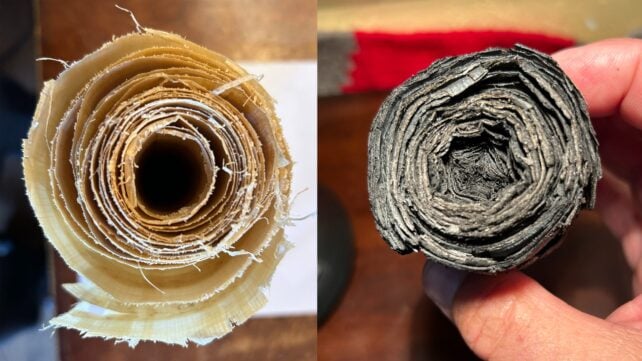
In 1752 CE, excavations sponsored by the Bourbon kings of nearby Naples unearthed a collection that currently contains over 1,800 papyrus scrolls, still in their rolled-up postures.
These scrolls represent the only known intact library from antiquity.
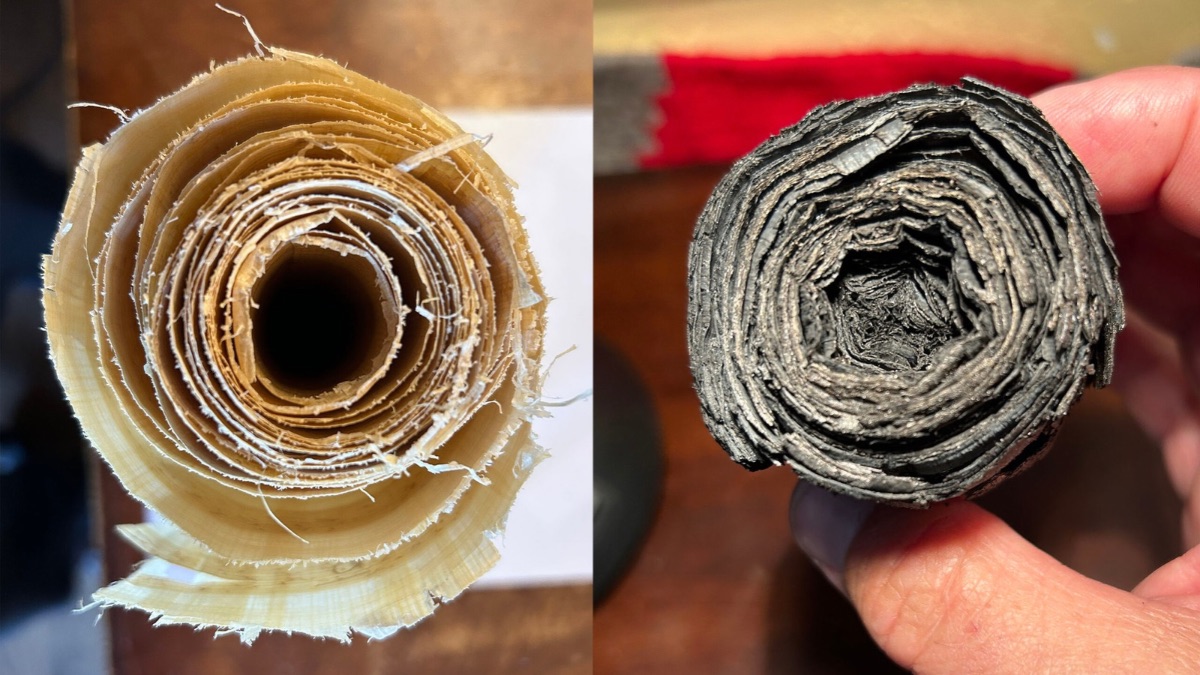
Well, kind of, because they've been thoroughly carbonized, or burnt to a crisp and turned into crumbling charcoal.
But that may not be a deal-breaker because a new study has demonstrated that any lead present in these Herculaneum writings can make them especially readable - no unrolling necessary, as the multi-million dollar Vesuvius Challenge has shown.
Anyone who's undergone an X-ray probably remembers donning that cumbersome lead vest.
The same principle applies here, as the lead within the letters in these scrolls is up to 25 times better at sopping up X-rays, compared to the atomically lighter, charred papyrus, yielding a distinguishable contrast between the writing and the medium.
So, in a potentially breakthrough study published in PLOS One, a team of researchers, including scientists from the University of California, Berkeley, and the National Institute of Standards and Technology (NIST), fought fire with fire.
As funded by first author Douglas Seiler – a Berkeley SETI affiliate involved in the Panoseti project to search for alien laser signals - the researchers and their family and friends made their own Herculaneum scrolls.
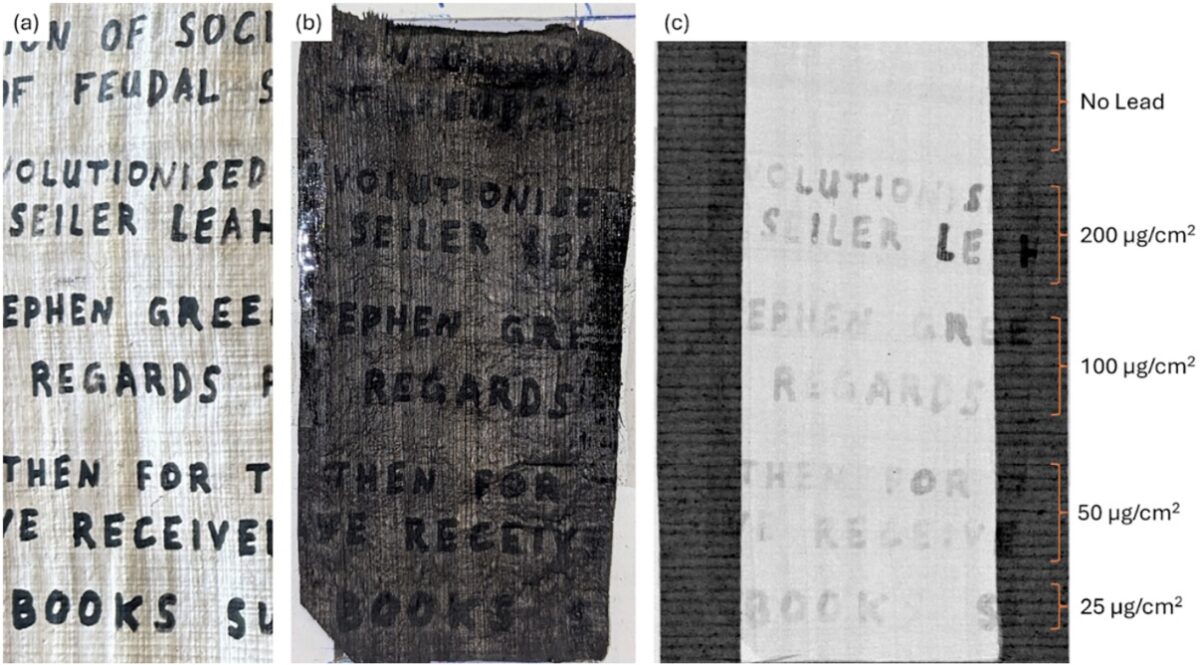
They used period-specific techniques and materials, including Egyptian papyrus, lampblack Japanese ink, a lead-spiked ink, and a reed stylus to inscribe quotes from Star Wars, The Outer Limits, and the Bible on substantial swathes of scroll.
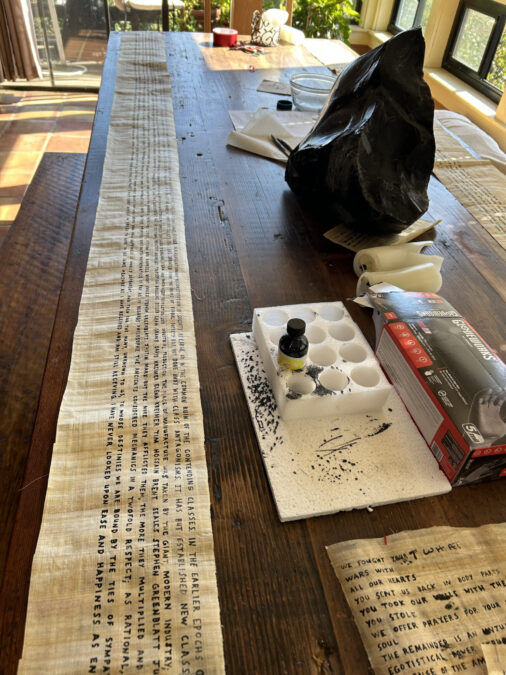
Then Seiler burned them in his household lab to mimic the real scrolls' properties (fabricating millennia-old scrolls in your personal burn-lab is quite the flex, incidentally).
"The value in this project is practically unquantifiable," says Leah Packard-Grams, an archaeologist and papyrologist at UC Berkeley.
"The stakes are the largest in the history of Greek literature."
Next, the researchers rotated the scrolls under a bombardment of X-rays – imagine a rotisserie chicken getting scanned for a sprained ankle – using NIST's neutron and X-ray tomography (NeXT) system in Gaithersburg, Maryland.
Via 3D tomography, these 'slices' of X-ray images were turned into a three-dimensional representation.
"If you look at the images, the letters light up like a Christmas tree," Seiler says.
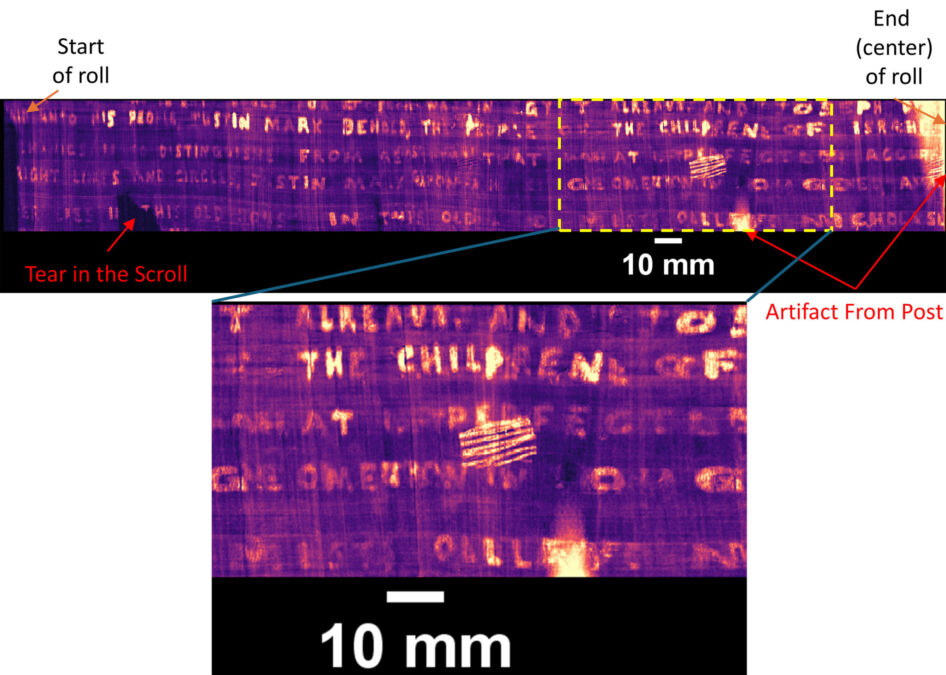
A custom algorithm initially designed to virtually unroll scans of lithium-ion batteries – developed by Michael Cyrus Daugherty, a physicist at NIST and study co-author – proved as adept at virtually unrolling the model scrolls.
"He just had to tweak his code to follow the uneven and changing thickness along the length of the scroll," explains Jacob LaManna, the NIST physicist who inspired Daugherty to aim his algorithm at the scrolls.
And, voila, the researchers revealed their writings.
Importantly, they also found that they could use a commercially available handheld X-ray fluorescence (XRF) device, which resembles the gummy-bear-barcode-zapping gun at the self-scan checkout, to detect the lead content in scrolls and select them for future study.
This is promising, because the Herculaneum scrolls include epic battle poems, the Histories of Seneca the Elder, Stoic texts, as well as philosophical treatises by such literary luminaries as the leisurely living Epicureans, including Epicurus himself.
And who knows what else.
Unrolled scrolls can typically reach 10 meters (33 feet) in length.
Unlike modern newspapers, they encompass more than an agglomeration of Hyundai sales and Marmaduke, as enlightening as the antics of "America's favorite Great Dane" may be.
Importantly, not all ancient writings feature lead in their letters, but at least a few of them do.
A previous study found that some of the real Herculaneum scrolls contain lead, though its origin is unclear; perhaps from a drying agent. Similar past research also detected lead in Egyptian letters from around this same Roman period.
"What I would like to see and what I'd like to do is a much more rigorous study into the ink concentrations or what's in the ink, not just lead," says LaManna.
"And see how far we could push this into making training data sets to actually make more robust algorithms for reading the real ones."
Accordingly, this paves a path for "blinded" training: make more model scrolls in various styles, inks, and languages, then carbonize them and see how well AI agents can recover their texts, lead-laden or not.
Since human creativity has never abided by bounds, we may be in for some whimsical writings, including love letters or Biblical affection spells of old, loads of philosophy, and maybe even ancient sci-fi about space travel and alien battles from cultures that our current mindsets can't comprehend.
The research has been published in PLOS One.
This article was fact-checked by Rachel Garner and edited by Rebecca Dyer. While we pride ourselves on our process, we are only human. If you spot a mistake, please let us know.