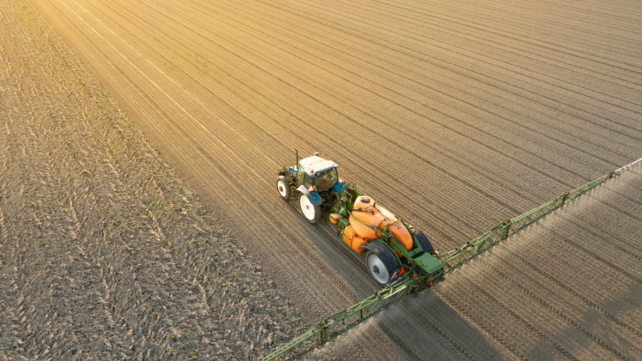
Every year, millions of dry metric tons of biosolids – the nutrient-rich stuff left over from municipal sewage treatment, aka sludge – are applied to US soils.
It's a marvel of nutrient recycling, and a great way to source fertilizer, for sure. For many years, these biosolids have been marketed to farmers as a natural alternative to petrochemical fertilizers.
But it's also making a really, really big mess, because much of that sludge is contaminated with PFAS.
Luckily, scientists are working on it.
"This issue – the contamination of agricultural land with PFAS – disproportionately hurts small farmers and organic farmers, who used fertilizers with PFAS before the full extent of the problem was known," explains environmental scientist Jake Thompson of Yale University.
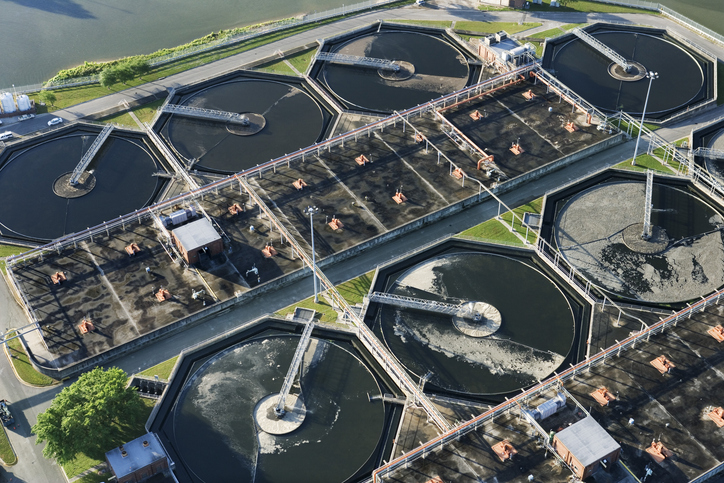
He and his colleagues have just proposed a detailed remediation method, published in the journal PNAS, that promises to reduce PFAS loads at a fraction of the cost of existing methods.
A National Sewage Sludge Survey conducted in 2001 by the US Environmental Protection Agency (EPA) estimated that 2,749 to 3,450 kilograms of PFAS (widely known as 'forever chemicals') are present in the annual total of biosolids produced in the United States, about half of which is applied to agricultural soils.
But, as the name suggests, forever chemicals don't readily break down: The carbon-fluorine chain at the core of these molecules is so strong that PFAS are expected to persist for thousands of years.
When applied to soil, PFAS just sits there, building up over the years as more biosolids are applied and spilling into waterways that pass through. Or, it might be absorbed by the plants growing in the soil, where it can go on to re-circulate through the food chain.
That's concerning, because mounting evidence suggests exposure to PFAS can be harmful to living things.
Lab and animal studies have suggested a possible role of PFAS in cancer, and problems with pregnancy and reproduction.
Studies in human populations have revealed links between PFAS and the occurrence of certain cancers, cardiovascular risk, multiple sclerosis, as well as fertility issues.
Many of these studies are preliminary, meaning the links are still being investigated.
But on the whole, it's looking like PFAS is not something we'd want accumulating in the soils where we grow our food.
"Though this study is US-focused, based on the available data, PFAS are a challenge globally," Thompson says.
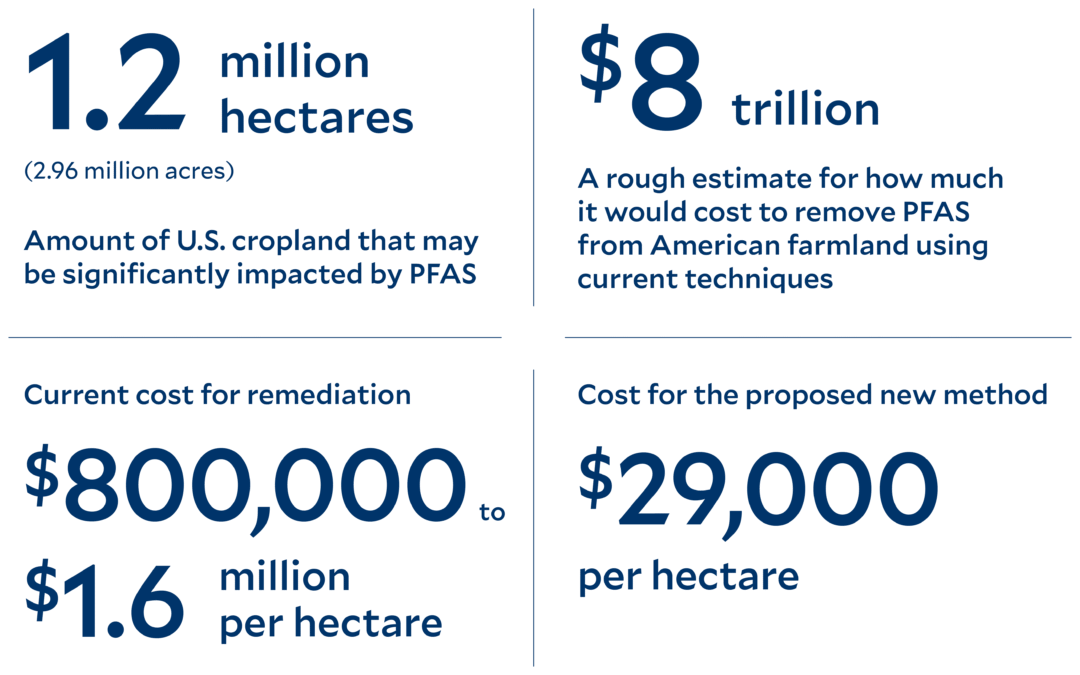
Cleaning up this mess will be no easy task: The cost of removing PFAS from American farmland using current techniques is around $800,000 to $1.6 million per hectare – which comes to an estimated total of $8 trillion US.
The proposed new method, by contrast, is about $29,000 per hectare if the process is repeated for up to 20 years to ensure remediation.
According to the researchers, it also improves soil health, while existing methods, which involve excavating and 'burning' soil, strip away topsoil and release large quantities of carbon dioxide.
So how does the new method work?
The first step is applying crushed alkaline rock to the contaminated fields. In their models, Thompson and team used basalt, but limestone could be another option.
"The application of alkaline rock amendments to soil (or enhanced weathering) elevates soil pH to a target pH of 7, leading to an increase in mobility and bioavailability of key PFAS such as perfluorooctane sulfonate (PFOS) and perfluorooctanoic acid (PFOA)," the authors explain in their published paper.
Plants, such as hemp and perennial grasses, that are known for their ability to rapidly accumulate PFOS are grown in the contaminated soil, then harvested and pyrolized (a kind of heat treatment sans oxygen), creating biochar.
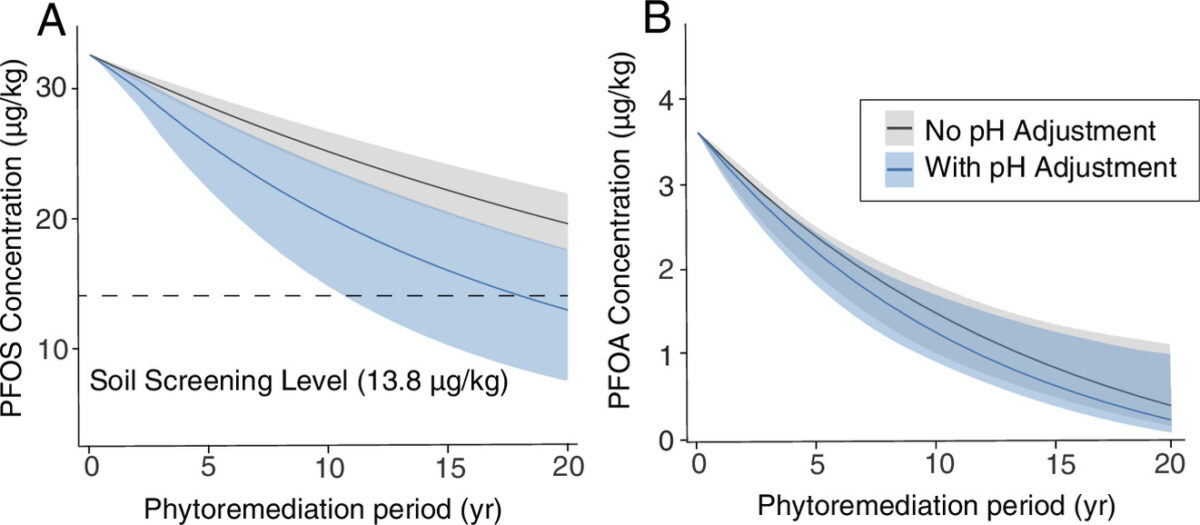
"Harvested biomass converted to biochar and reapplied to the field can also serve to immobilize residual PFAS, thereby reducing their transfer into forage crops," the team adds.
There are still many unknowns around the fate of PFAS during pyrolysis – a recent study shows that a temperature of at least 800 °C (1,472 °F) may be necessary for PFAS levels to be sufficiently lowered.

A major part of the economic equation here is the carbon balance.
The high temperatures required for pyrolysis and transportation of biochar products to other sites both contribute greenhouse gas emissions to the atmosphere, while the enhanced weathering process draws emissions down. As such, both components of the method are balanced against each other in Thompson and team's accounting.
But, provided their instructions are followed to the letter, the researchers estimate that national-scale adoption of their process in the United States could draw down 10.5 million metric tons of carbon dioxide from the atmosphere each year.
Related: Common Pesticide Exposure Linked With 2.7x Risk of Parkinson's Disease
"This is a real pathway to actually give farmers in this situation some agency over their land and leave the soil in better condition than it was before," Thompson says.
The research was published in PNAS.
This article was fact-checked by Clare Watson and edited by Peter Dockrill. While we pride ourselves on our process, we are only human. If you spot a mistake, please let us know.