Psilocybin, the psychedelic compound in 'magic mushrooms', is being looked at for treatments for depression and post-traumatic stress disorder (PTSD).
Ideally, though, researchers want to separate any potential brain benefits from the hallucinogenic trip that's usually included.
A new study published in Nature Neuroscience shows how that might be possible. The study authors, from the University of California, Santa Cruz, gave doses of psilocybin to groups of mice and were able to engineer boosts in brain connectivity without also causing trip-like sensations in the animals.
Through an analysis of the dendritic spines in the brains of the mice – the nerve cell connection points that enable communication – the team found that psilocybin could boost spine volumes and speed up spine development in less than 24 hours. In stressed mice (designed to mimic depression), the boost was even greater.
Crucially, by manipulating the brain cells receptive to psilocybin, the researchers were able to isolate the dendritic spine improvements from trip-like responses (assessed via the proxy of head twitches in the animals).
"I consider this work a major advance, particularly in our understanding of how psilocybin reshapes neural circuits and its potential implications for treating mental disorders," says molecular biologist Yi Zuo.
Past research has established that psilocybin can increase neuroplasticity in the brain, which in simple terms is the ability for brain cells to adapt and rewire themselves. That extra plasticity maps to extra dendritic spines.
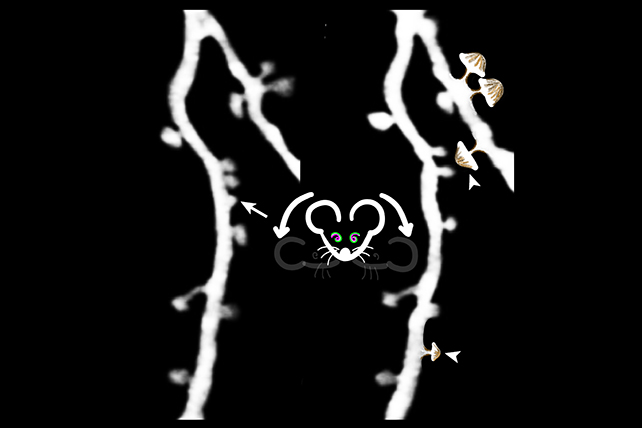
What really stands out from the research are the two different pathways – one for plasticity and one for hallucinations. They were identified by genetically reconfiguring the 'docking stations' on cells that psilocybin interacts with, to keep one reaction but not the other.
We're still at the early stages in terms of developing treatments – these experiments were only carried out in mice, not people, so the findings need to be translated over – but we're a little closer to drugs that can target one pathway and ignore the other.
"Psychedelics are fascinating compounds because they have the potential to profoundly transform who we are by reshaping the neural circuits in our brains," says neuroscientist Jacob Baker.
"These newly formed connections can integrate into existing neural circuitry and persist over time, leaving a lasting structural trace of psilocybin's effects on the brain."
In the mice that had been put under stress before receiving the doses of psilocybin, which is a rough approximation of depression in people, the compound had a different effect. New spine formation increased to a greater extent, and the loss of existing connections was stopped.
With the healthy, unstressed mice, psilocybin sped up both the production of new dendritic spines and the clearing away of old ones. Both approaches might be beneficial for different reasons, but the difference is notable.
"These findings challenge the prevailing view that psilocybin simply increases neural connectivity and suggest that its effects depend on the brain's underlying condition," says Zuo.
"This provides a new perspective on how psychedelics might help restore neural circuits disrupted by stress, with potentially important implications for understanding their therapeutic effects in depression and other psychiatric disorders."
Potential next steps include isolating the specific brain cells responsible for the hallucination responses, and charting spine production against changes in the mood of the animals, to better understand more precisely how all of this is affecting the brain.
Before now, it wasn't clear if the neuroplasticity benefits of psilocybin relied on the psychedelic aspects of the compound. This research strongly suggests that they don't, and that's vital knowledge to have for future studies into therapeutics.
"Such therapeutics could deliver the fast and lasting antidepressant benefits of psychedelics while eliminating hallucinogenic side effects – making neuroplasticity treatments safer, more scalable, and accessible to a broader patient population," says Zuo.
The research has been published in Nature Neuroscience.
This article was fact-checked by Fiona MacDonald and edited by Fiona MacDonald. While we pride ourselves on our process, we are only human. If you spot a mistake, please let us know.