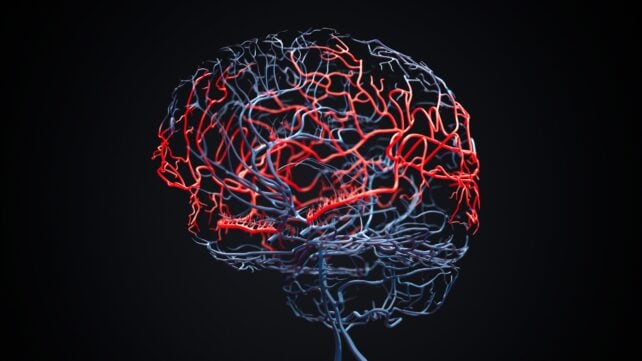
The blood-brain barrier is a powerful thing.
It maintains a strict 'guest list' of who's allowed in and who is banned from entering our most delicate organ.
But a new study, published in the journal Cell today, suggests the blood-brain barrier may be doing far more for our brains than we realized.
The results could one day help scientists find new ways to treat Alzheimer's disease.
"For a century, we've treated the blood-brain barrier as a simple physical boundary protecting the brain from toxins," says the study's senior author, bioengineer Andrew Yang, of the Gladstone Institute in San Francisco.
"We're finding that it's an intelligent interface that plucks the right proteins in the blood, often from distant parts of the body, and delivers them to the right cell types in the brain. Brain health depends on this sophisticated molecular supply line from the body."
The paper includes an atlas of the 92 different proteins that were transported across the BBB in the brains of mice, out of a total of 861 proteins tracked by the researchers.
Once certain proteins entered the brain, they were sent to specific types of brain cells, where they appear to be involved in some pretty important processes.
"We think of blood proteins as messengers carrying signals from distant body parts, and the cells of the blood-brain barrier import only the ones the brain really needs," says Haoyue Zhou, a neuroscientist in Yang's lab at Gladstone.
"But that's just the beginning of the story."
The blood-brain barrier is a known casualty of Alzheimer's disease, physically breaking down as symptoms progress.
Could the BBB's little-understood role in delivering proteins to brain cells have something to do with Alzheimer's?
Yang and team suspect it might.
A protein that originates in the liver, APOA1, was directed towards astrocytes, star-shaped cells that perform multiple important functions in the brain. The arrival of APOA1 to the astrocytes activates a pathway involved in maintaining healthy neural connections.
Earlier research suggests that Alzheimer's disease risk goes up when that pathway fails.
Another protein from the liver, Alpha-1 antitrypsin, travels to the microglia, which are the brain's primary immune cells. In healthy mice, the microglia that took up more of this protein tended to express more genes that are associated with neurodegeneration.
"Before the barrier starts leaking harmful proteins into the brain, it stops letting the beneficial ones through," Zhou says.
"The brain's supply line from the body starts to fail."
They looked at how the proteins facilitated by the blood-brain barrier differed in mice that had been genetically modified to model Alzheimer's-like symptoms (especially amyloid plaques), compared to healthy mice.
In the Alzheimer's model mice, APOA1 levels in the brain were reduced; Alpha-1 antitrypsin uptake increased.
Some mice were then given a liver-targeted gene therapy to increase the amount of APOA1 their livers produced.
This modification meant APOA1 levels in the brain improved. And despite their genetic fate, the mice showed fewer signs of Alzheimer's disease.
"Alzheimer's disease may not start entirely inside the brain; It may start when the brain's supply line from the body is severed," Yang says.
"If that's right, we may be able to fight this disease from outside the brain, by restoring what the brain has lost."
It's important to remember that since this research was conducted in mice, the same may not necessarily go for humans.
We share a lot of evolutionary history with mice, so there are plenty of similarities in how our bodies work. But there are also many crucial differences.
"Generalizability to other neurological disorders and to humans remains to be established, and species differences in BBB receptor expression, plasma composition, and barrier properties may further limit extrapolation," the researchers note.
Plus, the mouse Alzheimer's model is just that – a model. Many results based on these models have not translated well to human patients.
And because the model inherently relies on genetic drivers of the plaques associated with Alzheimer's, it could be missing other factors involved in the disease's development.
Far more research is needed before we will know for sure whether these findings could actually translate into human treatments for Alzheimer's and other brain-related diseases, but Yang is optimistic.
"We now have a map of the proteins the brain needs from the body and the transport system that delivers them," he says.
"We are excited to translate this blueprint into new therapies for Alzheimer's that work from the outside-in, and into next-generation blood-brain barrier shuttles to deliver powerful medicines into the brain."
The research has been published in Cell.
This article was fact-checked by Fiona MacDonald and edited by Fiona MacDonald. While we pride ourselves on our process, we are only human. If you spot a mistake, please let us know.