
The warning signs of Parkinson's appear to be all around us.
Scientists have found clues to the disease's emergence in people's hair, in their blood, and in their earwax too.
The way you talk, your mental health, and even where you live have all shown varying links to the condition, which affects movement and muscle control.
But despite the potential of these signals, Parkinson's disease – considered the fastest-growing neurological disorder worldwide in terms of disability and death – still relies heavily on clinical assessments for formal diagnosis. The lack of easily accessible, definitive biomarkers also makes early diagnosis complicated.
However, a test concept described in Discover Computing could reveal a new path forward.
In a study, a team of researchers in India developed an AI-based system capable of detecting Parkinson's disease with striking accuracy, based on how people completed a simple drawing test.
Handwriting and drawing analysis is viewed as a promising non-invasive screening tool for future disease, and scientists are increasingly pairing it with AI tools that can detect signs of neurodegenerative conditions based on subtle clues in your penmanship.
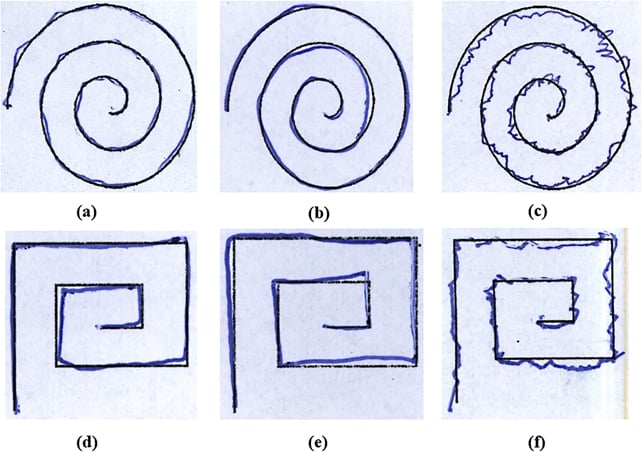
In an experiment led by first author and computer scientist Ishan Ayus from Siksha 'O' Anusandhan University, researchers used data from a previous Parkinson's study in Brazil involving 66 participants.
In that dataset, comprising 31 individuals with Parkinson's and 35 healthy controls, participants performed drawing exercises using a biometric smart pen that captured the images they drew while simultaneously recording signals of their hand movement.
In the tests, the participants traced two kinds of symbols: spiral shapes and meanders (made of angular-shaped continuous lines).
Ayus and fellow researchers then fed the images and the sensor data recorded by the smart pen into a series of different deep-learning systems.
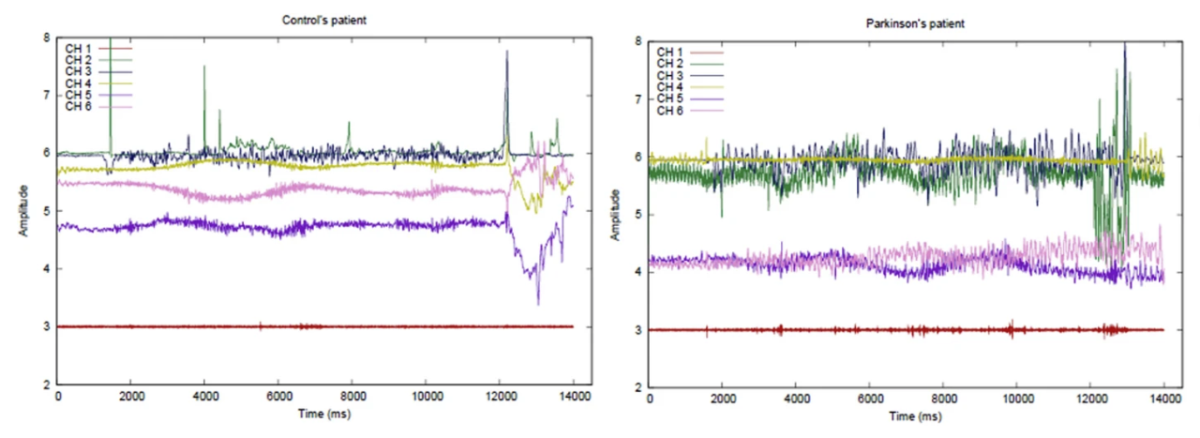
Each model evaluated spatial irregularities in the drawn spiral and meander patterns, in addition to analyzing subtle differences in motor control and hand coordination as recorded by the pen.
The data was then processed using an algorithm called SNAKE, which considered and weighted the various AI model evaluations, before ultimately determining whether each drawing was produced by a person with Parkinson's or a healthy control.
According to the researchers, their multi-modal setup outperforms several other AI systems that have previously been used to detect Parkinson's from handwriting and drawing tests, correctly identifying meander patterns with 98.95 percent accuracy and spiral patterns with 97.74 percent accuracy.

The team attributes their results to the capabilities of the SNAKE algorithm – which balances the predictions of different deep-learning systems using an accuracy-weighted model – and also the dual measurement readings provided by smart pens.
"Handwritten images provide spatial characteristics of stroke irregularities, tremor-induced distortions and shape deviations," the researchers write.
"In contrast, sensor-based handwriting signals capture temporal motor behavior which includes velocity fluctuations, pressure inconsistencies, and coordination deficits."
The researchers acknowledge that the small dataset they used, only 66 people, doesn't accurately mirror the clinical diversity of Parkinson's disease in large populations, and say their findings should be taken as a sign of their framework's potential, rather than as hard proof of its diagnostic effectiveness.
Related: A Signal of Cognitive Decline May Be Hidden in The Way You Write
Nonetheless, it sets a promising new threshold for Parkinson's detection using these kinds of methods, and subject to validation in larger clinical tests, the team thinks their process could play a much-needed role in enabling easier diagnosis of the disease.
"Overall, the study shows the growing role of AI in early and accessible screening of neurological disorders, supporting the ongoing transition toward preventive and precision healthcare," the team writes.
"The proposed framework may ultimately contribute to non-invasive, low-cost, and remotely accessible neurological screening and clinical decision support."
The findings are reported in Discover Computing.
This article was fact-checked by Clare Watson and edited by Clare Watson. While we pride ourselves on our process, we are only human. If you spot a mistake, please let us know.