This Week in Science: Enriching bread with spinach, a GPS glitch, a new Parkinson's test, and more!
First up: Sneaking spinach into bread could be a good way to get more veggies in your diet, providing useful benefits for your insulin response too.
Also this week:
- A 'fox head' turns out to be from an extinct species
- Metformin seems to be a 'wonder drug' for slowing aging
- A 10-sided structure appears on Saturn
- How a solar storm caused a major GPS glitch
- A new drawing test could diagnose Parkinson's earlier
Read on below, and make sure you also check out our TWIS video!
Researchers Put Spinach Directly Into Bread And Saw The Body's Insulin Response Change

Scientists have figured out how to secretly enrich white bread with spinach – and it could have an immediate and measurable impact on the body's insulin response.
In a recent crossover trial, funded by Monash University in Australia and published in Future Foods, researchers tested a novel bread recipe on 15 healthy adults.
After a night of fasting, participants were randomized to either consume white bread for breakfast or bread secretly enriched with spinach. The next week, they ate the other type of bread.
Compared to the white bread, the spinach-enhanced bread contained 28 percent more fiber, 58 percent more folate, 78 percent more calcium, 90 percent more iron, and two times as much potassium.
After breakfast, all participants showed relatively similar blood glucose patterns, regardless of which bread they ate.
But the insulin of those who unknowingly ate spinach did something intriguing.
Read the full story here.
Antique 'Fox Head' Bought at Auction Wasn't a Fox at All. It Was a Long-Extinct Species.
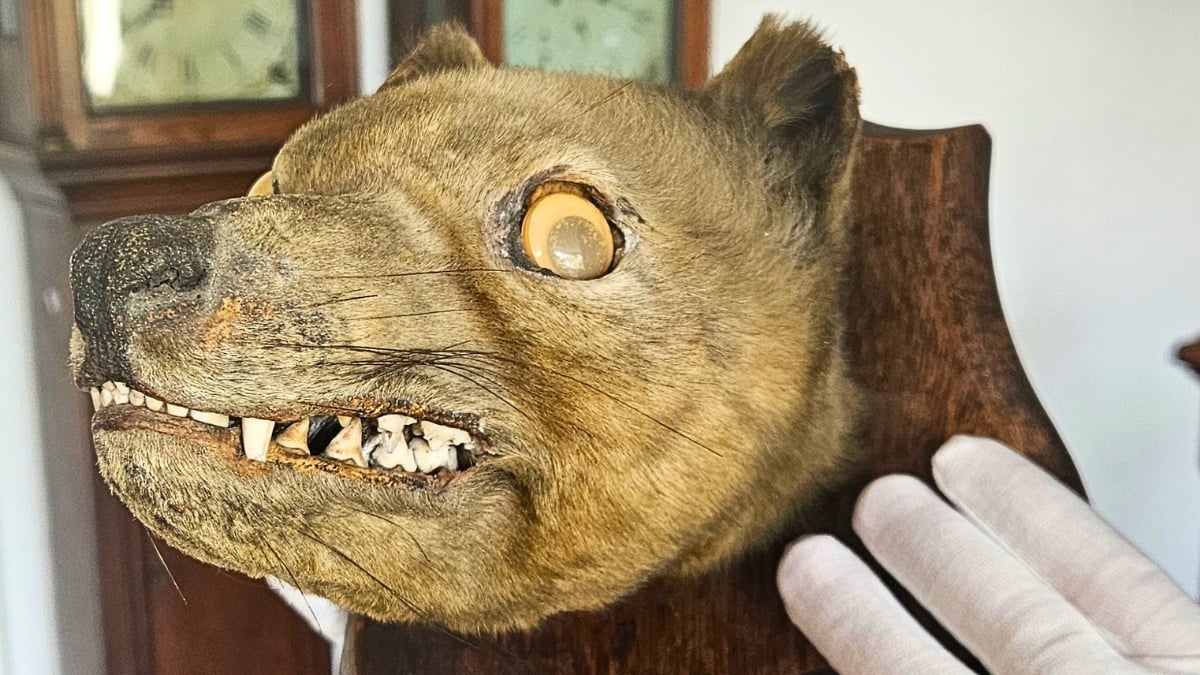
With its googly eyes, lumpy forehead, and awkward almost-smile, the strange, taxidermied fox head at the antique market was funny enough to throw down 50 quid on.
When the buyer later sold it at auction, they were stunned to see it go for 1,000 times more than they'd paid for it.
That's because this was no fox. This extremely rare specimen was instead the head of an extinct species.
"I collect weird and wonderful fox heads – good, bad, and the ugly – to show the differing qualities of taxidermy over the years and by different taxidermists," James Cranfield, a natural-history curiosities dealer in the UK, told ScienceAlert.
So when this "19th-century fox head" listing turned up among Cranfield's daily auction alerts, its goofy charm initially caught his eye – until he took a closer look.
"When I clicked on it and it opened up to a bigger picture, it was like a bolt of lightning to my brain and eyes that it wasn't a fox," said Cranfield.
"I immediately thought, 'that looks like a thylacine'."
Read the full story here.
This 70-Year-Old Diabetes Pill Might Also Slow Down Aging

A common drug that's been used to treat patients since the 1950s may hold transformative potential for human health, researchers say.
In a new review, scientists go as far as calling it a potential "wonder drug" but say more research is needed to understand how it can benefit modern medicine – especially with regard to its promise for slowing down biological aging.

The drug in question is called metformin, which is a first-line medication for type–2 diabetes and one of the World Health Organization's Essential Medicines.
In a paper published in Aging, scientists review what we know about metformin, and explore how it might achieve its anti-aging and longevity-boosting results.
Read the full story here.
Astronomers Detect a 10-Sided Structure in Saturn's Atmosphere
Saturn, apparently, has been hiding its talents.
For decades, humanity has puzzled over the gas giant's enormous hexagon swirling around its north pole – a six-sided atmospheric structure unlike anything else known in the Solar System.
Now, it seems, that bizarre feature is not an isolated incident – and Saturn may have a propensity for polygons, rather than a passing whim.
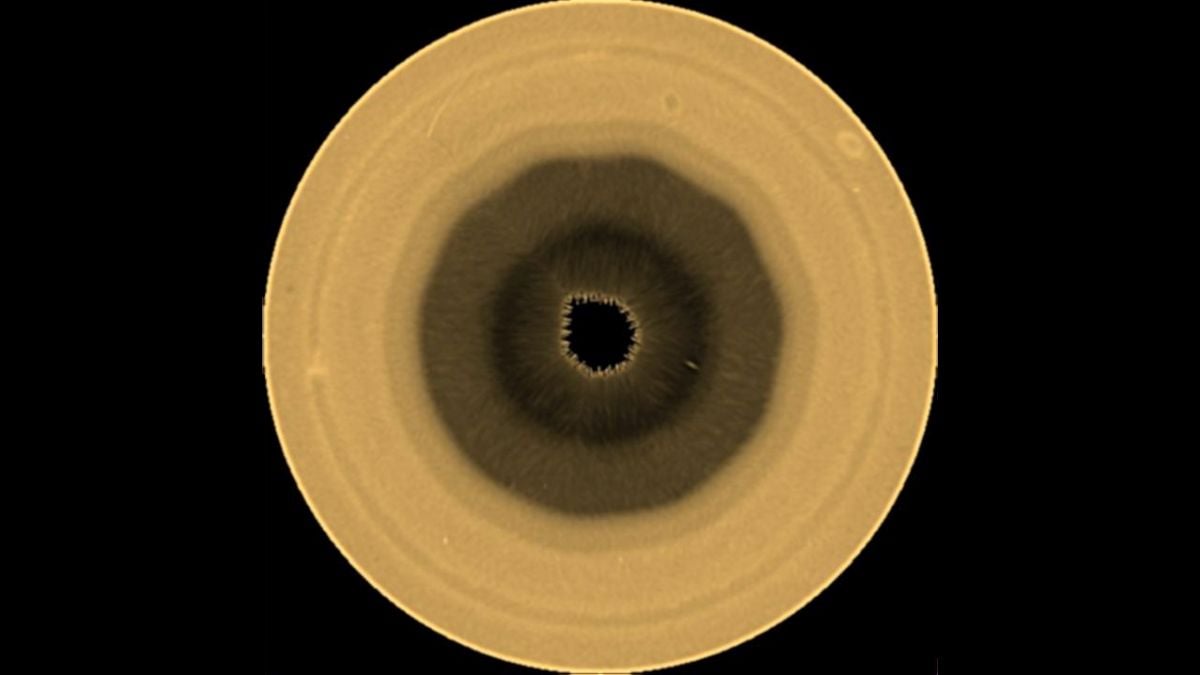
Lurking around the planet's south pole, astronomers led by Agustín Sánchez-Lavega of the University of the Basque Country in Spain have spotted another giant polygon – and this one has ten sides.
Read the full story here.
GPS Glitched Across The US by as Much as 33 Feet. Scientists Have Never Seen This Before.

In November 2025, Earth was buffeted by several massive eruptions of solar material that slammed into the magnetosphere.
That storm wrought havoc on the technology we rely on here on the ground.
And now, scientists led by space physicist Endawoke Yizengaw of The Aerospace Corporation in the US have discovered that the disruption was stranger – and more widespread – than anyone realized.
In a new analysis of data collected during the storm, the researchers found widespread, coast-to-coast disturbances in the atmosphere across the continental US – a phenomenon that has never been seen before on this scale.
Read the full story here.
The Way You Draw Can Reveal Parkinson's Disease With Up to 99% Accuracy, Study Reveals

Parkinson's disease still relies heavily on clinical assessments for formal diagnosis. The lack of easily accessible, definitive biomarkers also makes early diagnosis complicated.
However, a test concept described in Discover Computing could reveal a new path forward.
In a study, a team of researchers in India developed an AI-based system capable of detecting Parkinson's disease with striking accuracy, based on how people completed a simple drawing test.
Participants performed drawing exercises using a biometric smart pen that captured the images they drew while simultaneously recording signals of their hand movement.
Read the full story here.

Watch the video above for a recap of the top stories from this week!