The Atacama Desert in Chile is one of the driest places in the world, with almost all of its scant moisture provided by fog that rolls in from the Pacific.
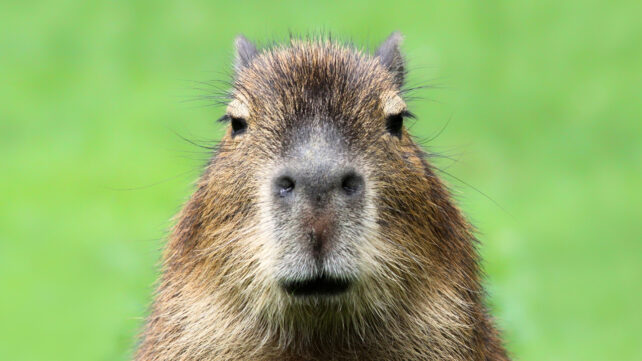
As such, it's the last place you'd expect to find capybaras: those giant, guinea pig-like, water-loving rodents the internet has come to hold so dear.
You might've seen capybaras kicking it in a yuzu-studded hot spring in Japan, but their true home is South America.
There, they lurk in wetlands around the Amazon basin, in every country on the continent – except Chile, where the Atacama is effectively 'walled off' by the Andes mountain chain.

The capybara lifestyle involves eating aquatic plants, grasses that grow on the banks of wetlands, and migrating along riparian corridors (ie., streams and rivers) in 'herds' of up to 20, a bit like tiny hippos.
Wherever they are in the world, capybaras are basically inseparable from water.
Which is why paleontologists were seriously surprised to find part of an 8.8-million-year-old capybara tooth in the Atacama Desert.
It's the oldest evidence of capybaras ever found in Chile, and one of the oldest capybara fossils ever found.
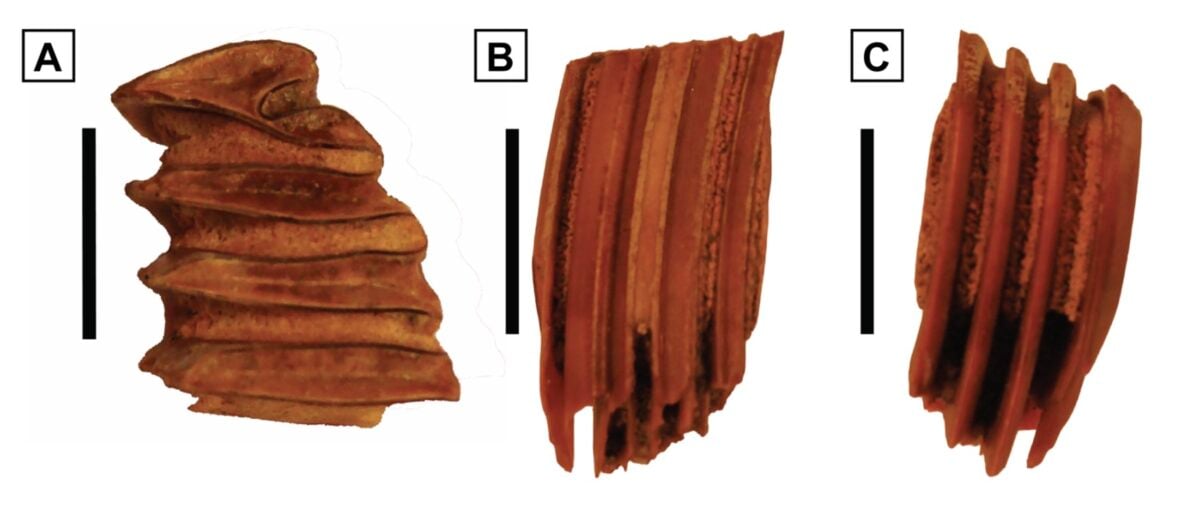
The tooth – part of a third upper molar – came from an extinct genus of capybaras known as Cardiatherium, prehistoric relatives of the modern capybaras we know and love today (Hydrochoerus hydrochaeris).
It was found in the Neogene Bahía Inglesa Formation of the Atacama Desert, embedded in sandstone.
"Finding a capybara tooth in a marine deposit in what today is one of the driest regions on Earth is just freakish," says Priscilla Martinez, the study's lead author and geoscientist at the University of Arizona.
Contrary to assumptions that the Atacama has been a desert for 40 million years, the fossil capybara tooth adds to a growing picture of the Atacama as a flourishing wet ecosystem during the late Miocene.
"We have multiple lines of evidence indicative of really wet conditions that are typically associated with capybara today," says paleobiologist Mark Clementz of the University of Wyoming.
"The same deposits contain fossils of freshwater fishes and gavials (freshwater crocodiles)."
The team also found tiny bits of silica in the deposit called phytoliths: telltale signs that plants were here, soaking up groundwater.
The particular kinds of phytoliths found alongside the capybara tooth suggest the presence of palms, gingers, and other flowering plants. That kind of vegetation is pretty good evidence that the southern Atacama once hosted persistent freshwater.
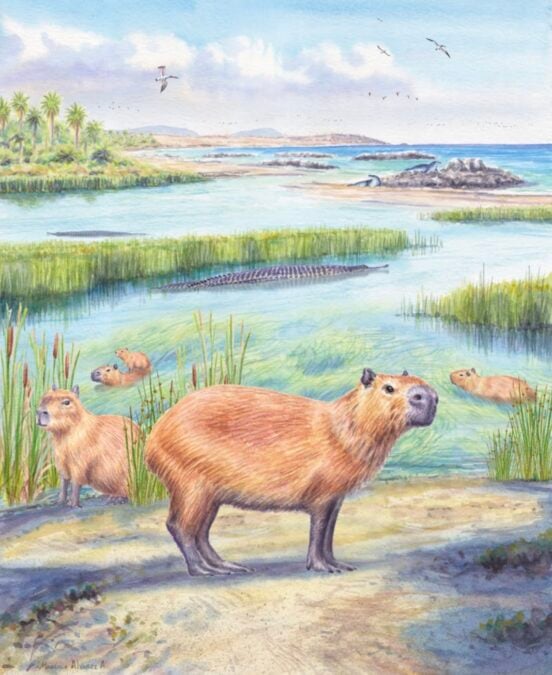
"All this supports the idea that there was enough of an ecological community to support capybara populations long term," Clementz adds.
"Finding this capybara – which I think everyone can agree is not a desert animal by any means – at that location is going to challenge many of the ideas about the Atacama's history."
It appears the Atacama Desert has undergone some serious changes over the past 8.8 million years.
Evidence for late Miocene capybaras has previously been found on the other side of South America, on the coast of Argentina. In the Miocene, the Andes mountain chain would have posed an even greater barrier between South America's east and west coasts, so how capybaras ended up on each side is a bit of a mystery.
"Not only are the plateau lands of the Central Andes very tall, they're also extremely arid," says Martinez.
"So, if capybaras originated east of the Andes in this foreland region, how in the world could these short-legged rodents make it across?"
The team thinks it's less likely they actually crossed the Andes, instead proposing that there might have been a path of wetlands traversing the continent north of the Andes, allowing capybaras to disperse either side of the mountain chain.
But those that headed east might've made the right call in terms of long-term survival, since the Atacama Desert is now an inhospitable place for a riparian rodent.
"The more we understand deserts, which are extremely sensitive to changes in climate, including shifts in monsoon intensity from year to year, the better we can predict how they fare long term," Martinez says.
"And if we can understand past climate changes that had nothing to do with humans, it gives us a baseline to work off of to understand how climate can evolve over time with humans in the mix."
The research was published in Scientific Reports.
This article was fact-checked by Rachel Garner and edited by Peter Dockrill. While we pride ourselves on our process, we are only human. If you spot a mistake, please let us know.