Diet and health are closely related, but the details can be fuzzy, with so many variables at play.
The more clarity scientists can get, the more control we can take over our health through what we eat and drink.
Now a new study from an international team of researchers has produced some intriguing findings in this area.
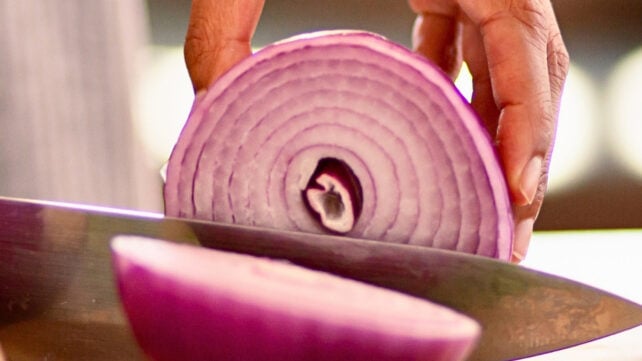
They relate specifically to onions.
The team found that liking the smell and the taste of onions was associated with lower odds of developing either type 2 diabetes or having high blood pressure.
And how they got there is an interesting journey through genetics – an approach that the researchers believe could be used to discover diet and health associations that are more reliable and more definitive.
"Our research shows taste and smell genes are promising tools for studying links between diet and disease and can help strengthen evidence about cause and effect in nutrition research," says genetic epidemiologist Daniel Hwang, from the University of Queensland in Australia.
"This is important as we need better ways to understand how diet influences diseases such as diabetes, heart disease, and cancer."
The team started with data pooled from more than 160,000 people aged between 37 and 73 in a UK health research database, covering both participants' genetics and food preferences.
The analysis identified hundreds of associations involving 96 food preferences.
These included genetic variants linked to liking garlic, grapefruit, onions, horseradish or wasabi, broad beans, and adding salt to food.
Having analyzed 325 taste and smell genes and 140 different foods, one link emerged as particularly interesting: between a preference for onions and a specific variant of the OR2T6 smell receptor gene.
This association was then confirmed through a smaller research database of younger individuals aged 25 – showing that the gene variant acts as a proxy for liking onions across age groups.
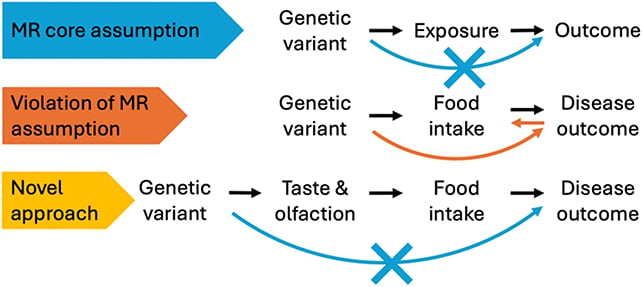
That's important because our genes are fixed from birth; they aren't affected by other lifestyle choices or environmental pressures that impact health.
For example, developing diabetes might cause someone to change their diet, but it cannot change the genes they inherited.
With that connection established, the researchers examined separate genetic datasets to link the OR2T6 gene variant to health outcomes.
That's where the reduced risk of both high blood pressure and type 2 diabetes comes in.
This process of using fixed gene variants as proxies for self-reported data such as food intake – which can be unreliable and shift over time – is known as Mendelian randomization.
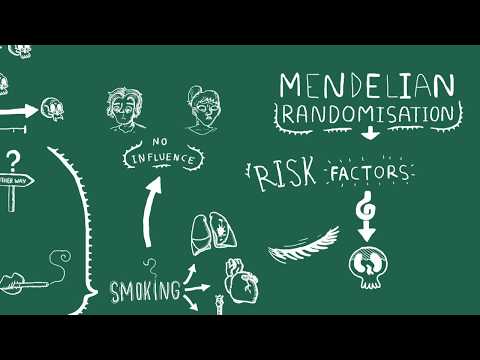
"Mendelian randomization nutrition research is expanding, with studies clarifying causal effects of coffee, alcohol, and milk intake," says Hwang.
It helps address the problem we mentioned at the start, where associations between diet and health can be fuzzy.
"Despite these advances, Mendelian randomization examinations of food and dietary patterns remain challenging due to difficulties in identifying valid genetic markers that reliably reflect what people eat," explains Hwang.
By focusing on the taste and smell genes, the researchers suggest a clearer line can be drawn between food preferences and genetics, as taste and smell contribute so directly to what we enjoy eating.

For now, the association between liking onions and these improved health outcomes stops short of direct cause and effect.
The researchers say the result must be replicated in larger and more diverse groups before any causal or clinical conclusions can be drawn.
But there's something worth investigating here – and it might have to do with the bioactive compounds in onions.
What the researchers are most interested in, however, is demonstrating that their taste-and-smell approach works.
While only one food emerged as a strong candidate in the analysis, that's an advantage in some ways: it suggests the analysis is robust enough to highlight only genuine connections.
It's estimated that unhealthy diets account for around 11 million early deaths every year, which is a high price to pay for too many sugary drinks or not enough fruit and vegetables. With more studies like this, we may be able to do something about it.
Related: A Taste For Cheese May Reveal Your Future Risk of Dementia
"Determining if a specific food causes, or is linked to, a disease is a significant challenge in nutrition epidemiology," says Hwang.
"We have built a framework guided by taste and smell genes to help scientists better understand how diet contributes to chronic disease."
The research has been published in BMC Medicine.