This week in science: A promising Alzheimer's breakthrough as an experimental drug completely reverses mental decline in mice with advanced disease; a historian may have cracked the mystery of an ancient tapestry; astronomers spot three galaxies in the process of colliding; and much more!
Promising New Drug Reverses Mental Decline in Mice With Advanced Alzheimer's
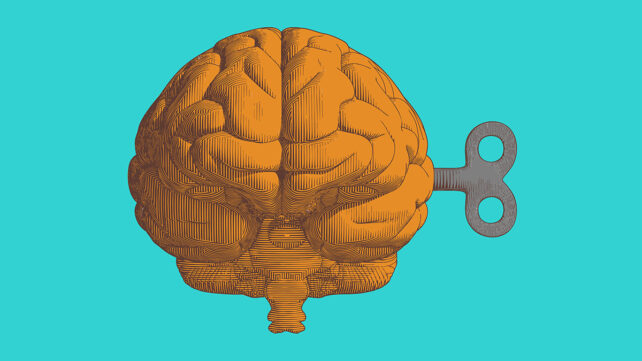
A drug candidate called P7C3-A20 has reversed the mental decline of Alzheimer's disease in promising tests on mouse models.
Brain cell damage was halted, inflammation was reduced, and the blood-brain barrier (the brain's protective shield) was also restored.
Read the full story here.
The True Purpose of The Bayeux Tapestry May Finally Be Revealed
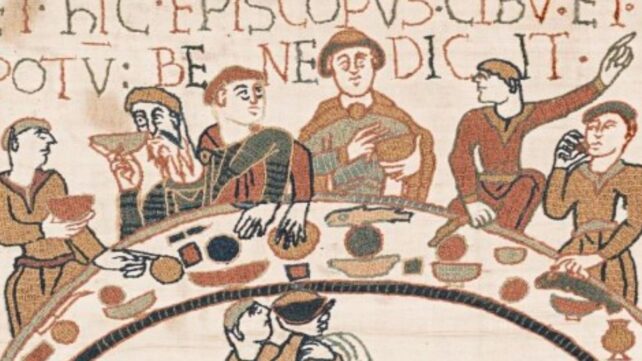
A historian has proposed the mysterious, ancient Bayeux Tapestry was made for mealtime reading for monks at St Augustine's Abbey, England.
"Just as today, in the Middle Ages mealtimes were always an important occasion for social gathering, collective reflection, hospitality, and entertainment, and the celebration of communal identities. In this context, the Bayeux Tapestry would have found a perfect setting," says historian Benjamin Pohl.
Read the full story here.
Three Supermassive Black Holes Discovered on Collision Course in a Cosmic First

Astronomers have spotted a trio of galaxies, all with active supermassive black holes at their centers, in the process of colliding.
"Triple active galaxies like this are incredibly rare, and catching one in the middle of a merger gives us a front-row seat to how massive galaxies and their black holes grow together," says astrophysicist Emma Schwartzman of the US Naval Research Laboratory.
Read the full story here.
South Asia's Dairy Intolerance Could Help Explain Our Ability to Drink Milk
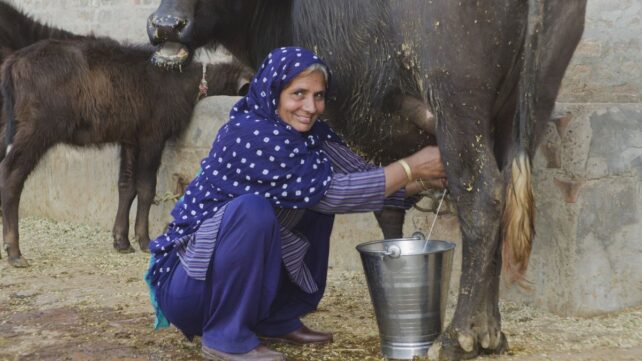
A genome-wide study of people in South Asia has traced the history of a gene variation that controls lactose tolerance through populations.

The explanation that best fits the data is that the gene was imported from the Eurasian Steppe and amplified by positive selection pressures. And its unusual strength in the Toda and Gujjar populations may have had something to do with their lifestyle. As buffalo herders, their diet depends heavily on fresh dairy, including fresh milk, butter, buttermilk, yogurt, and cheese.
Read the full story here.
A Twist Between Hidden Dimensions May Explain Mass

A brain-melting new theoretical paper has suggested that particles gain mass through the twisted geometry of seven-dimensional spacetime.
Confirmation could come from finding a new hypothetical particle called the Torstone, which may be detectable in particle collider anomalies, strange glitches in the cosmic microwave background, and even gravitational wave glitches.
Read the full story here.
'Mini-Brains' Reveal Hidden Signals of Schizophrenia And Bipolar Disorder
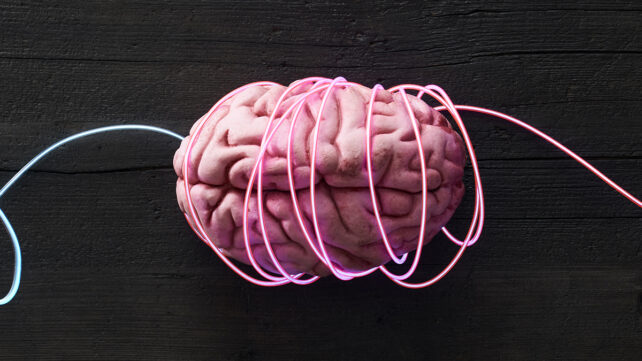
A study using lab-grown 'mini-brains' has revealed unique neural signatures associated with schizophrenia and bipolar disorder.
"Our hope is that in the future we can not only confirm a patient is schizophrenic or bipolar from brain organoids, but that we can also start testing drugs on the organoids to find out what drug concentrations might help them get to a healthy state," says biomedical engineer Annie Kathuria from Johns Hopkins University.
Read the full story here.