
High blood sugar spikes after meals could be a contributing factor to Alzheimer's risk, according to a new study that gives us more insight into the relationship between diabetes, insulin resistance, and dementia.
Previous studies have found that diabetes and dementia can be connected in some cases. But whether one is causing the other, and what biological mechanisms are involved, remain areas that scientists are still investigating.
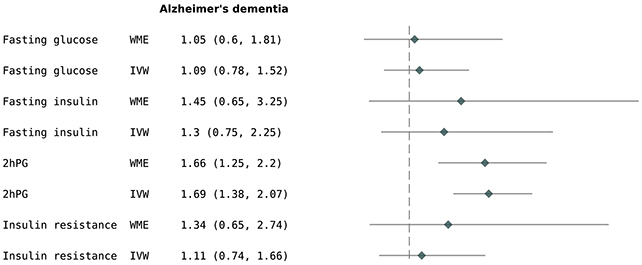
Here, researchers from the UK ran an analysis of a large genetic dataset covering 357,883 individuals, finding that people with a relatively higher level of blood sugar (glucose) in the two hours after eating were also 69 percent more likely to develop Alzheimer's disease.
Related: Garlic Could Be a Secret Weapon to Keep Down Your Glucose And Cholesterol
"This finding could help shape future prevention strategies, highlighting the importance of managing blood sugar not just overall, but specifically after meals," says epidemiologist Andrew Mason, from the University of Liverpool.
The researchers used a technique called Mendelian Randomization (MR) to analyze the data. Instead of actually taking measurements of post-meal blood sugar, they looked for people with genes known to be associated with sugar spikes after eating.
As this looks at the genetics that each person is born with, it takes out the influence of environmental factors and other health conditions, allowing cause-and-effect to be determined more confidently.
While there was a strong connection between post-meal blood sugar spikes and Alzheimer's, no link was found for standard glucose or insulin levels, or insulin resistance, for either Alzheimer's or dementia overall.
In addition, brain scans carried out on a subset of the participants showed no relationship between glucose or insulin traits and changes in brain or hippocampus size, or more white matter damage – the implication being that something more subtle is happening to connect sugar spikes with Alzheimer's.
"Previous observational and MR studies have suggested that 2-hour post-load glucose is a glycaemic trait that strongly predicts poorer cardiovascular outcomes," write the researchers in their published paper.
"Our findings suggest that the genetic predisposition for this marker of postprandial glucose is also associated with an increased risk for Alzheimer's disease."
It's still not clear why a post-meal burst in sugar raises the risk of dementia, but we know that the brain relies on glucose, just like the rest of the body. It's possible that some kind of inflammation or stress is being caused in brain cells after meals, and further down the line, targeting it could lead to dementia treatments or prevention.

However, there's a notable caveat to the research: the team was unable to replicate the findings in an older genetic dataset of 111,326 people – perhaps because of differences in how the participants were selected, the researchers suggest.
The original UK Biobank dataset used tends to skew towards healthier participants and individuals of a higher socioeconomic status, and exclusively draws on people of White British ancestry, so more work is required to test this idea in more diverse groups of people.
"We first need to replicate these results in other populations and ancestries to confirm the link and better understand the underlying biology," says genetic epidemiologist Vicky Garfield, from the University of Liverpool.
"If validated, the study could pave the way for new approaches to reduce dementia risk in people with diabetes."
The research has been published in Diabetes, Obesity and Metabolism.