This week in science: Mysterious molecules on Mars are tricky to explain without life; a compound that cuts cholesterol as a daily oral pill; an experimental new treatment for sleep apnea has a 93 percent success rate; and much more!
Memory Loss in Alzheimer's Linked to Problems With The Brain's 'Replay Mode'
Alzheimer's disease interferes with the brain's 'replay mode', contributing to memory loss, according to a new study in mice.
"What's striking is that replay events still occur – but they've lost their normal structure. It's not that the brain stops trying to consolidate memories; the process itself has gone wrong," says neuroscientist Caswell Barry.
Read the full story here.
Mars Organics Are Hard to Explain Without Life, NASA-Led Study Finds

A NASA-led analysis of organic molecules found on Mars has concluded that they can't yet be explained by known, non-biological processes.
They considered the non-biological deposition and formation mechanisms that could have put them there – processes that include transport from interplanetary dust, meteorites, atmospheric haze fallout, hydrothermal chemistry, and reactions such as serpentinization.
Even when combined, these processes were unable to approach the inferred original abundance of the molecules.
Read the full story here.
'Remnant' Cholesterol Cut by More Than 60 Percent in New Drug Trial
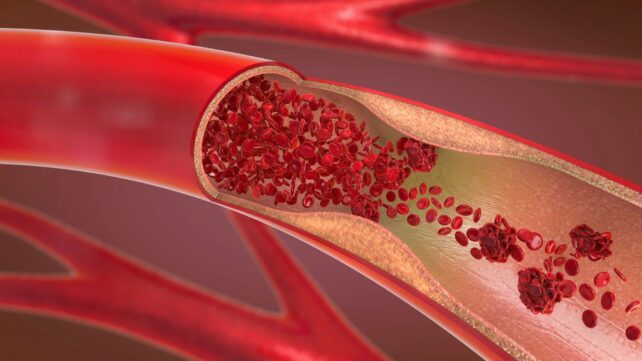
A compound called TLC-2716 has been found to reduce remnant blood cholesterol by up to 61 percent in a short clinical trial.
"All doses of TLC-2716 were safe and well tolerated", the researchers report.

The drug produced "substantial improvements in plasma lipid metabolism", and taking it orally may also be an advantage, the team adds, citing "patient convenience, reduced cost, and the potential to combine with other lipid-lowering therapies."
Read the full story here.
Scientists Have Discovered a Protein That Reverses Brain Aging in The Lab
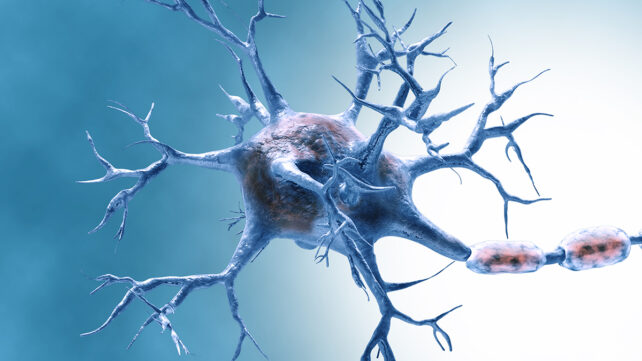
Increasing a protein called DMTF1 in the brain has been found to reverse brain aging in lab tests, by increasing neural stem cell numbers.
The team found that DMTF1 is more abundant in younger and healthier brains, and that adding more of the protein encouraged neural stem cells to grow and divide – potentially restoring the natural neuron production associated with a younger brain.
Read the full story here.
Something Far Darker Than a Black Hole Could Hide in The Heart of The Milky Way

Instead of a supermassive black hole, the Milky Way's core could be a big blob of fermionic dark matter, according to a new model.
"We are not just replacing the black hole with a dark object; we are proposing that the supermassive central object and the galaxy's dark matter halo are two manifestations of the same, continuous substance," explains astrophysicist Carlos Argüelles of the Institute of Astrophysics La Plata in Argentina.
Read the full story here.
93% Success Rate Shown in Experimental Sleep Apnea Procedure

An experimental new treatment for sleep apnea, involving a small implantable electrode, has shown a 93 percent success rate in human trials.
"It's a 90-minute procedure performed under ultrasound guidance with minimal discomfort," says otolaryngologist Simon Carney from Flinders University.
"Importantly, we were able to open airways in patients previously considered unsuitable for hypoglossal nerve stimulation [surgery]."
Read the full story here.