Researchers have made a significant step forward in understanding how gut bacteria, and specifically a newly discovered virus, can contribute to colorectal cancer – one of the most common forms of cancer in the developed world.
The researchers, from institutions in Denmark and Australia, wanted to take a closer look at an association previously identified between colorectal cancer and a bacterium called Bacteroides fragilis.
This bacterium often shows up in healthy people too, so the team wanted to see if there was a crucial difference in the bacterium in individuals who develop cancer – and that's exactly what they found.
"It has been a paradox that we repeatedly find the same bacterium in connection with colorectal cancer, while at the same time it is a completely normal part of the gut in healthy people," says microbiologist Flemming Damgaard, from Odense University Hospital in Denmark.
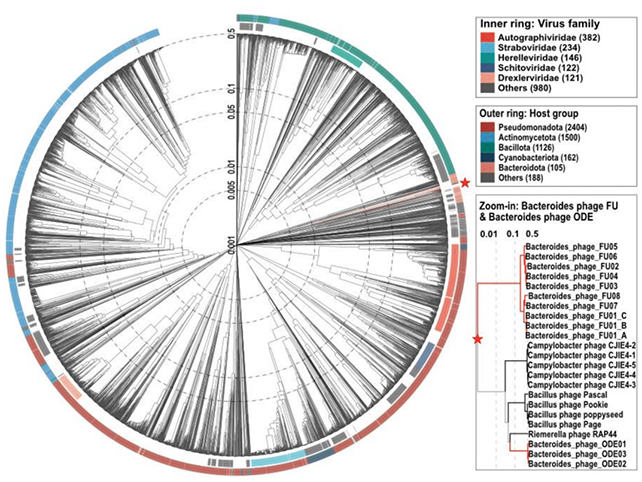
"We have discovered a virus that has not previously been described and which appears to be closely linked to the bacteria we find in patients with colorectal cancer."
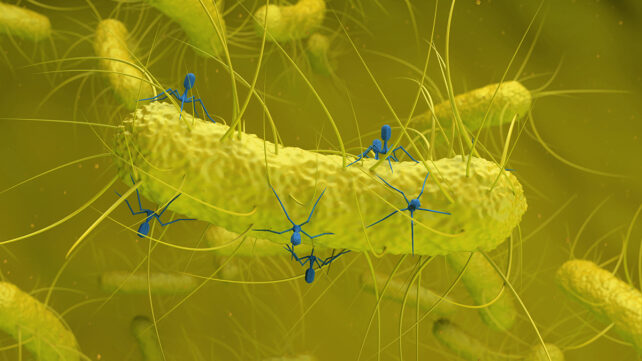
Using genetic sequencing, the researchers analyzed the gut bacteria of cancer patients in a large Danish population study. They found that in these patients, B. fragilis often came with a bacteriophage attached. Bacteriophages are viruses that live inside bacteria, hijacking these cells to duplicate and spread.
While the initial signal was discovered in a relatively small group of people, the findings were later verified in a larger cohort of 877 people with and without colorectal cancer – and point to a link that suggests viruses lurking in B. fragilis may tip the scales toward cancer.
People with colorectal cancer were twice as likely to have detectable levels of the bacteriophage in their gut bacteria, the data showed. What's more, it's not a virus that fits the description of anything recorded to date.

However, the researchers can't prove direct cause and effect yet. This is a notable association that will be useful for studying colorectal cancer and potential treatment targets, but there may be much more going on.
"It is not just the bacterium itself that seems interesting," says Damgaard. "It is the bacterium in interaction with the virus it carries."
"We do not yet know whether the virus is a contributing cause, or whether it is simply a sign that something else in the gut has changed."
Around 80 percent of colorectal cancer risk has been assigned to environmental factors, including gut bacteria composition. That means a better understanding of these factors and how they influence each other could impact millions of cancer cases.
Studying the mix of bacteria in the gut is no easy task, though. These incredibly complex microbiomes are both indicators of what else is going on in the body and influencers that can impact everything from sleep quality to weight loss.
Now there's an extra layer that future studies can examine: not just bacteria, but the viruses living inside them. One question the researchers are keen to look at next is exactly how B. fragilis might be affected by its bacteriophage lodgers.
Related: Scientists Link Gut Bacteria to Bipolar Depression in Mouse Study
This research is still very much in the early, experimental stage, but anything that helps experts understand how cancer gets started can also help in the development of targeted treatments – though that may take years.
The team behind this study suggests that their findings might also be used for colorectal cancer screening. With further research, stool sample scans could be developed to look for this B. fragilis virus, for example.
"The number and diversity of bacteria in the gut is enormous," says Damgaard. "Previously, it has been like looking for a needle in a haystack. Instead, we have investigated whether something inside the bacteria – namely viruses – might help explain the difference."
"In the short term, we can investigate whether the virus can be used to identify individuals at increased risk."
The research has been published in Communications Medicine.