
A new study has discovered dozens of potentially harmful chemicals in widely used hair extension products, raising serious concerns around their safety and regulation.
Researchers from the Silent Spring Institute and the Southwest Research Institute in the US purchased 43 popular hair products, taking note of their marketing claims (such as whether they were non-toxic) and marketing style (including those aimed at younger people).
Problematic chemicals were identified in all but two of the products, suggesting this is a bigger health issue than the few previous hair extension studies have shown.
The research team points out that this is a particular concern for Black women, who often wear hair extensions for reasons of convenience and culture. One study found that around 70 percent of Black women wore hair extensions regularly, compared to around 10 percent in other racial groups.
"While prior reports have found some chemicals of concern in hair extensions, there's still much we don't know about their overall chemical makeup," says analytical chemist and lead author Elissia Franklin, from the Silent Spring Institute. "We wanted to get a better picture of the extent of the problem."
"This is an industry that has long overlooked the health of Black women, who should not have to choose between cultural expression, convenience, and their health."
Hair extensions can be composed of a variety of natural and synthetic ingredients, and are often treated with chemicals, so that claims such as 'flame resistant', 'waterproof', or 'antimicrobial' can be made on the product packaging. However, there's currently little regulation regarding these materials.
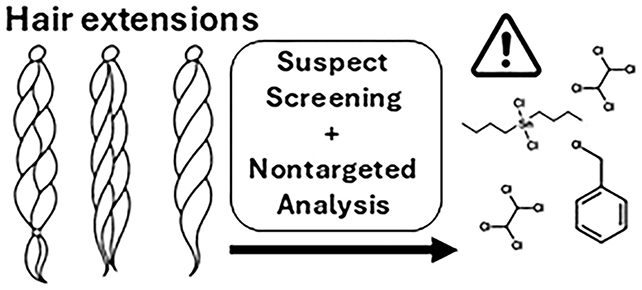
In this study, the researchers used a non-targeted approach to detect as many chemical signals as possible. More targeted scans, looking for particular substances on a list, don't always show the full picture.
Among the potentially dangerous chemicals identified in the study, there were 48 that currently appear on major hazard lists. Of those, 12 appear on California's Proposition 65 – a list identifying substances that are "known to cause cancer, birth defects or other reproductive harm" via exposure through water contamination.

A total of 17 chemicals related to breast cancer were found across 36 of the samples tested, some of which can alter hormones in ways that affect breast cancer risk. The team also identified four potentially harmful flame retardants in the samples, including in bio-based samples, suggesting these chemicals are often added later.
Also of concern was the discovery of potentially toxic compounds called organotins in almost 10 percent of the tested samples. These are another class of chemicals used in manufacturing, which have been shown to cause biological disruption in animal studies.
"We were especially surprised to find organotins," says Franklin. "These are commonly used as heat stabilizers in PVC and have been linked with skin irritation, which is a common complaint among hair extension users."
Considering how extensions are worn – for extended periods of time, and in close proximity to the skin and airways – the researchers are calling for more to be done in terms of regulation, manufacturer responsibility, and consumer warnings.
Hair extensions are often heated, which can vaporize and modify the chemicals, raising the risk of exposure.
However, we should note that this study didn't actually measure the health effects of these products on participants. Further research is needed to understand the levels of exposure we're dealing with and how unsafe those levels might be.
Related: Babies Are Exposed to 42 'Forever Chemicals' Before Birth, Study Finds
For most of the products, the researchers didn't quantify the levels of these chemicals, just that they were present – though when concentrations were measured, as with dibutyltin, the levels exceeded those recommended by standards agencies.
"These findings make clear that stronger oversight is urgently needed to protect consumers and push companies to invest in making safer products," says Franklin.
"Companies rarely disclose the chemicals used to achieve these properties, leaving consumers in the dark about the health risks from prolonged wear."
The research has been published in Environment & Health.