There's been a lot of buzz in recent years about bee cognition, but not all scientists are convinced.
Given how skilled these insects are at pattern perception, some suspected that experiments involving bees and numbers don't demonstrate facility with numbers at all, but an ability to differentiate between visual cues.
Now, new research has added a fresh ingredient to the mix: Accounting for how bees actually see the world, rather than relying on human assumptions.
And guess what? The bees still seem to be able to count.
"There has been a debate about whether bees are really 'counting' or just reacting to visual patterns. Our results show that this criticism doesn't hold when you consider the biology of the animal," says neuroscientist Mirko Zanon of the University of Trento in Italy.
"When we analyze the stimuli in a way that reflects how bees actually see the world, what remains is actual sensitivity to number."
Previous experiments seeking to assess bees' (Apis mellifera) numerical skills involved showing bees cards with patterns on them.
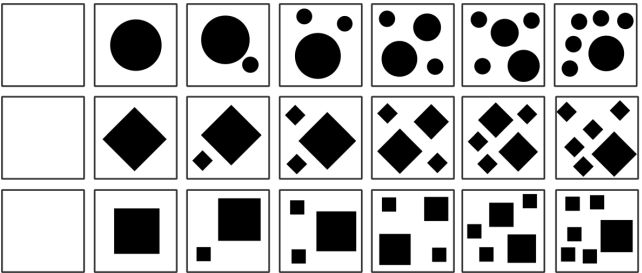
One landmark 2019 experiment involved associating invented symbols with numerical values that the bees were trained to recognize. Then, they were shown a card with a number of shapes on it and tasked with selecting the symbol that represented that number.
During the training phase, the bees achieved an accuracy of around 75–80 percent.
In the actual tests, performance was lower, reaching around 60 to 65 percent, but that score is still higher than can be attributed to chance, leading researchers to the conclusion that the bees were able to recognize numerical quantities.
However, according to a 2020 critique of the study, the bees may have just been pattern-matching rather than counting, and their vision may not be sharp enough to resolve the images presented to them.
That was a fair cop, the original researchers agreed – so they went back to reexamine their data.
"We must put the animal's perspective first when assessing their cognition, or we may under- or overestimate their abilities," says zoologist Scarlett Howard of Monash University in Australia.
"We see and experience the world quite differently from animals, so we must be careful of centering human perspectives and senses when studying animal intelligence."
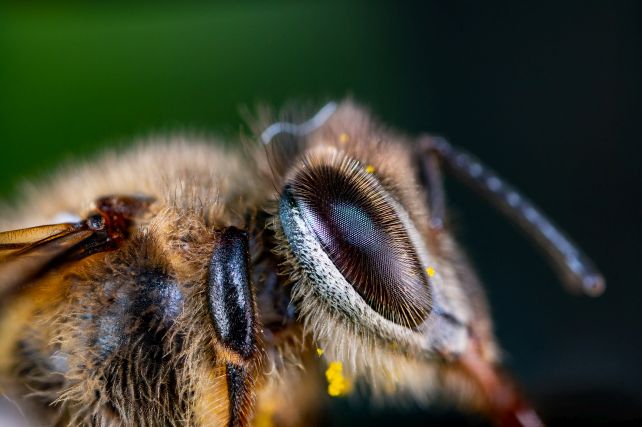
Prior studies in bee perception show that the distinction may be quite important. Bees can only resolve relatively coarse, low-detail patterns, but earlier analyses used cards with fine visual detail that may be beyond bees' visual resolution.
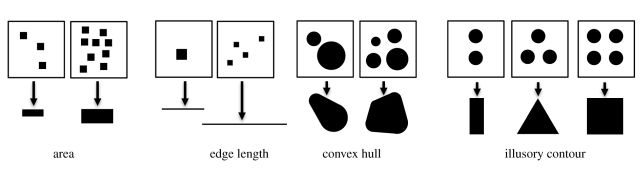
Instead, the bees may have used non-numerical visual cues to 'cheat' the test. So, the researchers reanalyzed the visual patterns used in previous experiments to reflect how bees actually perceive them, rather than how humans do.
They used a mathematical model based on previous estimates of the honeybee's spatial acuity and evaluated the stimuli anew. And here's where they found something interesting.
In earlier analyses, images with more objects also tended to look more visually complex, with more edges and more detail, so critics suggested bees might simply be choosing the "busier" image rather than counting.
But when the images are re-evaluated to match how bees actually see, that relationship becomes much less consistent. More objects don't necessarily mean more perceivable detail.

As a result, the idea that bees are relying purely on simple visual cues becomes harder to defend, because that supposed shortcut isn't clearly available to them anymore.
Related: This Tiny Fish Passed an Intelligence Test That Once Distinguished Great Apes
Instead, the results suggest the insects are responding to the number of shapes, not just the overall appearance of what they're looking at. This supports the earlier conclusion that bees are sensitive to numbers, rather than relying only on visual cues.
"It can be challenging to put ourselves in the mind of a bee to imagine how they see the world, but trying to see the world through an animal's eyes is an essential part of our work," Howard says.
"The bees always surprise us with how they move through the world, interpret our questions, and make decisions."
The research has been published in the Proceedings of the Royal Society B: Biological Sciences.