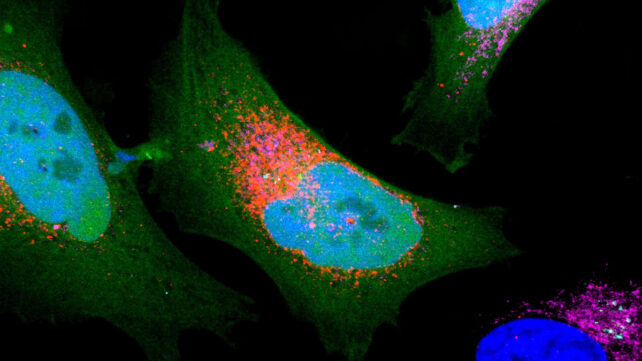
A new study has revealed a previously hidden layer of the human genome.
An international team has found evidence that over 1,700 'dark' proteins, fundamental building blocks of the body, are produced from parts of the genome not usually thought to have this kind of biological machinery.
These tiny protein-like molecules are not quite typical proteins. Many are so small or unusual that the researchers have given them a category of their own.
"Using new techniques, we have given a name to something we detected, saw had potential for further research, formally defined it, and made it accessible to other researchers,' says pediatric oncologist Sebastiaan van Heesch, from the Princess Máxima Center in the Netherlands.
For a long time, it was thought that only a fraction of our DNA contained genes that direct the production of proteins that perform jobs throughout the body. The vast majority of the genome was dismissed as 'junk' DNA with no real role.
In recent years, scientific understanding of this topic has advanced considerably. This previously ignored DNA landscape has been found to contain an extensive array of switches and controls acting on regular genes – sometimes called the 'dark genome'.
"We are entering a particularly exciting phase in biology," says geneticist Norbert Hübner, from the Max Delbrück Center in Germany.
This latest study adds evidence that the dark genome is not just acting as a modifier, but actually producing a 'dark proteome' too – proteins, but not by the conventional definition.
"We know that the current overview of recognized proteins doesn't capture the full picture," says van Heesch.
"With this study, we show that thousands of overlooked genetic sequences contribute to the dark proteome by producing a new class of protein-like molecules, microproteins, that had been missed before now."
The discovery took considerable work.
The researchers started with a candidate list of 7,264 DNA regions known as non-canonical open reading frames (ncORFs).
These regions had been identified in a previous study as potentially being connected to protein building, but it was unclear how many actually produced detectable molecules.
Through an in-depth analysis of 3.7 billion data points gathered from 95,520 separate experiments, which reportedly took around 20,000 hours of computing time to assess, the researchers identified 1,785 microproteins.
"It was very special when we realized: this really is something new!" says van Heesch.
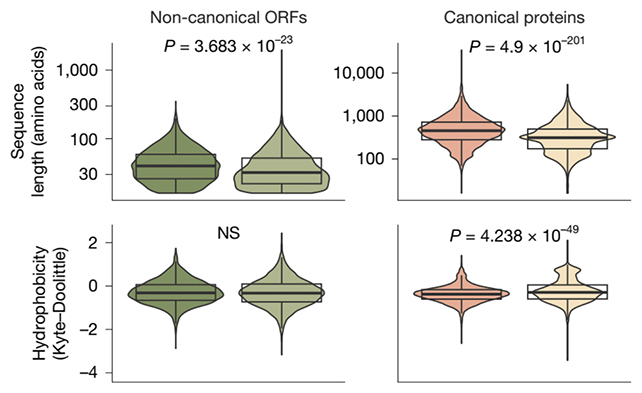
Only a few of these dark proteins really resemble the conventional kind; many are much smaller.
The researchers have given them a new name, 'peptideins', indicating their ambiguity (peptides are like short protein fragments). They may be functioning like standard proteins, but right now it's unclear what most of them do.
"We're just beginning to see what this dark proteome has to offer," says University of Michigan pediatric neuro-oncologist John Prensner.
"It's like the trailer to a movie. We see the outline of a game-changing view of human biology."
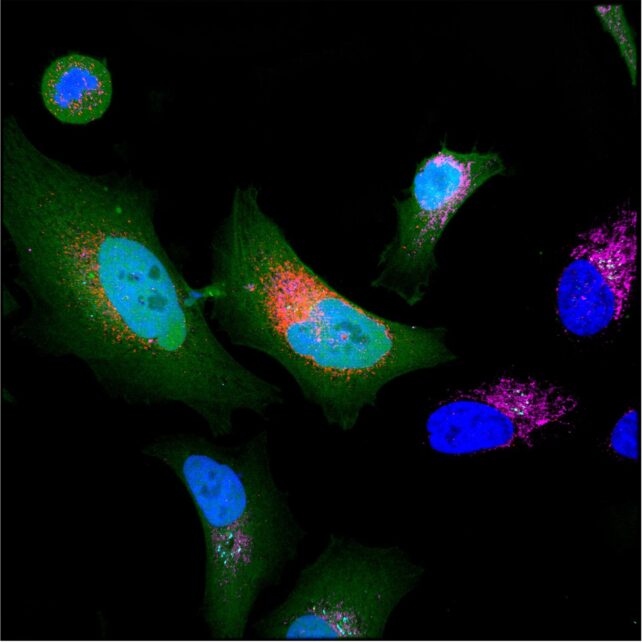
An earlier version of this research was announced in 2024. Since then, the team has settled on the term peptidein – microproteins or dark proteins that might graduate into actual proteins – and has identified one particular peptidein that performs a specific function.
Produced from OLMALINC, a gene previously considered noncoding, this dark protein appears to be associated with cancer survival. When the researchers deactivated it in lab tests, cancer cells struggled to grow.
Not only does this show that peptideins can be functional, like regular proteins, it also suggests they may be a useful component of future disease therapies.
"We're incredibly excited that the coming years will open new doors to help solve and treat human diseases such as cancer," says Prensner.

That's still a long way off – a lot more research into these peptideins is needed first – but the potential is there. And it seems that our DNA is a lot busier and more functional than previously thought.
Related: 'Junk' DNA Could Hide Switches That Allow Alzheimer's to Take Hold
"The discovery of hundreds of peptideins gives visibility to a vast and previously overlooked layer of the genome and greatly expands the known proteome," Hübner says.
"Understanding their roles could transform how we study human disease, including cardiovascular disorders, and may reveal entirely new therapeutic opportunities."
The research has been published in Nature.