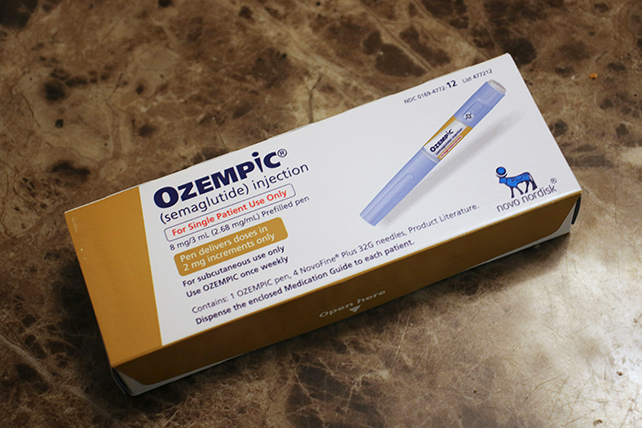
Does losing weight by taking GLP-1 drugs such as Ozempic and Wegovy actually improve your risk of other diseases associated with obesity?
New research led by scientists at the University of Liverpool in the UK, and presented at the European Congress on Obesity (ECO 2026), could have an answer.
GLP-1 drugs are named after the glucagon-like peptide-1 hormone that they mimic, which helps suppress appetite, regulate insulin and blood sugar, and slow digestion.
Newer medications in this category also simulate the effects of another hormone called glucose-dependent Insulinotropic polypeptide (GIP), which helps manage insulin release and fat metabolism. One of these, Mounjaro, was also included in the new research.
We know these treatments can be effective at shedding pounds, but there are questions around them in terms of their long-term effectiveness, and the effects they're having on the rest of the body.
And that's what the new study was investigating.
The researchers found that patients who lose the most weight while taking GLP-1 drugs were then less likely to develop obesity-related conditions, including sleep apnea and kidney disease.
While the basic premise may seem a little obvious – losing more weight means a lower risk of conditions associated with obesity – this research actually advances our understanding of GLP-1 drugs in several important ways.
The researchers analyzed health records for 89,718 individuals in the US who had started one of these GLP-1 or GLP-1/GIP drugs between January 2021 and June 2024.
Changes in body mass index (BMI) were tracked for a year, with subsequent health conditions tracked for an average of 11 months afterwards.
Compared with those who had seen drops of between 0 and 5 percent of their BMI during the year of treatment, those whose BMI had fallen 15 percent or more had a 37 percent lower risk of osteoarthritis, a 30 percent lower risk of chronic kidney disease, a 69 percent lower risk of obstructive sleep apnea, and a 32 percent lower risk of heart failure.
Obesity can affect the risk of all those conditions, and in each case except for heart failure, the statistical significance threshold was reached.
Some of the participants actually gained weight during the GLP-1/GIP treatment. Compared with those who lost less than 5 percent of their BMI, these individuals were at a statistically significant higher risk of sleep apnea and heart failure.
It's also worth bearing in mind that about half of the participants stopped their treatments before the initial year finished. However, these people were still included in the final statistical analysis.

Treatments like Ozempic and Wegovy are also thought to have additional health benefits beyond weight loss, such as protecting against heart conditions. From this analysis at least, it seems those benefits might be closely tied to reductions in BMI, not just the drugs themselves.
We also know that people frequently regain weight after quitting one of these GLP-1/GIP drugs. The point that the researchers conclude with is that these treatments have to work as intended to see further health benefits beyond a lower number on the scales.
"In this real-world study where half of patients discontinued GLP-1-based treatment within a year after initiation, not losing weight was associated with worse clinical outcomes while larger reductions were associated with decreased risks," say the researchers.
Related: Suicidal Thoughts Prompt New Warnings From Health Authorities For GLP-1 Drugs
"These findings highlight the potential clinical importance of achieving and maintaining weight loss after GLP-1-based treatment initiation."
The research has been presented at the European Congress on Obesity (ECO 2026).