
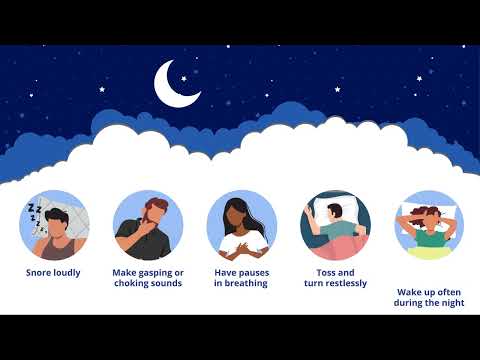
Nearly 1 billion people across the world are affected by sleep apnea – and that's not including the people sleeping next to those with the disorder.
The hallmark of obstructive sleep apnea is repeated blockage of breathing during sleep, which can lead to daytime tiredness, headaches, and snoring.
But long-term, these nightly apneas that leave patients gasping for air can have serious impacts on their cardiovascular system, brain function, and other aspects of their health.
Now, following a successful phase 3 clinical trial, it seems a much-needed pharmaceutical solution is just a few steps away from hitting drugstore shelves – pending its approval by the US drug regulator.
Many patients treated for obstructive sleep apnea use a CPAP (continuous positive airway pressure) machine to keep their upper airway open throughout the night.
But while CPAP machines are very effective, they're not exactly comfortable or portable. Many patients simply abandon treatment because of the inconvenience and discomfort.
According to Patrick John Strollo, a sleep medicine physician at the University of Pittsburgh Medical Center in the US, the majority of diagnosed obstructive sleep apnea patients are going untreated or undertreated.
"An oral pill that targets the underlying neuromuscular drivers of airway collapse during sleep could help address this gap and broaden the range of effective options for patients who remain untreated today," Strollo says.
Strollo and colleagues have now shown just how effective such a pill could be, completing a phase 3 clinical trial for a drug called AD109, to be taken nightly.
They enrolled 646 patients from across the US and Canada who had been diagnosed with mild to severe obstructive sleep apnea, but who either couldn't tolerate or had refused to use a CPAP machine.
Each participant was randomly assigned to take either the drug, AD109, or a placebo, but were unaware of which pill they had been given.
They took the pill nightly across 26 weeks, with the first week at a half-dose. By week 26, Strollo and team hoped, the group taking AD109 should start showing some improvements.

Success was measured using a system called the apnea-hypopnea index (AHI), which is standard for assessing obstructive sleep apnea severity.
It brings together the average number of apneas (pauses in breathing) and hypopneas (reduced breathing with insufficient oxygen) a patient experiences throughout the night.
For patients taking AD109, their index fell by around 44 percent across the trial period, while the placebo group's indices dropped by around 18 percent on average.
By week 26, almost 42 percent of participants taking the drug had moved into a lower severity category – and nearly 18 percent stopped experiencing obstructive sleep apnea altogether.
Patients experienced only a few mild side effects, including dry mouth, nausea, and insomnia, but these were expected, since the drug's components are well-understood and used to treat other conditions.
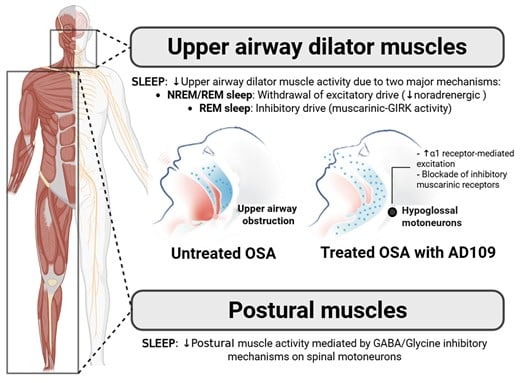
The pill works by pairing aroxybutynin, which reduces activation of the parasympathetic nervous system, and atomoxetine, a drug better known for treating ADHD.
According to an accompanying review of the drug's mechanism, this combo is "designed to counteract sleep-related withdrawal of excitatory noradrenergic drive and rapid eye movement (REM)–related muscarinic inhibition at the hypoglossal motor nucleus."
In other words, it stops the brain from dropping the upper airway muscles during sleep.
The US Food and Drug Administration has fast-tracked approval for AD109, with the regulator's decision expected in 2027.
And it's not the only alternative to CPAP machines in the pipeline.
Another recent clinical trial has found success in repurposing epilepsy medicine, and GLP-1 drugs have proved effective for those whose apneas are related to obesity.
At the more experimental end, a technique that involves implanting electrodes into the tongue has shown promise in early trials. Scientists even think blowing on a conch shell could help tone the muscles responsible.
But pharmaceutical options, like AD109, may turn out to be a convenient solution for patients hoping to free themselves from the CPAP machine.
Related: Repurposed Drug Improves Sleep Apnea by Up to 50% in Clinical Trial
"These results provide encouraging evidence that targeting neuromuscular dysfunction can translate into meaningful clinical outcomes, aligning with our evolving understanding of the disease biology," Strollo says.
The results were published in the American Journal of Respiratory and Critical Care Medicine.