An oceanic expedition has turned up 31 new species from a vast, dimly lit habitat between the sunlit surface and the deep ocean.
The international team of scientists aboard the Schmidt Ocean Institute's Falkor (too) research vessel also achieved another seagoing milestone – imaging the living cellular structure of a microbe in 3D.
The researchers used multiple advanced imaging technologies and genome sequencing to confirm and describe the new species from the tropical midwaters of the South Atlantic Ocean, off the coast of Brazil.
"The largest habitat on Earth, the midwater, is filled with incredible animals we are only just starting to understand," says Karen Osborn, a research zoologist at the Smithsonian National Museum of Natural History and the expedition's chief scientist.
This hidden habitat holds an extraterrestrial appeal due to its inaccessibility and immensity, as well as the otherworldly weirdness of its denizens.
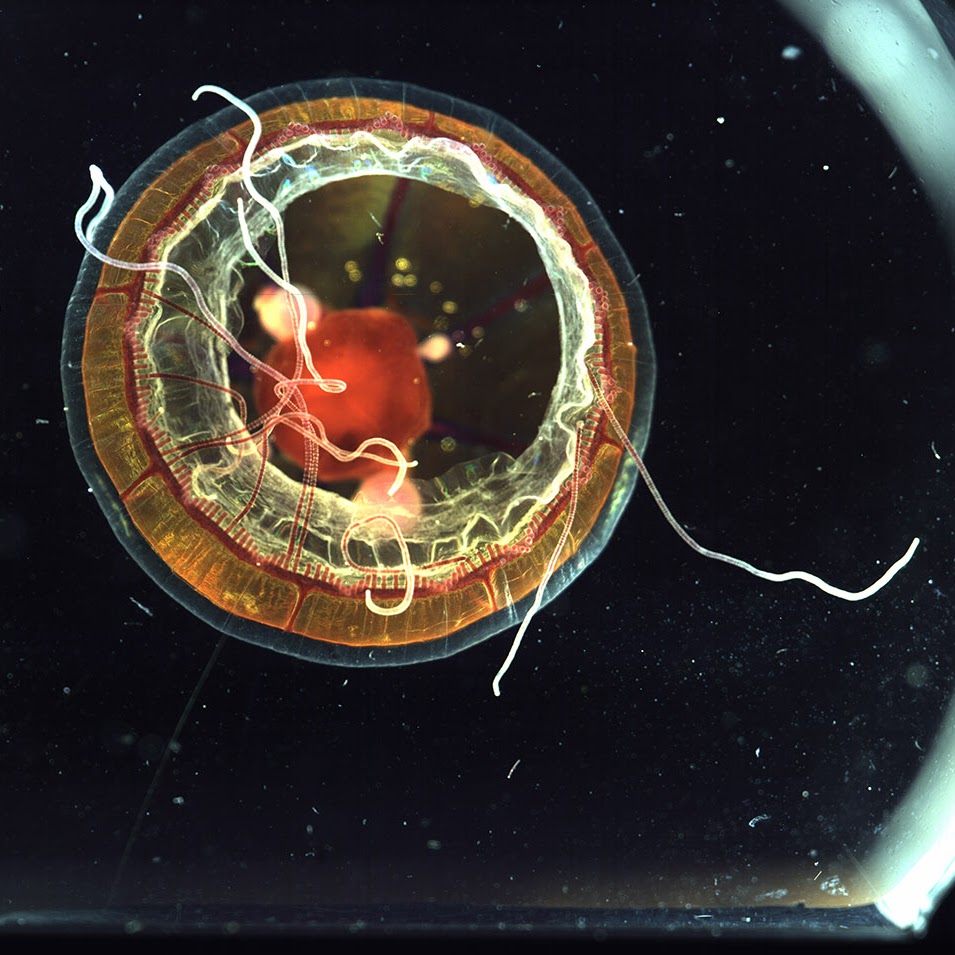
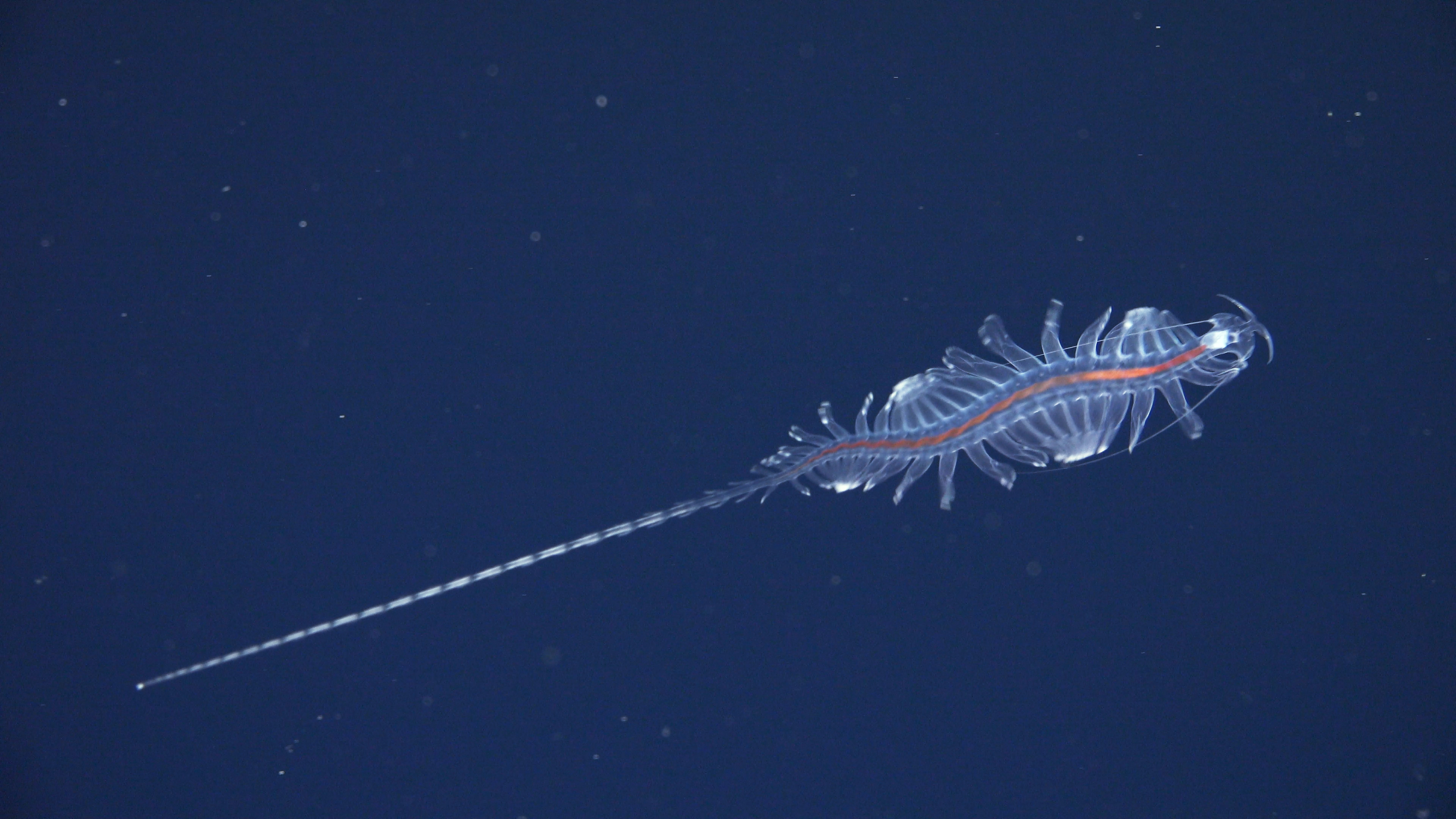
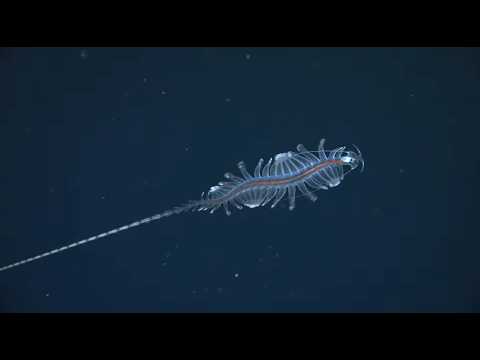
These newly discovered aquatic animals include hypnotically beautiful enigmas such as ghostly gossamer worms (Tomopteris) and comb jellies, propelled by glittering finger-like appendages.
The researchers also discovered giant rhizarians, which are (mind-bogglingly) massive enough to be visible to the naked eye, despite being just single cells.
"I continue to be fascinated by the fantastic variety of solutions they have evolved to survive in this formidable environment, and that drives me to keep asking questions about our ocean," Osborn says.
Case in point, this midwater menagerie comprises creatures seemingly too strange to be real, including tadpole-like larvaceans that build balloon-like 'houses' out of mucus, which they use to trap tiny food particles that float by.
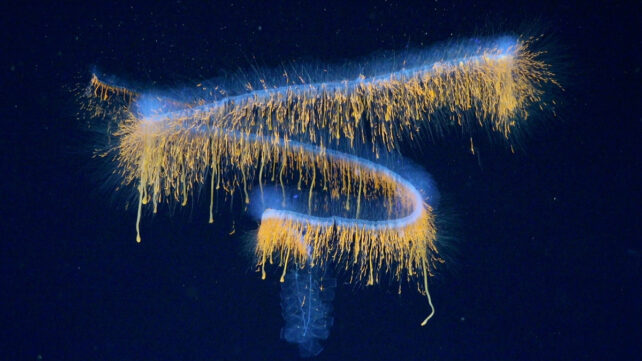
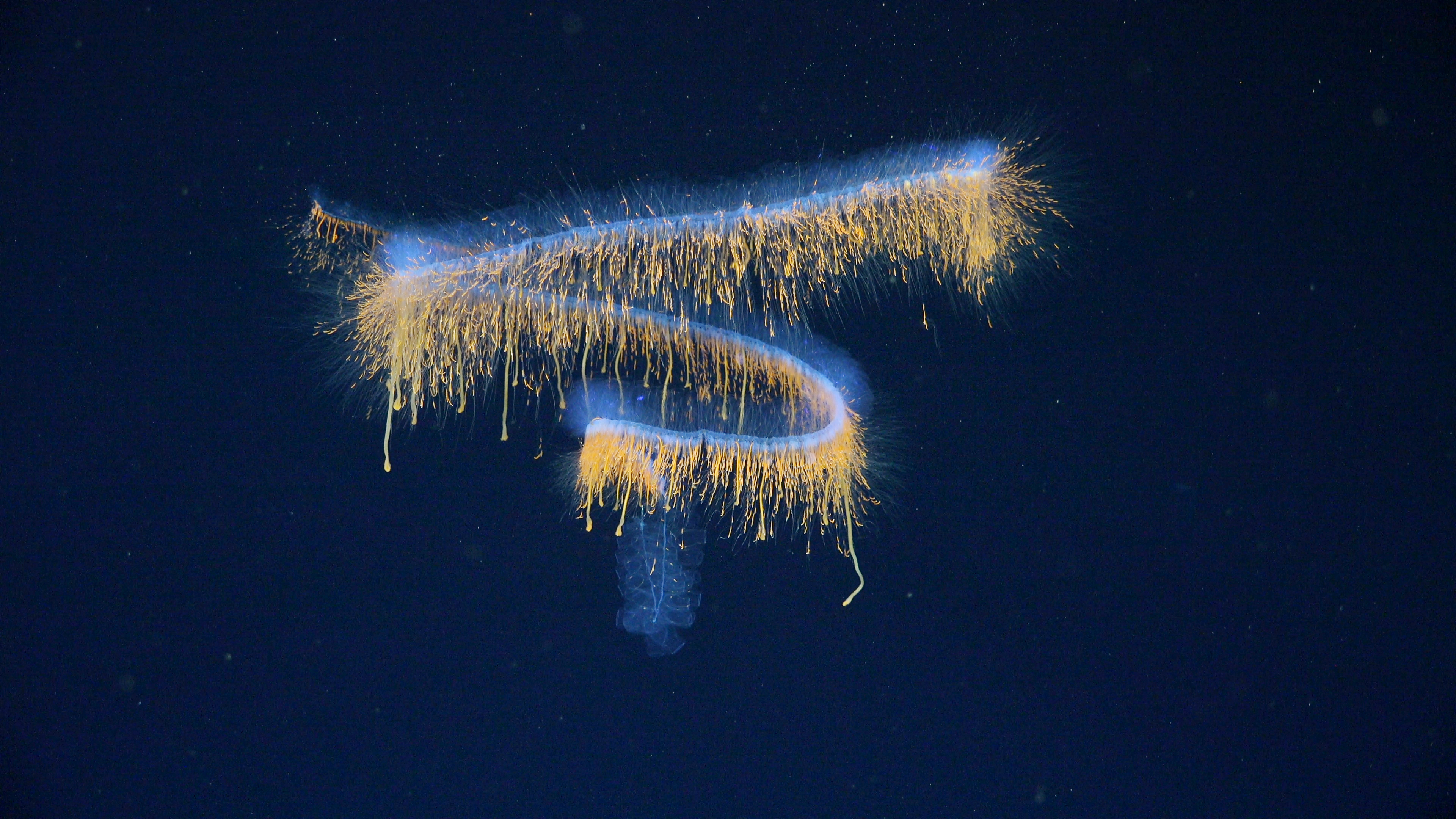
Astoundingly alien-like, siphonophores are collections of specialized clones, or zooids, that work together as a single colonial creature.
This expedition is notable for demonstrating the efficacy of multiple new technologies, enabling scientists to confirm numerous previously undescribed species in just days rather than years or decades.
Plus, as the unjustly 'uglified' blobfish revealed, deep-water fauna are soft and gelatinous to withstand extreme pressures.
They are therefore easily deformed by conventional sampling methods, which may require collecting these animals.
Much of Earth's largest living space has remained mysterious because its delicate animals are so difficult to study without damaging them.
So the researchers used three sophisticated imaging systems – attached to their remotely operated vehicle (ROV), SuBastian – to learn more about the midwater critters without having to swoop them from their homes.
They used the DeepPIV (particle image velocimetry) instrument and the EyeRIS (remote imaging system), both developed by the Monterey Bay Aquarium Research Institute (MBARI), to create 3D images of the creatures by non-invasively scanning them with lasers.
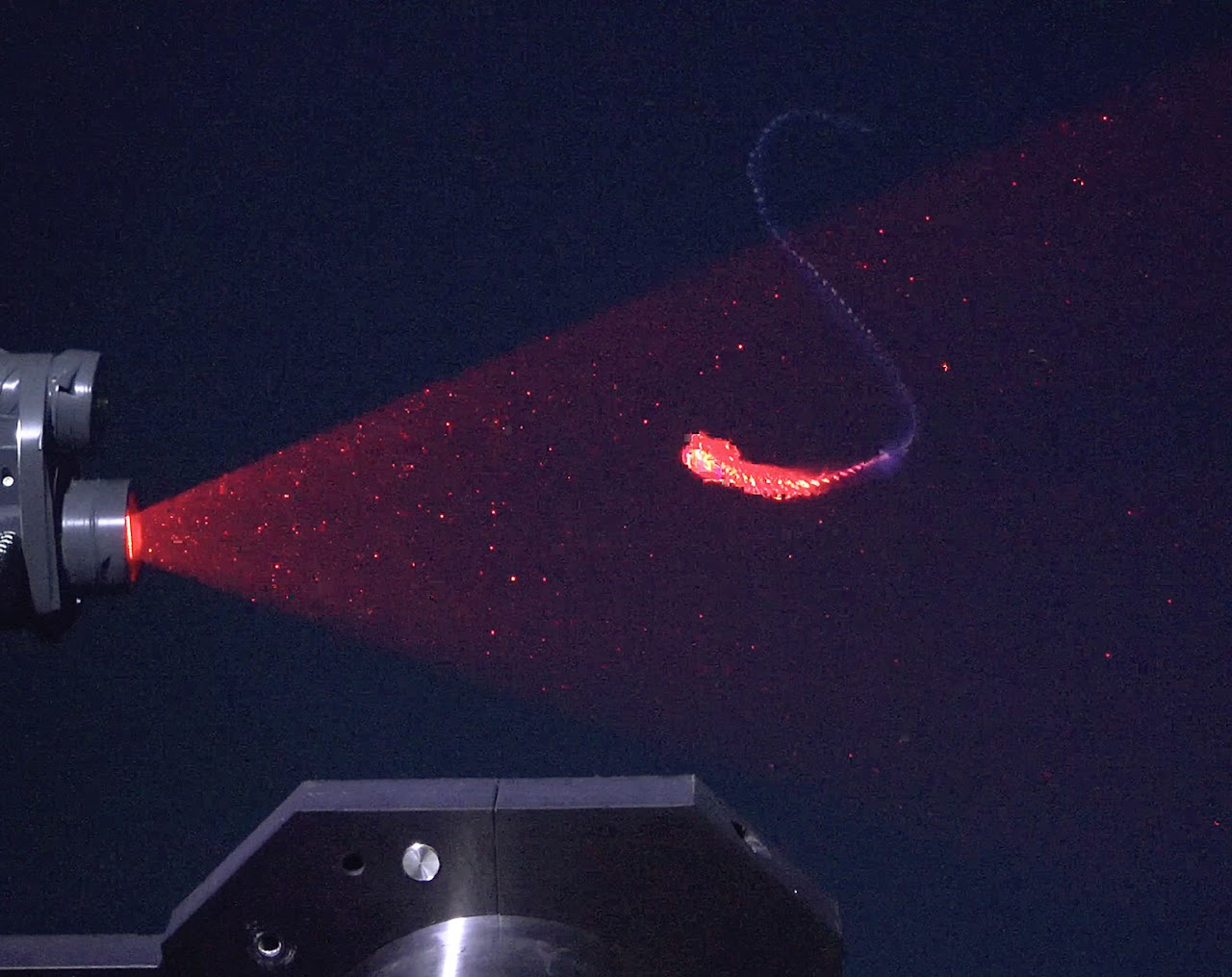
The researchers also utilized a shadowgraph camera, developed by the Japan Agency for Marine-Earth Science and Technology, to capture high-contrast silhouettes and reveal additional, finer creature features not visible via laser scanning.
They further studied the animals' physiology and behavior using three non-destructive methods.
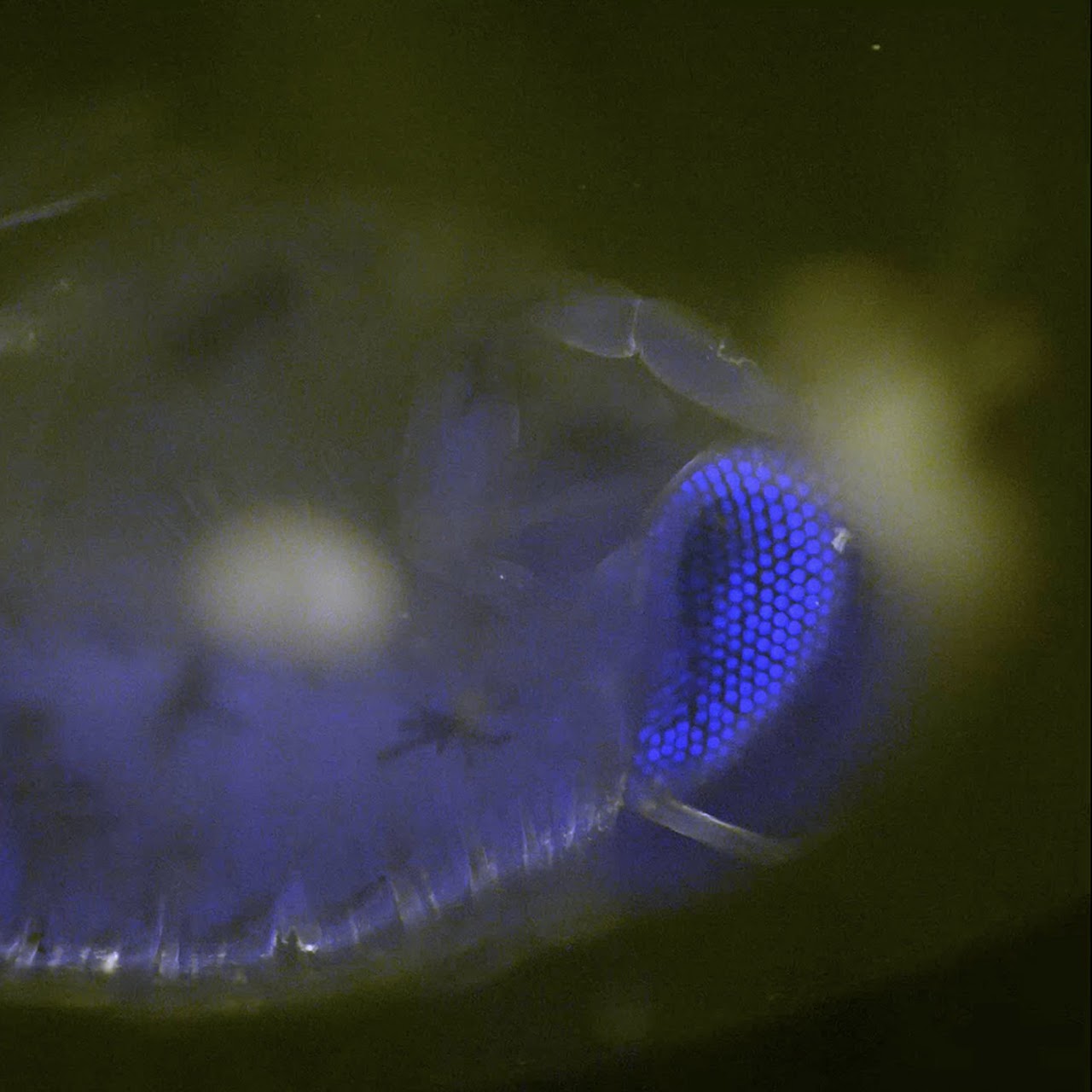
In a first-of-its-kind achievement at sea, they used the Squid microscope developed at Stanford University to view the living cellular structures and glass skeleton of a single-celled microbe called a protist.
The team also explored animal behaviors via a virtual reality application developed at the University of Western Australia and a hydrodynamic 'treadmill' designed at Stanford.
This is an upright circular chamber that mimics an endless water column to observe the tiny, briny behaviors of microbes without experimental interference.

"It's an incredible honor to not only view and experience this rare and inspiring midwater life, but also to be able to work towards describing and sharing that life broadly through the use of novel, non-invasive technologies," says Kakani Katija, a bioengineer at MBARI.
This marriage of techniques and technology represents an incredible future for marine science.
Researchers can collaborate across institutions and study animals in their natural environments, without collecting or otherwise harming them.
Related: Hidden Coral World The Size of Vatican City Found Deep Beneath The Ocean
"Schmidt Ocean Institute's mission is to push technological advancement, and this was our third cruise in collaboration with this team of scientists and engineers to test and further develop this innovative midwater equipment," concludes physical oceanographer Jyotika Virmani, the institute's Executive Director.
"We look forward to a future in which scientists study marine life as elegantly as this team did – and in virtual reality."