This week in science: A world record, a world first, and much more!
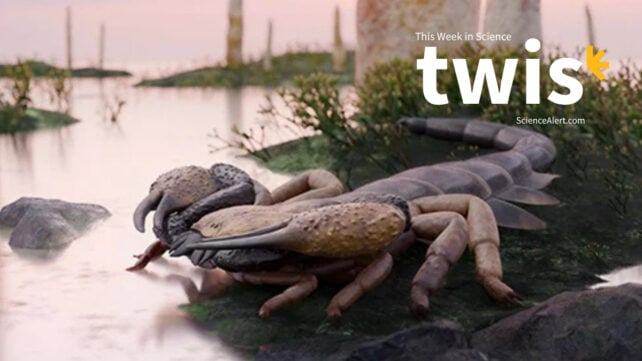
We start with a scorpion you absolutely don't want to meet.
Thankfully, you probably won't have to worry about running into this critter. After all, this scorpion lived 415 million years ago. Let's just say it's big. Scary big.
This week, we've also got news about a world-first gene therapy that could reverse some symptoms of aging.
Despite the considerable promise, it's worth noting that the technique comes with substantial risk. We can explain.
Also: What happens when you simulate a nuclear fireball in the lab?
Researchers found something unexpected when they simulated that very thing – and the discovery helps us understand more about the mysterious phenomena that take place during a nuclear event.
Watch the video below for all the details, and read on for even more in science news!
Scientists Identify The World's Biggest Known Scorpion, The Size of a Dog

The world's biggest scorpion has been identified: a dog-sized critter that was one of the first apex land predators 415 million years ago.
"Praearcturus lived when life on land was just starting out and the ancestors of reptiles, mammals and birds were yet to leave the water," says lead author Richie Howard, a paleontologist from the Natural History Museum in the UK.
"It suggests that this species might have grown so big because there weren't any other large predators, allowing it to dominate its environment."
Read the full story here.
World First: Patient Receives High-Risk Therapy to Make Cells Young Again
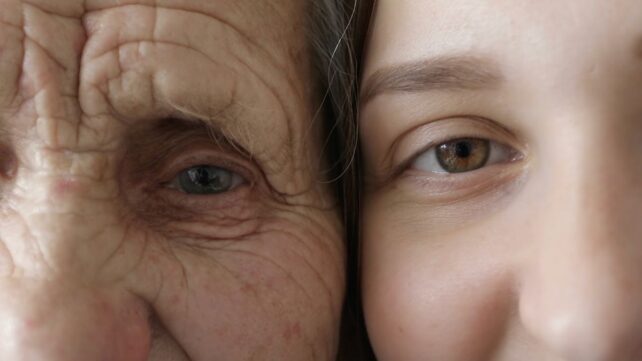
A world-first gene therapy has entered human trials. The hope is to reverse age-related vision loss, but it may be 'high risk'.
It's one of the most anticipated clinical trials of the year, and some think it could be a pivotal moment for the field of longevity research.
Other scientists argue it is "extraordinarily high-risk" and are skeptical it will work at all.
Read the full story here.
Scientists Simulated Nuclear Fallout in The Lab And Got a Surprise

Scientists have simulated nuclear fallout in the lab. The experiments revealed that cesium cools and mixes in an unexpected way.

"By studying these processes in a controlled system, we can replace assumptions with measurements, improve the models used to interpret nuclear debris, and support decision-making when it matters most," says chemist Rakia Dhaoui.
Read the full story here.
Huge Psilocybin Dose Has Incredible Effect on Elderly Dementia Patient
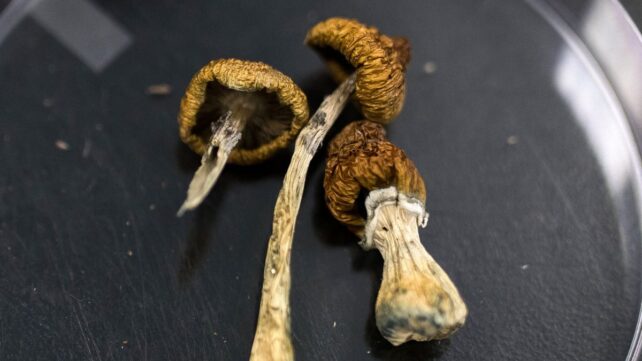
An 80-year-old dementia patient temporarily regained some cognitive function after a huge dose of psilocybin, a case study reports.
Before the experimental treatment, the patient could only speak in monosyllables, rarely initiated communication with others, and was very dependent on assistance for basic activities of daily living.
Roughly 19 hours after the oral dose, the woman suddenly began to talk to herself. She kept doing so for several hours.
Over the next few days, the elderly patient was reportedly able to control her bladder, dress and walk by herself, and engage in conversation, holding eye contact and smiling back.
Read the full story here.
Giant Whale Graveyard Found in The Ocean Is Like a Drowned City of The Dead

A giant 'whale graveyard' has been discovered at a depth of 7,000 m. It contains the remains of almost 500 whales, up to 5.3 million years old.
"These findings," writes a team led by deep-sea scientist Xiaotong Peng of the Chinese Academy of Sciences, "reshape the understanding of the limits and biogeography of whale-fall ecosystems and establish some deep-sea floors as a fossil archive for tracing cetacean evolution over geological time."
Read the full story here.
A Commonly Used Sleep Aid May Have a Dangerous Side Effect

A drug called quetiapine, commonly used as a sleep aid, has been found to significantly impair users' reaction times the next day.
On a 10-minute psychomotor vigilance test, participants were slower to react after taking quetiapine compared with after a placebo. Their attention lapses during the test also rose from a median of 2 after placebo to 10 after quetiapine.
In the driving simulation, participants drifted an extra 33 percent farther from the center of their lane, on average, after being given quetiapine compared with placebo.
Read the full story here.