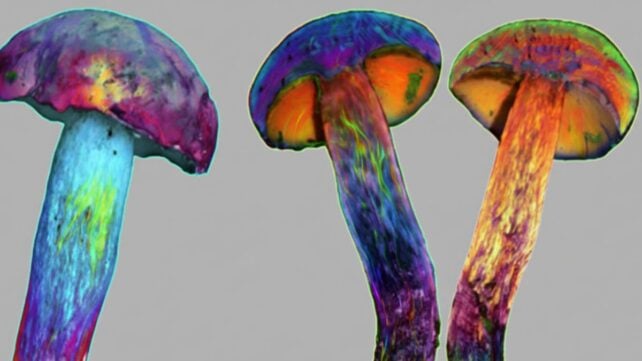
If you consumed a wild mushroom and suddenly started seeing tiny people around you, you might reasonably assume it contained a familiar psychedelic.
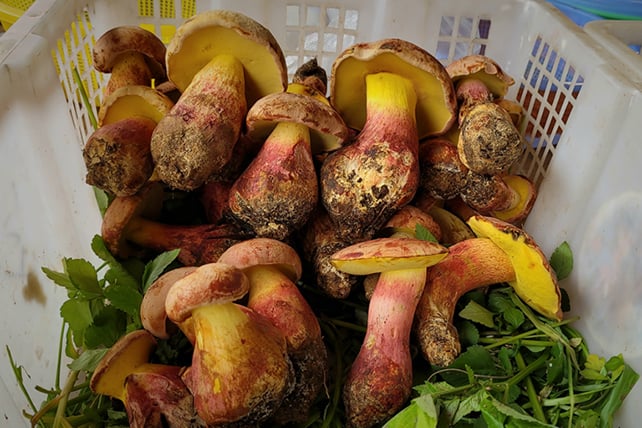
But that does not appear to be the case with Lanmaoa asiatica, known locally as jian shou qing, a mushroom species sold in markets in Yunnan, southwestern China.
When eaten undercooked, the mushroom can produce vivid visions of miniature people – not unlike Gulliver on his travels to Lilliput.
Yunnan hospitals get dozens of these cases each year.
To try and find out the root cause, University of Utah mycologists Colin Domnauer and Bryn Dentinger sequenced the genomes of 53 mushroom samples from across the wider Lanmaoa genus.
And despite the reported hallucinations, they found no close matches to genes associated with psilocybin or ibotenic acid, two well-known mushroom hallucinogens whose biosynthetic pathways were specifically examined in the study.
"Biosynthetic gene mining of the L. asiatica genome found no close hits with any genes known in the production of mushroom psychoactive compounds," write the researchers in their published paper.
"This supports our hypothesis of the presence of a novel unidentified metabolite responsible for the unique hallucinogenic properties of L. asiatica."
There's an official name for seeing tiny people: Lilliputian hallucinations.

Lilliputian hallucinations are not the only side effect of eating undercooked L. asiatica, but they're the most common. Dizziness, auditory hallucinations, and physical sickness have also been reported.
Whatever chemical pathways are causing these effects in the brain, the responsible compound appears to be something scientists have not yet identified.
"This finding corroborates observational and clinical data, which report drastically different psychological and physiological symptoms following L. asiatica intoxication compared with psilocybin or ibotenic acid," write the researchers.
"The phylogeny and genomic data provided in this study may support future drug discovery efforts, as well as research into the evolution and phylogenetic distribution of the potentially important bioactive secondary chemistry within the genus Lanmaoa."
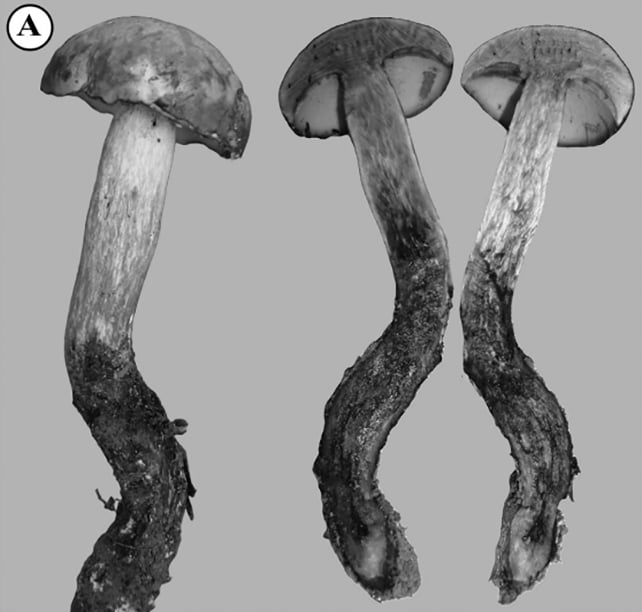
The findings from the genome sequencing conducted in this study go beyond merely ruling out the effects of psilocybin or ibotenic acid.
By identifying 1,515 corresponding genes across the selected specimens, the researchers obtained a clearer answer to the question of what defines a mushroom species as part of the genus Lanmaoa.
There are now 17 recognized species in the genus, including four that haven't been identified before, two of which the researchers specifically named here: Lanmaoa fallax and Lanmaoa carbonilivor.

The researchers say the Lanmaoa family and evolutionary tree can now be more fully mapped out, and some existing specimens may need to be reclassified.
Part of the problem in categorizing them before now is that they share many of the same physical characteristics, even if their biological signatures differ.
"As Lanmaoa species are popular globally traded commercial products, frequent misidentification of wild edible mushrooms with potentially poisonous lookalikes is a both well-documented and serious concern for public food safety and medical practitioners," write the researchers.
"That highlights the need for greater taxonomic understanding."
That these mushrooms can produce such a specific psychedelic hallucination is fascinating.
The next question is how it's triggered, and the researchers suggest that once we get that answer, it could tell us much more about the workings of the human psyche.
If you've been following the science, you might be aware of just how much has been discovered about the humble mushroom: its links to disease prevention, its evolutionary innovations, and its role in the planet's ecosystem.
Related: California's Death Cap Mushrooms Are Making New Compounds, Scientists Discover
When it comes to the Lanmaoa genus in particular, there's still much more to find.
"This study establishes a comprehensive genomic foundation for Lanmaoa systematics, enabling future research to more robustly explore the evolutionary history and secondary chemistry of the genus," write the researchers.
The research has been published in Mycologia.