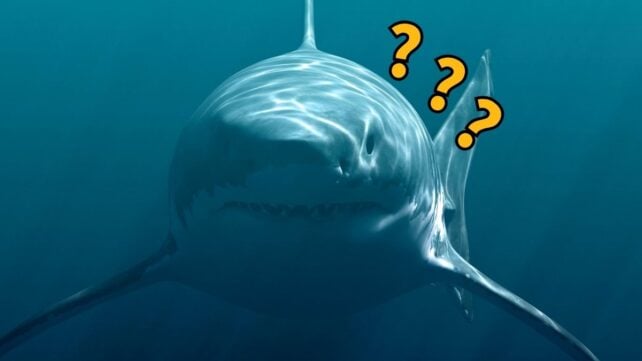
In 1978, a wonder emerged from the crumbling earth of the Gram Clay Pits in Denmark.
Paleontologists were stunned when they unearthed about 20 vertebrae from a single megalodon, including one that, at 23 centimeters (9 inches) across, was larger than any megalodon vertebra ever found, before or since.
That vertebra became the foundation for maximum size estimates of the giant shark (Otodus megalodon), suggesting a huge monster that terrorized Neogene seas.
Then, disaster struck.
In 1989, while being moved from one storage facility to another, the specimen was severely damaged and was thought lost.
It turned up again after vertebrate paleontologist and curator Bent Erik Kramer Lindow of the Natural History Museum of Denmark noticed a box of jumbled remnants and realized that he was looking at some of the missing fossils.
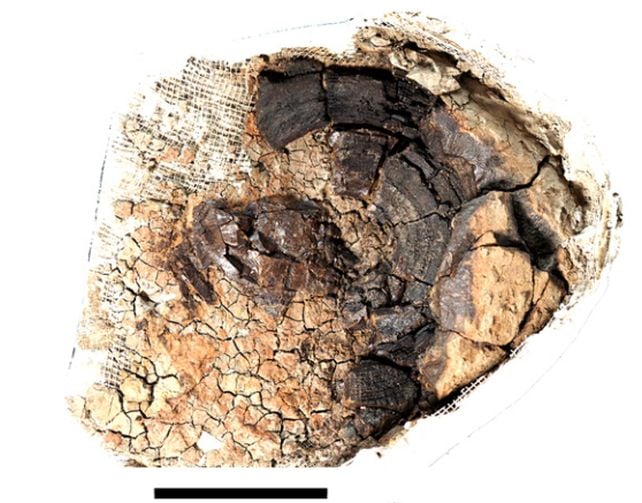
These rediscovered remains have now been reanalyzed in a new study, confirming previous findings about megalodon and revealing new information about its lifestyle.
"When I first learned about the vertebral specimen from my Danish collaborators, I was in disbelief, but my immediate concern was its condition, as I was told they had been found badly damaged," first author Kenshu Shimada, a paleobiology professor at DePaul University in Chicago, told ScienceAlert.
"The biggest excitement came when I learned that at least one of the vertebrae preserves the center and portions of the periphery. This is because it gave a radius of 11.5 centimeters, which meant that its diameter was indeed 23 centimeters, just as it was originally reported.
"In science, reproducibility of data is critical, so when I confirmed that measurement, I literally exclaimed, 'Yes!'"
"When I confirmed that measurement, I literally exclaimed, 'Yes!'"
Although it lived for only around 20 million years, from around 23 million to around 3.6 million years ago, megalodon is one of the most beloved predators of the ancient world.
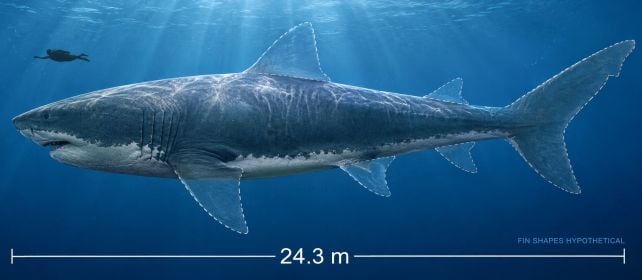
Part of the reason for that is its estimated size – up to 24.3 meters (80 feet), about two standard city buses.
But figuring out what megalodon looked like and how big it was is a game of educated guesses.
Because sharks have cartilaginous skeletons, they don't leave many fossils behind; for megalodon, all that remains are mostly teeth, with occasional vertebrae, made of dense, calcified cartilage that can withstand fossilization.
Scientists can look at partial megalodon spinal columns – the most complete to date contained 141 vertebrae – and compare them with those of modern sharks to gauge how large the ancient predator may have been.
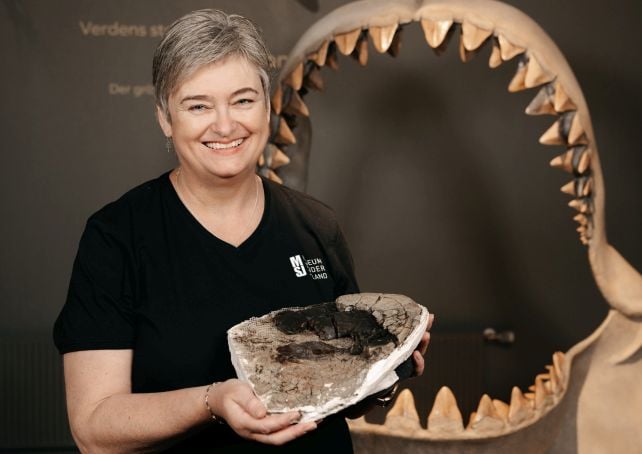
The long-lost Gram specimen was crucial. As the largest of its kind ever found, it was the linchpin for estimates of the maximum known megalodon body size.
"The giant megalodon vertebrae are of great importance because size matters when it comes to understanding the biology, ecological impact, and geographic distribution pattern of this extinct giant predator," paleontologist Mette Elstrup of the Museum of Southern Jutland says in a statement.
But after the specimen was lost decades ago, all the most up-to-date size estimates of megalodon were based on photographs of the vertebra, not the fossil itself.
Its rediscovery meant that Shimada and his colleagues could seek that critical reproducibility.
"Although some additional assumptions have gone into the estimated length, the rediscovery of the vertebrae from Denmark eliminates any doubts about the maximum vertebral diameter of 23 centimeters that has been critical for the 24.3-meter length estimate," he told ScienceAlert.
The fossils in the box were in a sorry state.
When the specimen was shattered in 1989, paleontologist Frank Osbæck saved the fragments, but the box was then apparently forgotten. Kramer Lindow recognized its contents in 2017, but tallying them up took a long time.
Ultimately, the researchers found the box contained two partially preserved vertebrae, at least 185 small vertebra fragments, and several rock pieces containing casts of vertebrae.
It's unclear how much, if any, of the original specimen is missing, but even with what's there, the fossils can tell us a lot.

"Part of the study included the examination of sediment samples surrounding the vertebrae," Shimada said.
"While the size and characteristics of the vertebrae can be ruled out as from any other types of sharks, I was surprised to discover many scales of a fossil basking shark under a microscope. This led my research team to interpret the basking shark remains to represent megalodon's stomach content."
Recent studies have found that megalodon was an opportunistic feeder with a broader diet than scientists once thought.
Related: 'Mammoth' Bones Kept in a Museum For 70 Years Turn Out to Be Entirely Different Animal
This discovery offers insight into how these giant predators lived – especially at their most intimidating sizes, suggesting that the biggest megalodons may even have hunted large sharks.
Megalodon has long departed from our oceans and left many mysteries in its wake. But the answers to some of those mysteries may be awaiting discovery right under our noses.
"Museum collections are mightily important for science, and many of my past discoveries are based on museum specimens that were collected many years ago," Shimada told ScienceAlert.
"So, I am quite certain that there are many other historically known and unknown specimens still waiting for scientists to discover something new and exciting."
The research has been published in Palaeontologia Electronica.
This article was fact-checked by Carly Cassella and edited by Rebecca Dyer. While we pride ourselves on our process, we are only human. If you spot a mistake, please let us know.