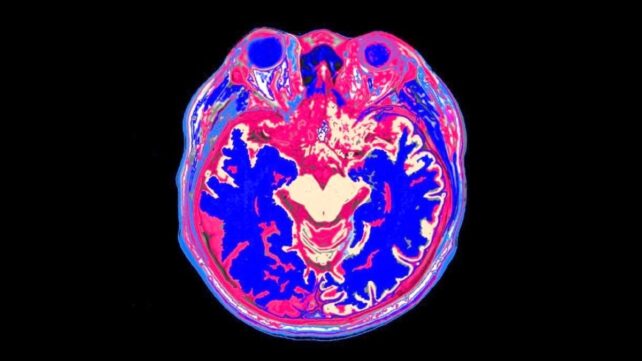
Oxytocin is famous for its links to love, trust, and bonding. But scientists have now found evidence that brain cells sensitive to the so-called "love hormone" may also help us recognize when danger has passed.
Oxytocin's reputation as a straightforward social chemical has long been questioned. Its effects can shift depending on the situation, emotional state, and whether another individual is perceived as safe or threatening.
Experiments in mice revealed a small group of oxytocin receptor-expressing neurons that appears to influence both social approach and fear extinction – the process of learning that something previously associated with danger is now safe.
The study, published in the journal Brain, points to the paraventricular thalamus (PVT) as a possible meeting place for social behavior and fear. The findings could provide an early clue to why both processes can be disrupted in conditions such as autism and anxiety disorders.
To explore these varied effects, a team of scientists in Japan studied oxytocin-sensitive neurons in the PVT, a brain region involved in stress, motivation, and emotional behavior.
Using genetically modified male mice, the team selectively suppressed or activated these neurons to see how they affected social behavior and fear extinction.
When the researchers suppressed these neurons, the mice showed less interest in interacting with unfamiliar animals. Reduced social engagement was observed across two different social behavior tests and was not caused by reduced movement or greater anxiety.
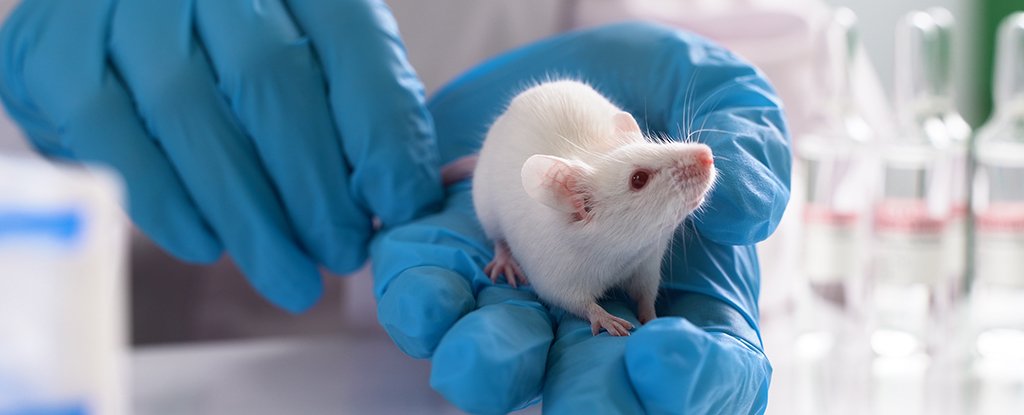
But activating the same neurons did not make the mice more sociable. This suggests that the cells may be necessary for normal social behavior, but turning them on is not enough by itself to increase social interest.
The researchers then examined fear extinction.
First, the mice learned to associate a particular setting with a mild electric shock. They were later returned to the same setting several times without receiving another shock.
Suppressing the oxytocin-sensitive neurons did not prevent the animals from forming the original fear memory. However, the mice continued to freeze – remaining motionless as a sign of fear – when they returned to the now-safe setting. This suggested they had difficulty learning that the danger had passed.
Activating the neurons produced a different result. The mice showed less freezing during the early stage of fear-extinction learning, but this effect did not remain when they were tested the following day or one week later.
By contrast, manipulating similar oxytocin-sensitive neurons elsewhere in the brain did not alter the mice's sociability, suggesting that the role of these cells in social behavior depends on where they are located.
That regional difference matters because oxytocin does not produce the same social response in every neural circuit. A 2024 review published in Hormones and Behavior, drawing on studies in California mice, similarly found that oxytocin can promote either social approach or social avoidance depending on the context and the brain circuits involved.

The team also looked for signs that oxytocin and the thalamus might be linked to social traits in humans.
They analyzed data from 30 Japanese adolescents, including 19 diagnosed with autism spectrum disorder and 11 typically developing participants. Salivary oxytocin levels were compared with MRI measurements of the thalamus and assessments of autism-related traits.
The researchers found associations between oxytocin levels, thalamus features, and some behavioral measures. But the analysis was small and exploratory, and salivary oxytocin may not reflect the hormone's activity in the brain.

The animal experiments also have important limitations. The researchers mainly studied male mice, and artificially activating the targeted population of neurons carrying oxytocin receptors does not reproduce the brain's natural release of the hormone.
The findings therefore do not yet show that naturally released oxytocin directly controls social behavior or fear extinction.
Related: Brain Mechanism That Regulates Fear Discovered in Mice, Scientists Say
If future research confirms a similar system in humans, it could help scientists better understand conditions involving difficulties with social behavior or fear regulation, including autism and anxiety disorders.
For now, the findings suggest that oxytocin's influence depends on precisely where and when it acts in the brain – potentially shaping both social approach and the ability to recognize when danger has passed.
The study was published in Brain.
This article was fact-checked by Michael Irving and edited by Michael Irving. While we pride ourselves on our process, we are only human. If you spot a mistake, please let us know.