Crocodiles are among today's most feared predators, but their ancient relatives make today's crocs seem as threatening as a cuddle-prone kitty with a cold.
It took a while, though: Since crocodyliforms arose more than 200 million years ago, they've gone through stages of non-threatening vegetarianism and even a literal cat-like form.
Eventually, evolution yielded some absolutely bonkers varieties that ruled their ecosystems with a scaly fist.
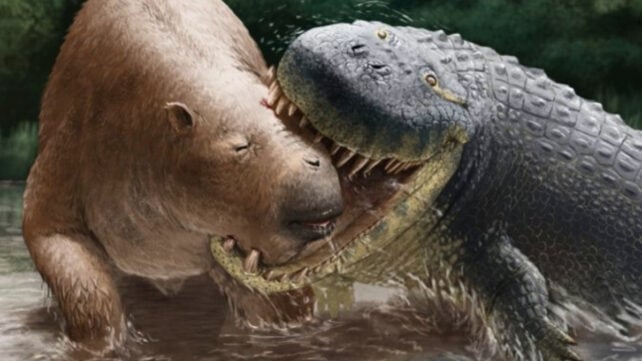
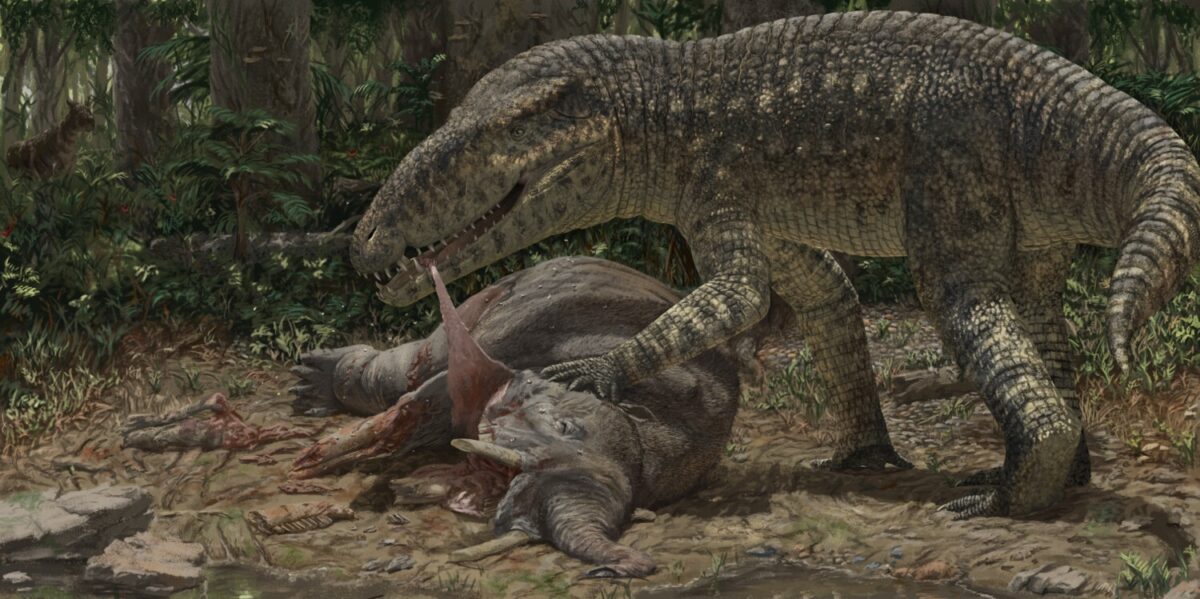
Enter the stone-cold (blooded) Purussaurus neivensis, a predecessor of caimans that attained 7 meters (23 feet) in length and 1,800 kilograms (4,000 pounds) in heft, similar to an average car.
First formally described in 1941 and named after the nearby Purus River, a new study in the Journal of Vertebrate Paleontology has described this giant animal as the apex predator in South America during the Miocene (23 million to 5.3 million years ago) – a conclusion based on its mangled victims.
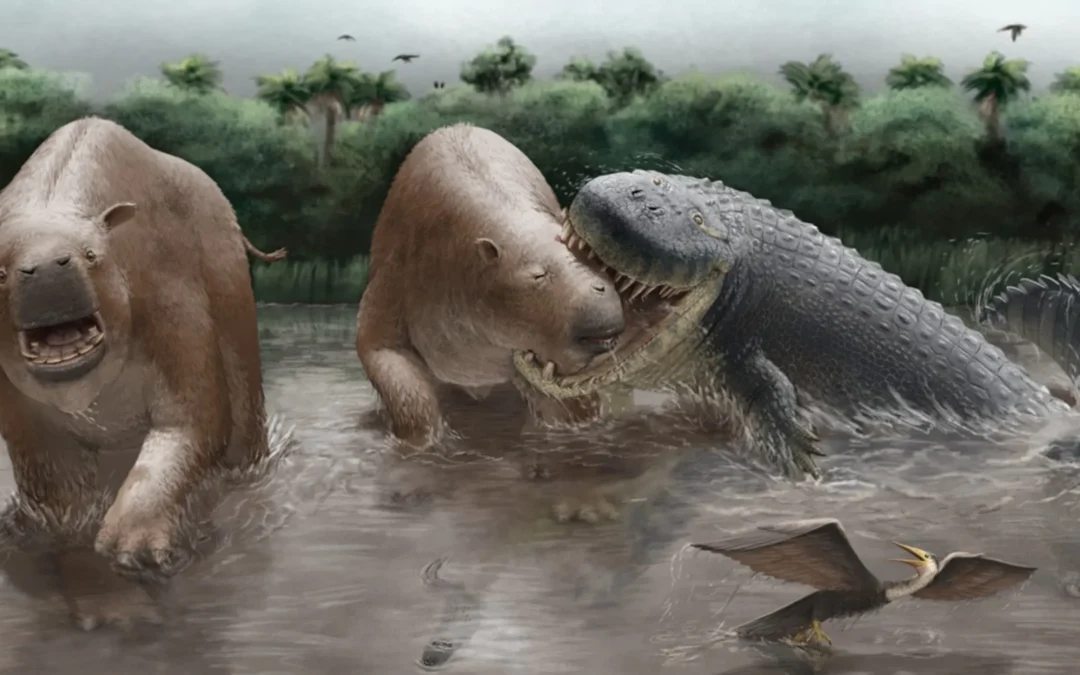
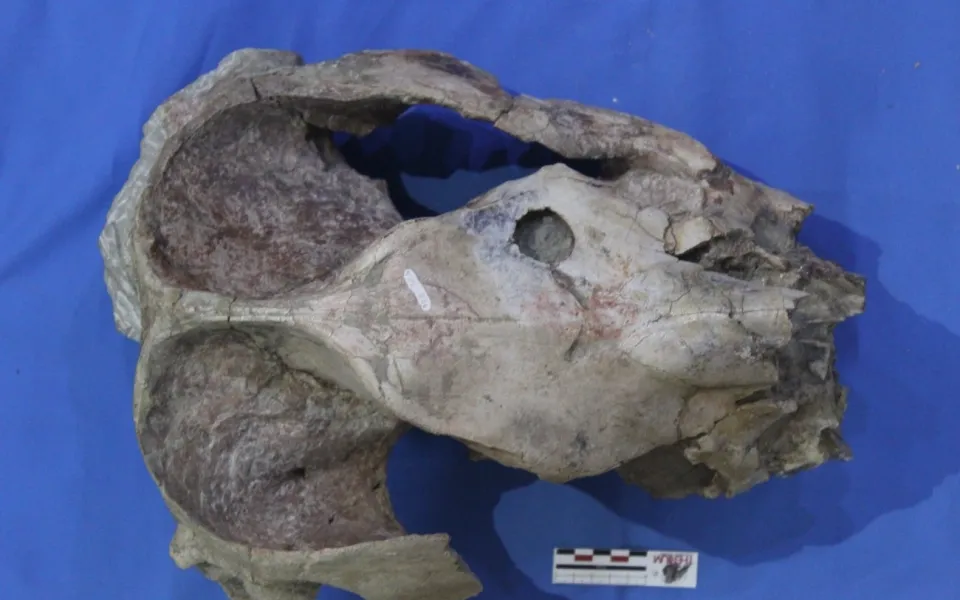
The researchers reconstructed the ancient crocodyliforms' predatory tactics and bone-crushing power by analyzing grisly fossil evidence unearthed in La Tatacoa Desert, modern-day Colombia.
This evidence includes four fossil remains between 10.5 and 16 million years old, each preserving signs of an antediluvian attack: a partial skull, a femur, and two lower jawbones, belonging to three different types of ungulates – hoofed, usually plant-eating mammals.
The unfortunate ungulates likely served as meals for P. neivensis, based on the size and shape of the chomp marks.
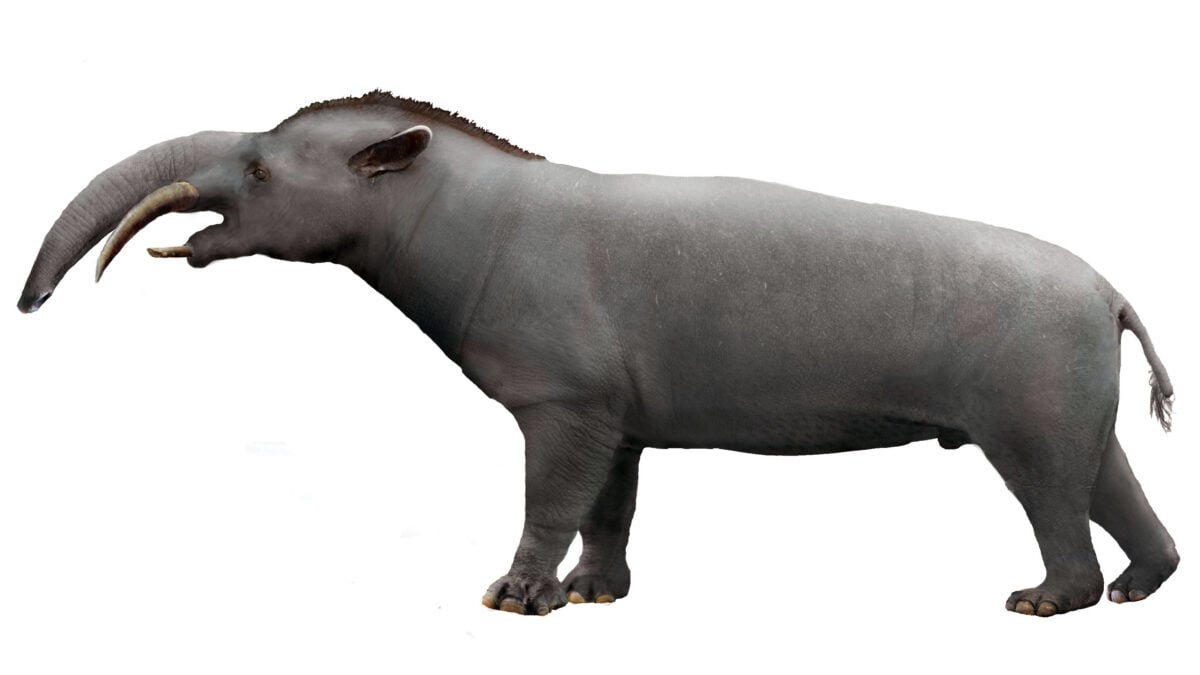
These plant-preferring prey would have been beefy beings in their own right, as members of their species could potentially weigh well over a ton.
They also sported formidable creature features, like tree-trunk legs, tusks, and rhinocerine bodies – with equally substantial, Star-Wars-ian names like Granastrapotherium snorki.

"The frequency of marks likely made by Purussaurus suggests that it was an important predator in these tropical ecosystems," says Oscar Wilson, a vertebrate paleontologist at the University of Helsinki and the study's first author.
And while large mammal placental predators may dominate modern communities, this was not always the case.
Before the Great American Biotic Interchange, which saw a large land-and-sea animal migration between North America and South America (akin to a continental Pokémon trade), other predators were prominent.
For example, P. neivensis would have shared its environment with fearsome non-mammalian hunters, including monstrously massive madtsoiid constrictor snakes.
And phorusrhacid 'terror birds' that flaunted huge beaks stood tall enough to dunk a basketball simply by standing on their killer-clawed tippy-toes.
"There was so much prey available that mammalian predators couldn't have eaten it all," Wilson explains.
"Our new study shows that crocodylians in particular were the region's most important predators, especially when it came to hunting large prey."

Modern evidence supports the crocodilian propensity for giant prey.
Saltwater crocodiles (Crocodylus porosus), the largest living crocs, can grow to around 1,200 kilograms and are known to go after domestic horses and bulls, as well as feral water buffalo in Australia.
Similarly, Nile crocodiles have been recorded feeding on hippos and rhinos in Africa, though their predecessors may have pursued even relatively larger prey, the researchers point out.
Related: An Ancient Shark Graveyard Has Been Found in The Egyptian Desert
Overall, the story related in this study is one of immense power preserved across eons, reviving hunting scenes lost for many millions of years:
To have created the fossil evidence examined here, P. neivensis may have snatched its unassuming victims by their heads as they drank, crushing their skulls with a bite force perhaps greater than that of Tyrannosaurus rex, before dismembering them with the dreaded death roll.
It thus helped out its Miocene mates by leaving leftovers:
And, finally, it supported its aquatic ecosystems by transferring nutrients from the land to the sea – through its poop.
This research was published in the Journal of Vertebrate Paleontology.
This article was fact-checked by Rachel Garner and edited by Rebecca Dyer. While we pride ourselves on our process, we are only human. If you spot a mistake, please let us know.