The competition for dominance starts long before sperm make their last mad dash to reach the egg.
Deep inside the testicles, the jostle for genetic survival can start before the sperm themselves are even formed.
Mutations that arise in the stem cells that produce sperm can give those cells an advantage, allowing them to proliferate in a survival-of-the-fittest battle against their unmutated housemates.
There's just one problem. What's 'fittest' in the testicles isn't necessarily beneficial to the offspring that those sperm may eventually help create.
A sweeping analysis of mutations in human sperm has revealed that this hidden evolutionary contest is far more extensive than scientists realized.
And the consequences could be significant.
Many of the mutations identified are associated with developmental disorders – and as men age, these mutations become increasingly common in their sperm, raising the chances of passing them on to their progeny.
The sperm production line never sleeps. Every day, the testes of an adult man can churn out somewhere between 150 and 275 million gametes.
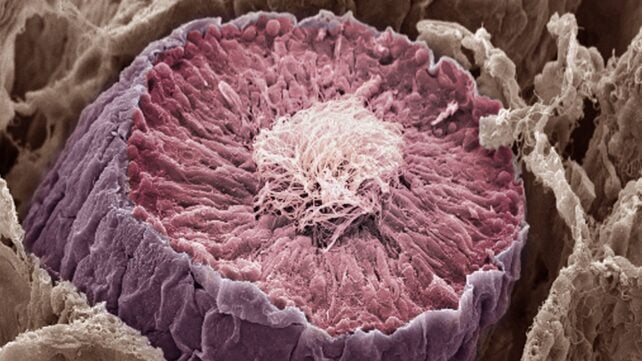
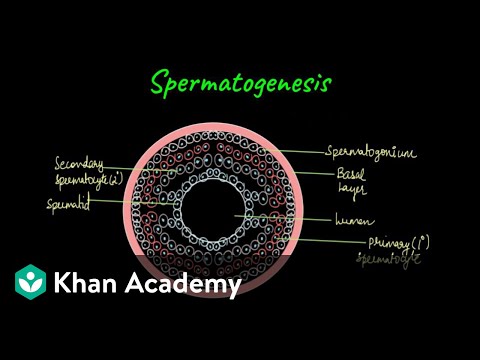
Powering that factory are spermatogonial stem cells, which sit along the seminiferous tubules and continually divide, both renewing their own population and producing cells that will go on to develop into sperm.
Every time a cell divides, though, there's a chance that a mutation will arise from slightly janky replication of the DNA. Many of these mutations will be nothingburgers… but every now and then, one pops up that gives the new stem cell some sort of advantage.
That mutant stem-cell lineage can then proliferate at the expense of the surrounding cells, spreading along the tubule and producing more sperm that carry the mutation.
Scientists already knew this could happen. Previous research identified mutations in 13 genes that appear to give sperm-producing stem cells this competitive edge – all of which are associated with severe developmental disorders.
But no one fully understood the extent of the phenomenon – so a team led by computational biologist Matthew Neville of the Wellcome Sanger Institute in the UK embarked on a quest to find out.
Using an ultra-accurate DNA sequencing technique called NanoSeq, the researchers analyzed sperm samples from men aged 24 to 75.
They were looking for something very specific – signs that mutations were being positively selected in the male germline. That means mutations present in higher numbers than you would expect from random chance – suggesting that they had a competitive edge.
And boy howdy did they find it.
Their search turned up more than 35,000 germline coding mutations. From these, the researchers identified 40 genes showing signs of significant positive selection.
Thirty-one of those genes had never before been implicated in this strange evolutionary battle. The other nine were among the 13 already known.
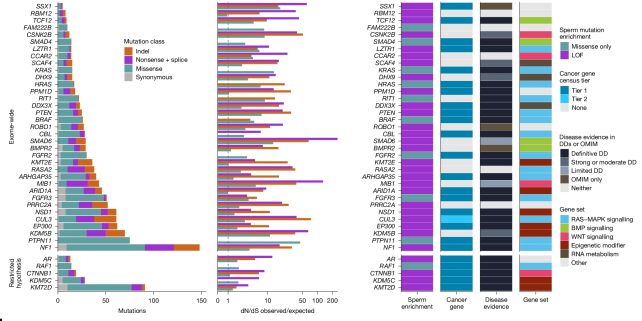
Many of them have troubling implications for the offspring that inherit them. Of the 31 newly identified genes, 27 are linked to genetic disorders, while 16 are also known cancer genes.
Those aren't just abstract findings. Mutations previously seen repeatedly in children with developmental disorders were 66 times more common in the sperm dataset than expected from the underlying mutation rate.
Age added another facet to the findings. Across the sperm genomes they analyzed, the researchers found that mutations accumulated at a steady rate of around 1.67 per year.
Between that accumulation and the positive selection for advantageous mutations, the mutation load climbed much higher as men aged.
The researchers estimated that, at age 30, around 2 percent of a man's sperm carried a likely disease-causing mutation. By age 70, that figure had risen to around 4.5 percent.
Without positive selection, their model predicted much lower rates: around 0.73 percent at age 30 and 1.6 percent at age 70.
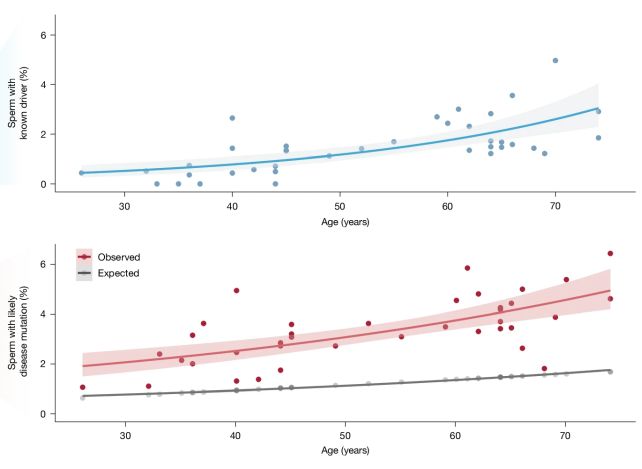
That suggests that the evolutionary battle royale taking place inside the testes appeared to increase the prevalence of potentially disease-causing mutations by roughly two- to threefold.
Crucially, though, that doesn't mean a 4.5 percent chance of passing a genetic disorder to a child.
A mutation detected in sperm still has a long way to go before it ends up in a living baby.
Some affected sperm may be less likely to fertilize an egg, while some mutations may result in an embryo that doesn't survive or a pregnancy that ends in loss.
The researchers caution that the relationship between mutations in sperm and the prevalence of disorders at birth remains uncertain.
And, interestingly, evolution itself seems to provide another filter.
When the researchers looked at genetic variation across the wider human population, they found evidence that many of the mutations favored during sperm production are selected against over successive generations.
So the testicles create the problem, and the world cleans up their mess.
Sounds about right, really.
The research was published in Nature in October 2025.
This article was fact-checked by Rachel Garner and edited by Peter Dockrill. While we pride ourselves on our process, we are only human. If you spot a mistake, please let us know.