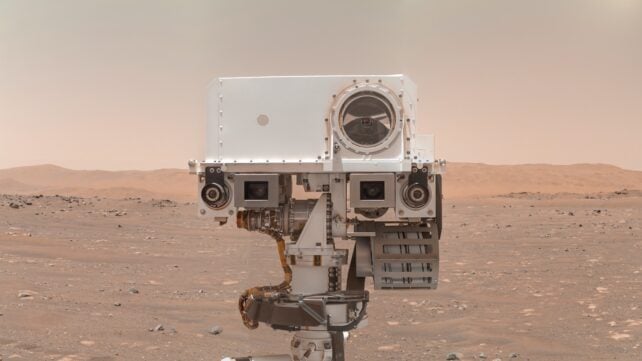
When we look up at Mars, many millions of miles away, it's inspiring to think that someone may be looking back at us – not any heat-ray-equipped aliens, thankfully, but one of humanity's greatest accomplishments: NASA's Perseverance rover.
In July of 2020, the affectionately nicknamed Percy left Earth forever in a bright flash of hope during some of modern history's darkest days.
It, and we, have come a long way since then.
In fact, Perseverance has recently achieved something completely unique: it has traveled farther across the surface of another world than any previous entity.
As its interplanetary odometer ticked off 45.22 kilometers (28.10 miles) on October 11, it graciously surpassed the record set by its older sibling Opportunity, which traversed 45.16 kilometers of dusty, red, rocky Martian expanse from 2004 to 2018.
Perseverance is a product of its predecessors. It has covered more than 90 percent of its record-breaking distance through its own wits, using its AutoNav system to scan and safely scale the wild terrain between waypoints set by scientists on Earth.
This feat was made possible by the twin rovers Opportunity and Spirit, which completed around 5 percent of their distance using the earliest AutoNav system.
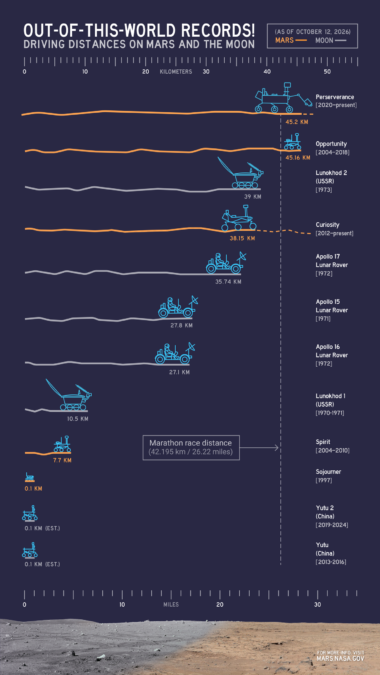
Perseverance's most prototypical predecessor, and the first rover on Mars, was a dog-sized explorer named Sojourner, which landed in 1997 and covered around 100 meters.
And while Sojourner took 20 measurement points of the path ahead of it, Perseverance processes 200,000 with each glance, JPL scientists point out.
It can do this at or near its top speed, "thinking while driving" to cover as much as a blistering 412 meters (1,351 feet) in a single sol, or Martian day, which is about 40 minutes longer than an Earth day.
Perseverance has also provided a real 'Wright Brothers moment' with its Ingenuity Mars Helicopter, the first controlled aircraft flown on another planet.
Instead of performing five test flights in 30 days, it shattered everyone's hopes. In a good way, because it made 72 flights across three years, covering 17 kilometers and lifting itself nearly 24 meters in Mars' whisper-thin atmosphere.
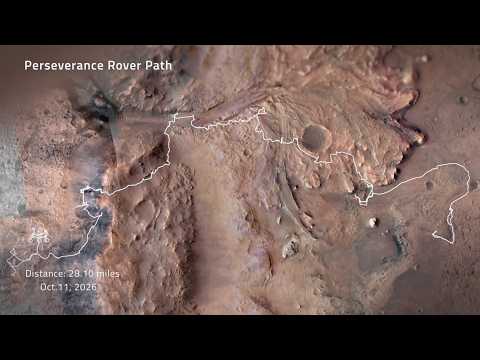
Perseverance's current objective is skirting Jezero Crater, so it's in the Lac de Charmes region, which may one day be the wine-growing part of Mars.
It's exploring some of the oldest rocks we've ever laid eyes, lasers, or robotic arms upon – "probably older than 4 billion years," says Ken Farley, professor of geochemistry at Caltech and former Perseverance project scientist.
"There are few rocks on Earth older than 4 billion years. So we are in an area that is very deep in the history of the solar system."
On Earth, most rocks of such an ancient age have been disintegrated by erosion or recycled by plate tectonics. Yet some remain, and may hold traces of early life.
Of course, this may be the ultimate goal for Perseverance. And it has found what may be the best evidence for extraterrestrial biology yet, trapped within the leopard-spot speckled rock called Cheyava Falls, in an ancient asteroid-gouged basin that held water several billion years ago.
Perseverance is now on the western rim of Jezero Crater in Lac de Charmes, on its way to check out Idubi, which may have been a hydrothermal system, possibly similar to those thought to have helped life arise on Earth.
Rainbow Falls is another revealing target: a chunk of Mars ripped out of the ground by the impact that created Jezero Crater.
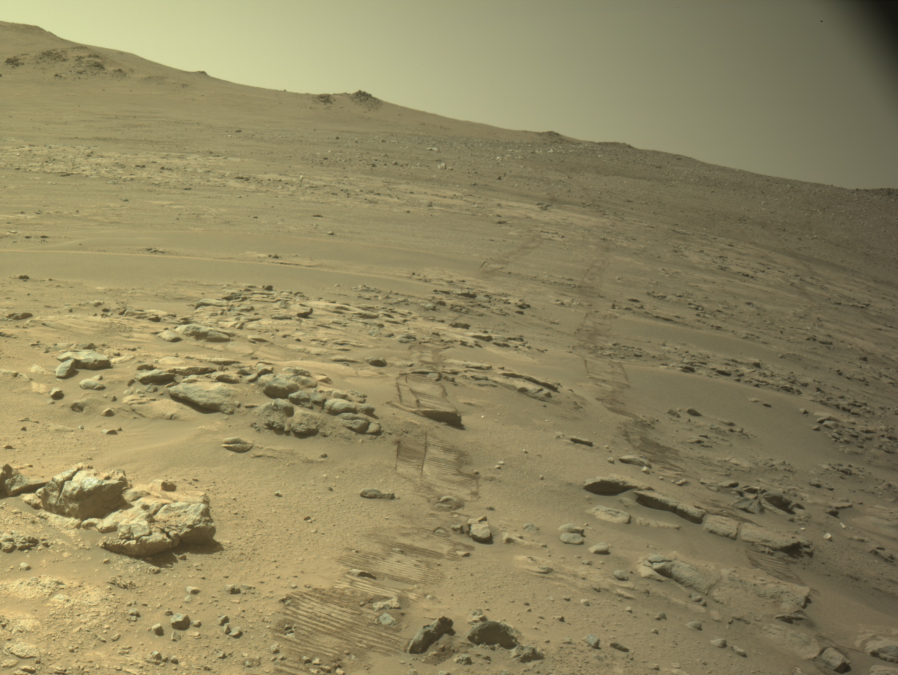
Perseverance therefore presents a contrast. Searching for life signs from faraway exoplanets is essential, but rife with challenges, as shown by the highly disputed 'biosignature' from K2-18b, or the more locally famous but equally fickle phosphine from Venus.
As Farley suggests, "the place that will give the richest information is the one you can bring samples from."
A return mission is the obvious next step, though NASA's Mars Sample Return program lost its funding earlier this year, leaving the timing of any retrieval uncertain.
Since Mars was a wet planet when life evolved on Earth, collected samples can help answer the most profound existential question – the evidence is 'bagged' and waiting just down our cosmic street.
Such a mission would also inform future efforts to convey humans to the red planet and back, safe and sound, sacrificing only their squat and bench press numbers.
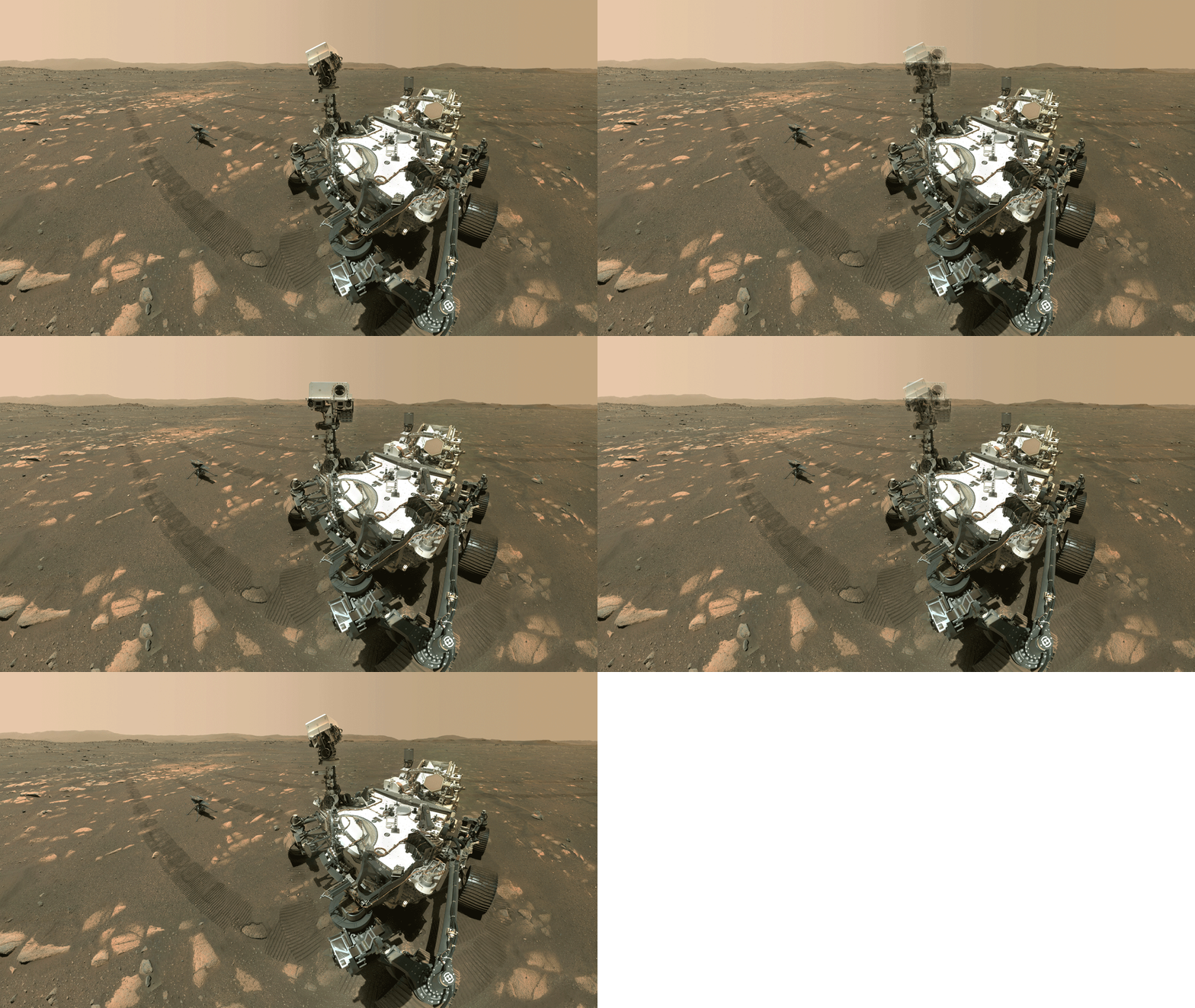
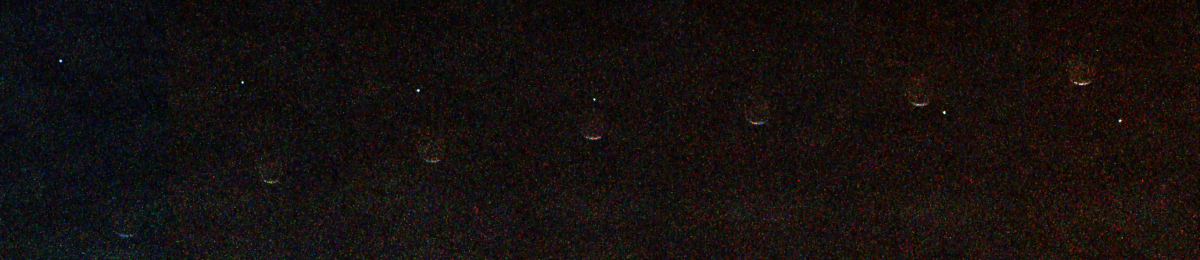
Finally, if anyone feels wistful for Percy spending cold nights alone on a faraway world, consider that our emissary has seen stunning sunsets, glimpsed green-glowing auroras, and, perhaps, been the first to see signs of another lineage of life in the Solar System.
Not a bad haul, and a privilege passed to us.
This article was fact-checked by Rebecca Dyer and edited by Rebecca Dyer. While we pride ourselves on our process, we are only human. If you spot a mistake, please let us know.