It took approximately 4 billion years of cumulative evolution to make modern humans, but it only took us 0.000075 of that immense span to settle the entire globe – including (kind of) Antarctica, thanks to the invention of high-capacity poo incinerators.
Our innate intrepidity and ants-in-the-pants-iness have driven us across scorching deserts, the rarefied air atop jagged mountains, and slashing through jungles. Then, when the endless oceans stopped us, we built boats.
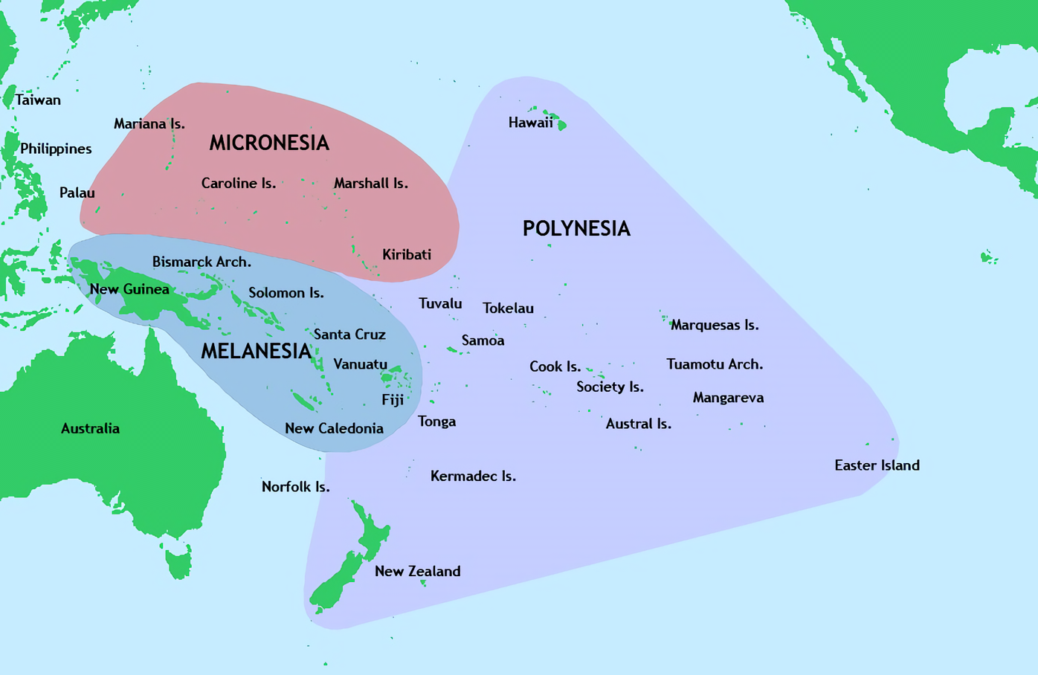
And thus, over 3,000 years ago, our ancestors began peopling Polynesia, which includes over 1,000 islands spanning an expanse of the Pacific Ocean the size of North and South America combined.
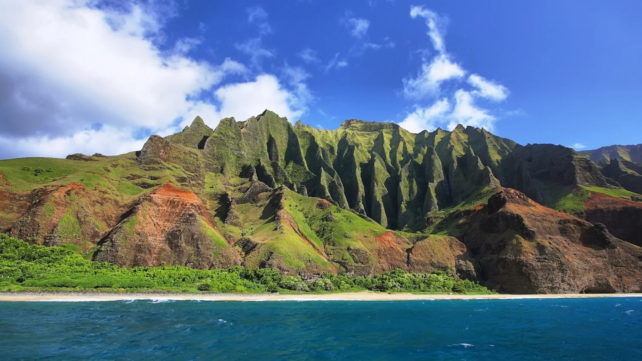
Millennia later, they reached Hawaii, a lush paradise born of Earth's inner fire, and among the most isolated places on Earth. But where did these communities come from?
Science now has the clearest answer yet, as published in the journal Science:
"What we uncover in this paper is where the native people of Hawaii had come from," says Alexander Ioannidis, a genetics and biomedical data science researcher at Stanford University and the study's co-senior author.
"Hawaii is the only Polynesian island in the Northern Hemisphere, so it's a long way from everything."
A long way is an understatement. Accordingly, the crux of this landmark study is the evidence that the closest genetic ties are between the two most-separated islands: Hawaii and Rapa Nui (also known as Easter Island), which are each over 3,000 kilometers (nearly 2,000 miles) from the nearest inhabited island and 7,000 kilometers from each other.
They're a bit less related to people from Mangareva Island, suggesting this locality was the ancestral launching point for the modern populations of Hawaii and Rapa Nui.
Altogether, the Polynesian peopling was achieved piecemeal and in small populations.
This eventually led to one of the dark sides of exploration: the founder effect, a genetic bottleneck in which small founding populations experience reduced genomic variation and resilience, increasing the odds of harmful mutations.
In the absence of written chronicles, and TikTok still millennia away, the researchers genetically recreated the history of the Polynesian peoples.
They explored these genetic histories and how they relate to founder effects by analyzing previously published whole-genome sequencing data from 1,050 individuals across French Polynesia. Also, 12 unpublished genomes from Rapa Nui, and genomic data from Native Hawaiians, Samoans, and Tongans from the NIH's All of Us Biobank.
They isolated genetic segments of Polynesian ancestry via the machine learning Gnomix analyzer, using genomic data from diverse populations around the world as a reference panel.
They then applied an identity by descent (IBD) method, which links past people to living descendants to reveal common ancestors - a technique that previously illuminated some of America's earliest colonists.
And while other populations, like the Amish and Finnish, have experienced a known bottleneck or two, Native Hawaiians may have experienced a series of them, as modest populations navigated between islands on double-hulled catamarans that could only accommodate dozens of people.
The researchers' previous genetic study pinpointed the ultra-migrations of Polynesians as they crisscrossed the Pacific:
From Samoa to Fiji and Tonga, followed by an eastward inching toward the Cook Islands, then the Society Islands, which include Tahiti, then, after yet more island hopping, Rapa Nui in 1210.
The researchers also performed a genetic analysis of people from Tahiti, as they represent the largest genomic dataset. A comparison of IBD snippets suggests that the island was founded by around 800 individuals of reproductive age (an estimate excluding elders and children) who arrived 34 generations ago, circa 1070.
But, how do these bottlenecks actually affect the odds of disease?
The researchers described three genetic mutations recently associated with autosomal recessive conditions, meaning they require two copies of a mutated gene, one from each parent, to potentially cause a certain condition.
The gene ADAMTSL4 normally helps build our bodies, but two 'bad' copies can cause a detached lens in the eye. Similarly, the gene PDE6B helps us see, but its variant can cause progressive vision loss. Finally, FAN1 is responsible for DNA repair, but the mutations can cause kidney failure.
These mutations range from rare to exceedingly rare in other populations.
The FAN1 variant, uniquely, was not found in a single individual in the gnomAD database, which includes more than 800,000 combined genomes and exomes (the protein-making portions of a genome; about one percent of DNA).

In the context above, and more to be discovered, this work is vital to disentangle the potential health risks of populations with diverse ancestries and genetic profiles as it relates to screening guidelines, like those of the American College of Medical Genetics and Genomics (ACMG), to facilitate precise and equitable healthcare for all.
This may be especially important here:
"We don't have recommendations for genetic testing, and there's no reimbursement from insurance because these are conditions we don't even know about," Ioannidis concludes.
Finally, what affects some of us affects us all:
"This is a population that should be getting research resources and attention from geneticists even more urgently."
The research has been published in Science.
This article was fact-checked by Fiona MacDonald and edited by Fiona MacDonald. While we pride ourselves on our process, we are only human. If you spot a mistake, please let us know.