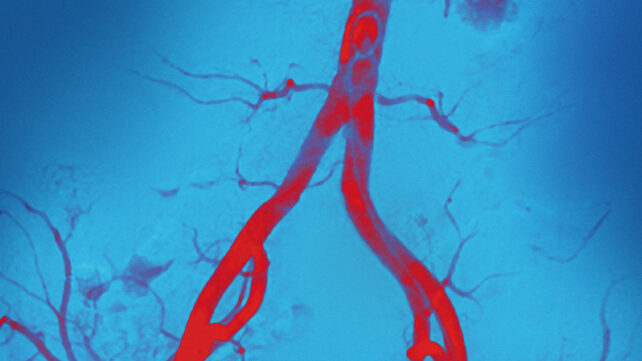
One of the reasons that our health becomes more precarious as we age is that our blood vessels stiffen up and become less flexible, which can increase the risk of higher blood pressure and cardiovascular issues.
Now researchers led by a team from the University of Surrey in the UK may have discovered a new way to counteract that gradual decline in blood vessel flexibility.
They tested an already-available longevity and anti-aging supplement called Novos Core in 61 people aged over 40.
A little over half of the participants got Novos Core in a powdered formula, while the others were given a placebo powder. Both groups were followed for six months, while researchers kept tabs on the participants' cardiovascular health, including the work done by the lining of the blood vessels (the endothelium).
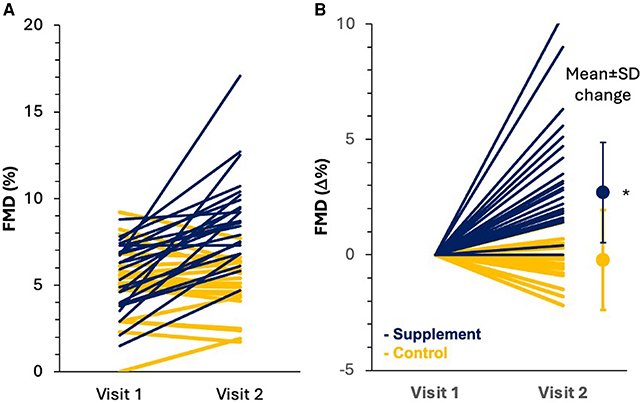
The final results showed a positive association between Novos Core and blood vessel function: not only did blood vessels start to behave in a more youthful way, some of the improvements were seen after just an hour.
"In apparently healthy adults, six months of daily intake of a multi-ingredient nutritional powder formulation was associated with favorable changes in vascular aging markers, including improved endothelial function, reduced device-derived arterial stiffness, and lower systolic blood pressure compared with control," write the researchers in their published paper.
For those in the Novos Core group, blood vessels got better at widening to allow more blood through, while arteries became softer and less stiff. Blood pressure in these participants went down too – systolic blood pressure (the top number in readings) dropped by 6.1 mmHg more on average than for those in the placebo group.

The 10-year estimated risk of heart attacks and strokes went down for the Novos Core group too, but it's important to bear in mind these events weren't tracked. There was no difference in low-density lipoprotein (LDL) cholesterol reduction between the two groups – the 'bad' cholesterol linked with poorer heart health.
As an anti-aging supplement, Novos Core combines several ingredients that researchers have previously linked to slower biological aging, including magnesium, glucosamine, ginger extract, and vitamin C.
"The formulation evaluated in the present study was selected to combine ingredients with prior evidence of relevance to complementary biological domains implicated in aging and vascular dysfunction, including endothelial function, redox balance, inflammatory signaling, metabolic regulation, and vascular tone," write the researchers.
Now we know that some of those ingredients are apparently acting on blood vessel function, which may explain why they're already associated with the body's aging process and better cardiovascular health.
There's still plenty of research work left to be done, though. The blood health markers that the study looked at are significant, but the participants weren't followed to see who did or didn't go on to have heart health problems in the future.
"The findings provide an interesting proof of concept, but the important next step is to understand the underlying biology and establish whether changes in cardiovascular biomarkers translate into meaningful longer-term health benefits," says Juliet Wright, the Founding Dean of Medicine at the University of Surrey, who wasn't directly involved in the research.
Further research would be able to look at larger, more diverse groups of people, and perhaps tease out the effects of the different ingredients in Novos Core. Right now, it's tricky to know which of its various compounds are having the most effect.
It's also worth noting that the funding for the research came from the Novos company that makes Novos Core, though the paper declares that Novos "had no role" in the study design, or the "collection, primary analysis or interpretation of data".
"These findings are encouraging," says Christian Heiss, a professor of cardiovascular medicine at the University of Surrey.
"We now need larger studies to understand the mechanisms involved and, importantly, whether these changes translate into longer-term health benefits."
The research has been published in European Heart Journal Open.
This article was fact-checked by Fiona MacDonald and edited by Fiona MacDonald. While we pride ourselves on our process, we are only human. If you spot a mistake, please let us know.