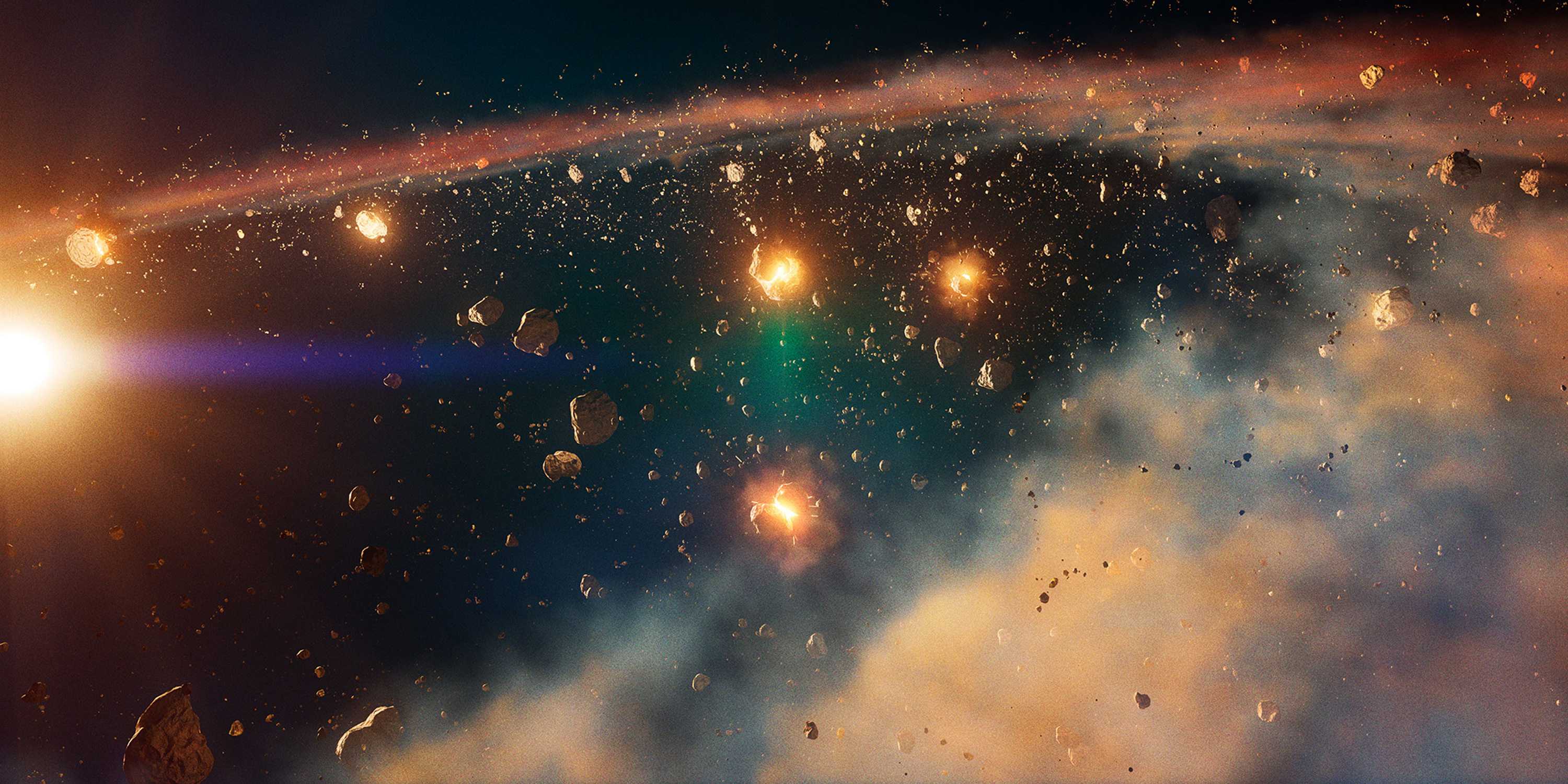
The Solar System is full of the ghostly remnants of its violent birth.
This ancient debris includes sad little rocks that never coalesced into large bodies, as well as the rocky guts of ancient planetary objects smashed apart by the catastrophic collisions that were surprisingly common more than 4 billion years ago.
Until recently, these stony, icy, or mixed space rocks were thought to come in two main flavors: asteroids and comets, differing in their composition, orbits, visible features, and activity.
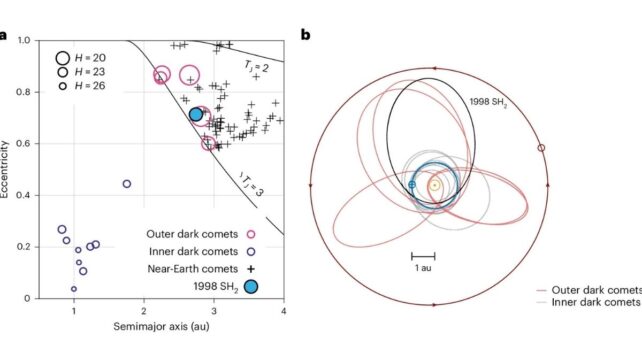
But now, astronomers are increasingly discovering a weird family of asteroid-comet hybrids called 'dark comets,' which may be surprisingly common – including, perhaps worryingly, around Earth.
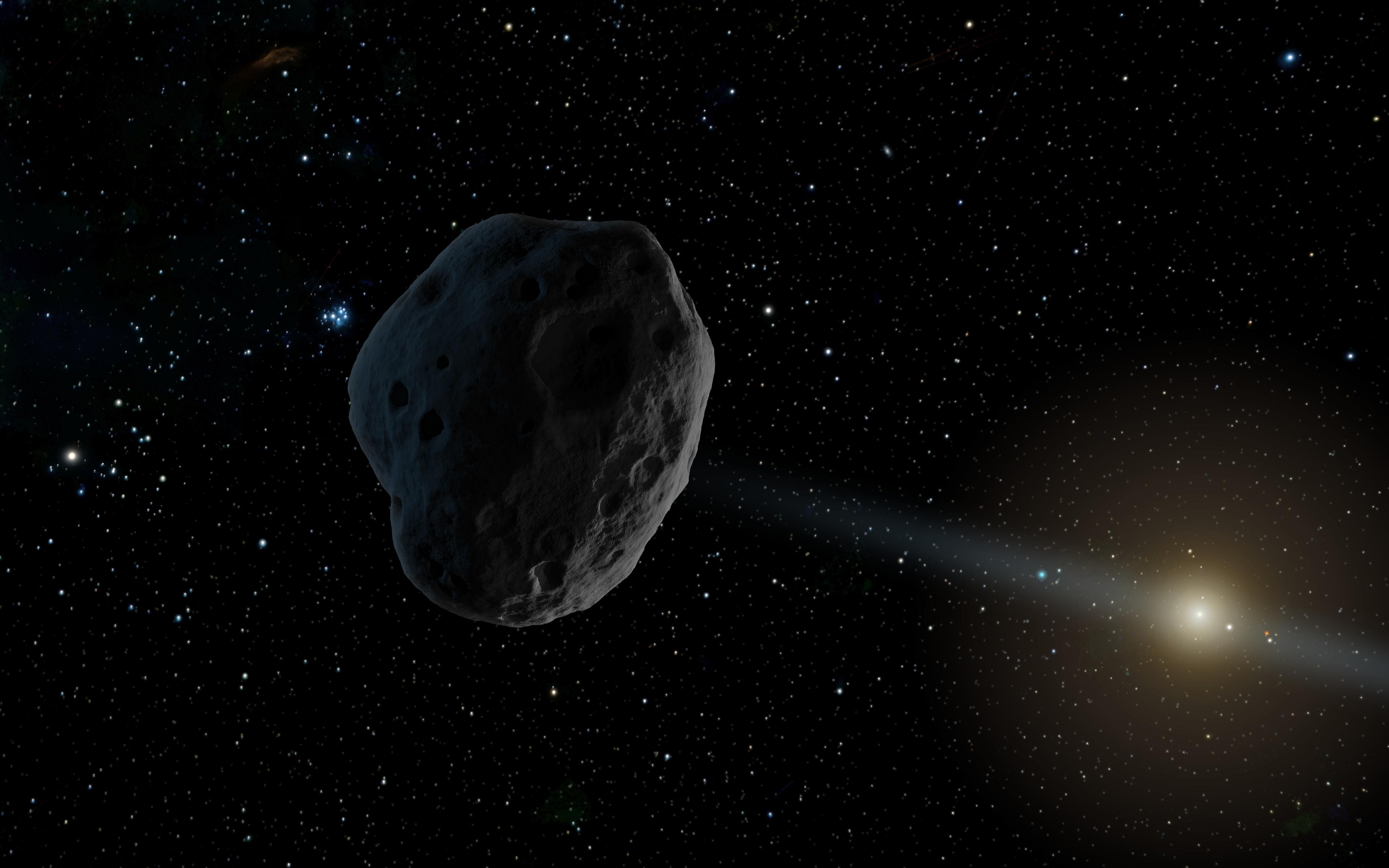
These dark comets may appear to be asteroids, lacking a brilliantly glowing tail.
Yet they also exhibit non-gravitational perturbations, like comets, indicating that a hidden source, such as escaping gas, is causing them to accelerate or change direction.
In a new study, astronomers have revealed that a near-Earth asteroid discovered in 1998 is actually one such dark comet, with important implications for Earth's past and future.
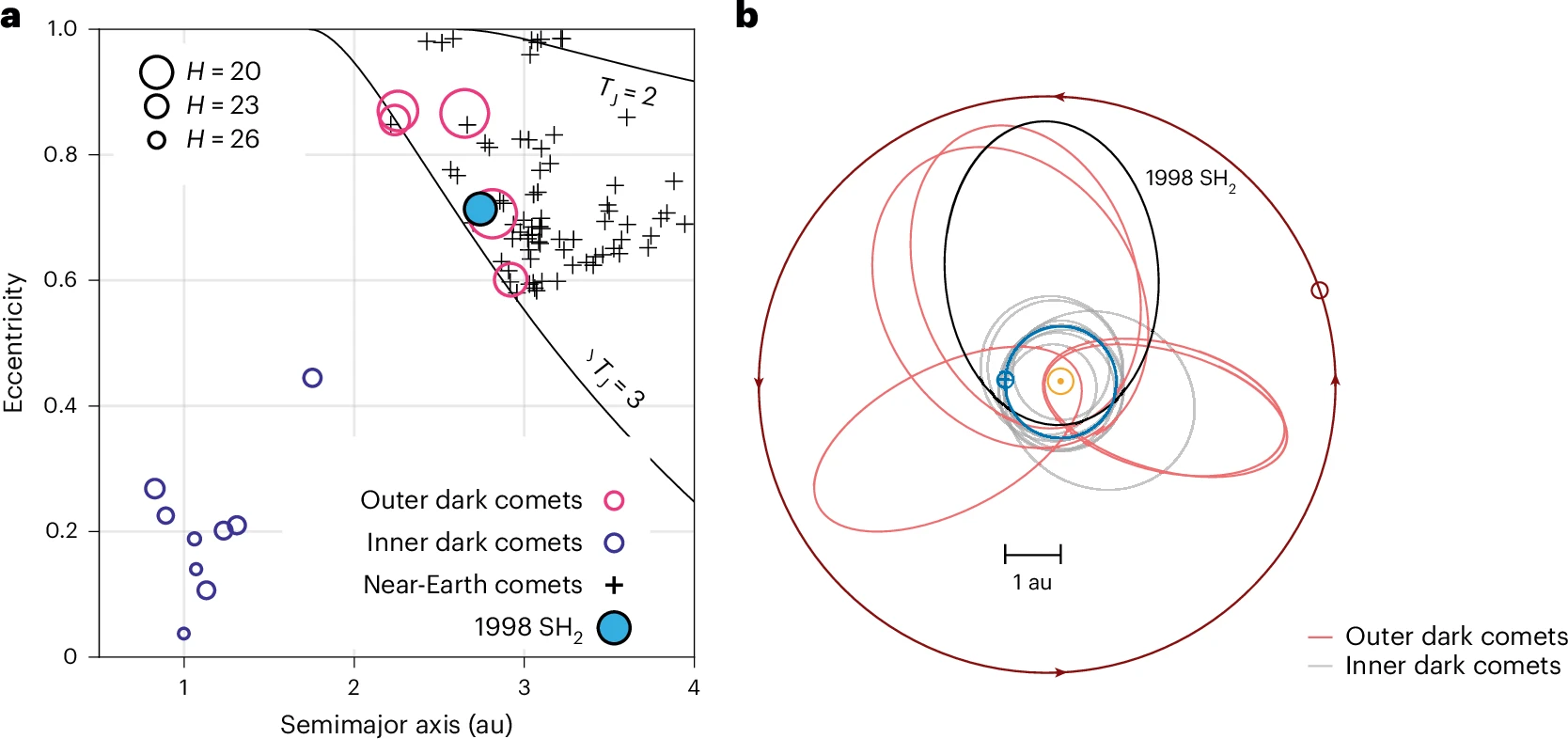
Astronomers tracked the orbit of the assumed asteroid 1998 SH2 from 1998 to 2016, but did not observe it as it made its next two 4.5-year orbits around the Sun.
When it passed just 3 million kilometers (2 million miles) from Earth in 2025 on its next sunward swing – at a harrowing distance of 0.02 astronomical units – it did not take the path that astronomers had calculated based on their previous observations.
So they studied its movements in optical light using numerous observatories, including the global Asteroid Terrestrial-impact Last Alert System (ATLAS), the Canada-France-Hawai'i Telescope (CFHT) in Hawai'i, and two European Southern Observatory (ESO) facilities in Chile.
These observations revealed that 1998 SH2 did indeed exhibit signature cometary features. These include a faint coma, or gaseous halo around its body, as well as a weak, narrow tail, suggesting that when "cometary activity is weak, outgassing may remain undetected for decades."
Based on simulations, the astronomers conclude that 1998 SH2's non-gravitational movement was caused by ice sublimating beneath its surface, rather than by minor impacts or material thrown off due to its spin.
This research therefore represents a milestone, as "1998 SH2 is the first object for which cometary activity was initially predicted based on non-gravitational perturbations to its motion and then confirmed by targeted observational data," the researchers explain.
Overall, if such dark comets are more common than believed, they may have been implicated in delivering water to an early Earth.
Their non-gravitational mechanism may also help explain the strange accelerations observed in the interstellar visitor 'Oumuamua, offering a more practical (though less exciting) explanation than the alien-probe hypothesis.
So, like correcting a photo album of potentially mislabeled pictures, it may now be necessary to re-analyze astrometry data and identify any other odd-acting asteroids that may actually be comets.

"This work shows the importance of continuously tracking near-Earth objects," says Davide Farnocchia, a navigation engineer at NASA's Center for Near-Earth Object Studies at the Jet Propulsion Laboratory (JPL) and the study's lead author.
Because while mislabeling an obscure cousin in a family picnic photo may not be momentous, mislabeling an asteroid might be.
Space rocks that move unexpectedly are pretty irksome for planetary defense programs, which rely on predicting the movement of space rocks and accurately ascertaining their composition.
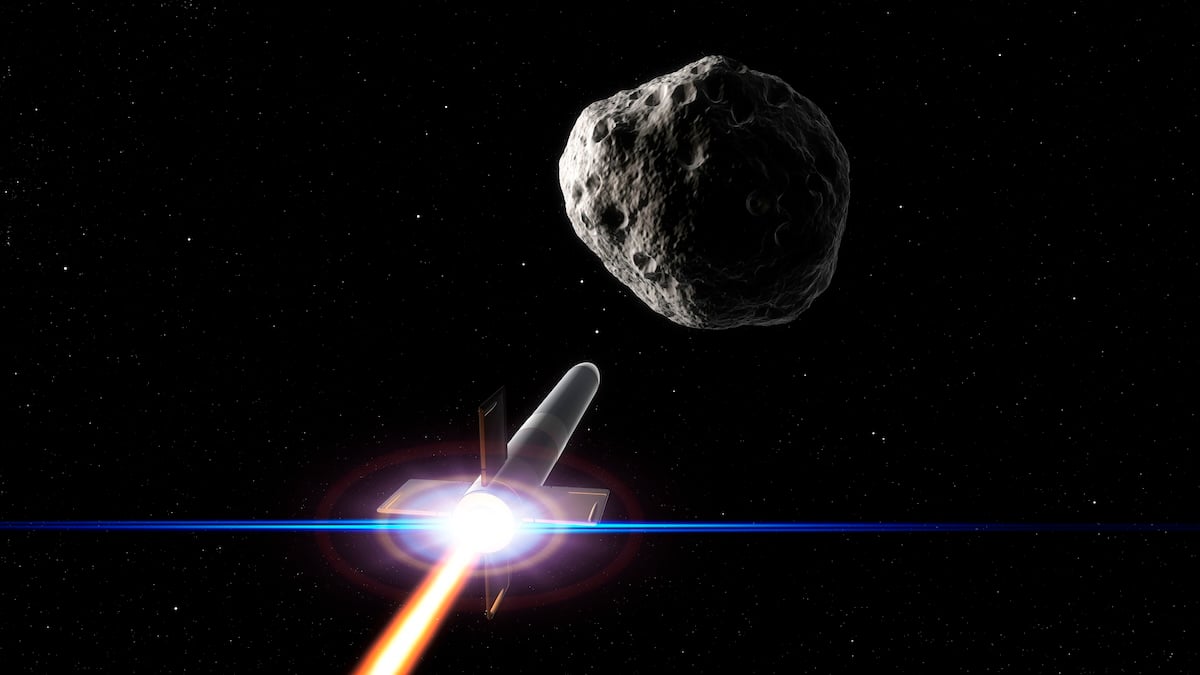
"Because of outgassing, the motion of comets is more significantly perturbed than that of asteroids," Farnocchia adds, so who can say when a comet's flatulent fancies may nudge it toward a certain blue-and-green planet.
For perspective, the meteor that exploded over Chelyabinsk in Russia in 2013 with the energy of more than 30 atomic bombs measured nearly 18 meters (60 feet) in diameter, while 1998 SH2 is about 380 meters across, according to the team's new estimates.
Thankfully, its odds of hitting Earth are still zero, though for all we know it could change unexpectedly. And other objects we think are asteroids might turn out to be comets.
Related: Moon Impact 3.5 Billion Years Ago Hints at Hidden Era of Solar System
Astronomers have detected more than 280 potentially hazardous asteroids that are at least around 140 meters in size and zoom within 0.05 astronomical units, 7.5 million kilometers (4.6 million miles), of Earth.
"Detecting these perturbations can be an important diagnostic tool for planetary defense that will help understand which objects may be comets rather than asteroids, how their orbits evolve, and how that influences their Earth impact risks," Farnocchia concludes.
This research was published in Nature Astronomy.
This article was fact-checked by Clare Watson and edited by Rebecca Dyer. While we pride ourselves on our process, we are only human. If you spot a mistake, please let us know.