
An international team of researchers has found that Neanderthals suffered a major population crash that started around 75,000 years ago.
While they did bounce back for a while, almost all late Neanderthals in Europe were descendants of one small group.
This low genetic diversity may have contributed to their extinction, around 40,000 years ago.
"We have evidence that Neanderthals inhabited Europe continuously between 400,000 and 40,000 years ago," says paleogeneticist Cosimo Posth, from the University of Tübingen in Germany.
"However, we have only fragmentary details of their population history. So far, we know very little about the evolutionary developments that preceded their extinction."
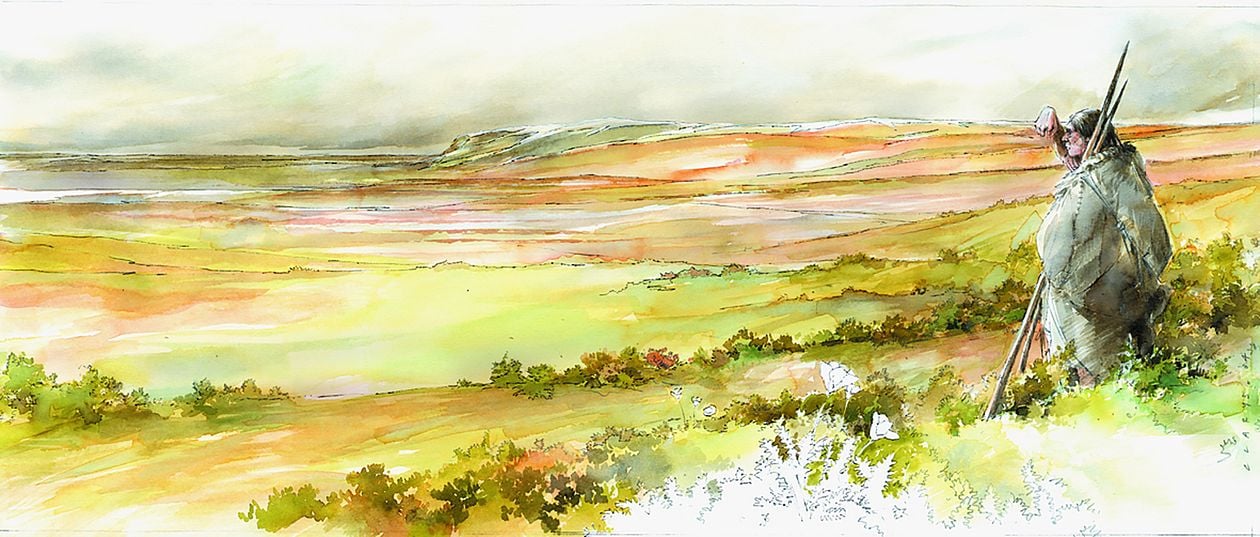
To investigate, the researchers on the new study combined DNA analysis with existing archaeological evidence to explain how, around 75,000 years ago, Ice Age conditions may have forced widespread groups of Neanderthals to retreat to a single safe zone, or refugium, somewhere in southwestern France.
The Late Neanderthals of Europe who were studied here lived between 60,000 and 40,000 years ago. The researchers analyzed the mitochondrial DNA (or mtDNA), passed down the maternal line, from the bones and teeth of 59 individual Neanderthals.
While mtDNA doesn't contain the full genome like standard DNA does, it is better at surviving in the environment across tens of thousands of years. It's also easier to extract from ancient remains, as was done here.
Through a statistical analysis of the mtDNA, the researchers were able to pinpoint 65,000 years ago as the time period when the population's genetics began to substantially diversify again – about the time the Neanderthals would have been able to emerge from their Ice Age refugium again.
While the mtDNA samples were taken across a wide geographical area, the same maternal branch of genetics was dominant across them all, pointing to a shared ancestry of a surprisingly small group of individuals.
"This explains why almost all Late Neanderthals sequenced so far – from the Iberian Peninsula to the Caucasus – belong to the same line of inherited mitochondrial DNA," says Posth.

It wasn't smooth sailing forever, though. The mtDNA also showed a sudden and steep drop in Neanderthal genetic diversity between 45,000 and 42,000 years ago.
This is evidence of a substantial and rapid decline in population numbers before the final extinction, which is thought to be around 40,000 years ago.
It's a strong indication of a species that has repeatedly spread out and broken up into smaller groups – which then makes them more vulnerable to natural disasters, environmental pressures, and the pressures of low genetic diversity (including disease and mutations).
While several assumptions need to be made to piece together the timeline that the researchers have come up with here, and mtDNA doesn't quite provide the complete picture that complete DNA records do, the study makes a compelling case.
It means we probably shouldn't think about European Neanderthal ancestry as being linear. Rather, it contracted, expanded again, and crashed down, before going completely extinct – that's the tale told here.
Each new Neanderthal study contributes something more to this fascinating period of history, just before Homo sapiens started to become the most dominant species on the planet. Learning more about the Neanderthals can often lead to a better understanding of our own species and our own history.
Related: Neanderthals May Never Have Truly Gone Extinct, Study Reveals
The study also showcases how different approaches to analysis in the same study – in this case both mtDNA and a wider collection of archaeological records, showing the movements of Neanderthal populations over time – can be used to reconstruct ancient history in a meaningful way.
"This allowed us to combine the two lines of evidence and reconstruct the demographic history of Neanderthals in terms of space and time," says Jesper Borre Pedersen, a paleolithic archaeologist from the University of Tübingen.
The research has been published in PNAS.