
Wipe on, wipe off.
The meditative movements of washing might not turn you into a karate star, as Mr. Miyagi intended, but they could calm your mind all the same.
In fact, Zen monks argue that a quiet, reflective clean is better for mental health than simply sitting and meditating.
That's why Zen apprentices spend much of their time sprucing up the monastery.
No randomized trial has yet tested that idea with scientific rigor, but some small experiments do suggest that cleaning may regulate the body's nervous system.
A simple chore like washing the dishes, for instance, may help calm the mind and lower stress levels.
A 2014 study, published in the journal Mindfulness, found that among 51 students, those who focused their minds on the act of washing dishes (smelling the soap and feeling the warm water on their hands) experienced mental health benefits.
They reported a decrease in nervousness by 27 percent and an increase in mental inspiration by 25 percent.
The control group, which washed the dishes as usual, did not experience either of these benefits.
It's a small experiment, but the findings suggest that clearing the mind isn't just about cleaning; it's about intentionally focusing on the task at hand.
When washing becomes a menial chore, some research suggests it may decrease well-being.
But if the act is voluntary and intentional, it could be more inspiring.
Our attitudes and approach to cleaning may matter for our mental health.
"I've had an interest in mindfulness for many years, both as a contemplative practitioner and a researcher," said study author Adam Hanley from Florida State University in 2015.
"I was particularly interested in how the mundane activities in life could be used to promote a mindful state and, thus, increase overall sense of well-being."
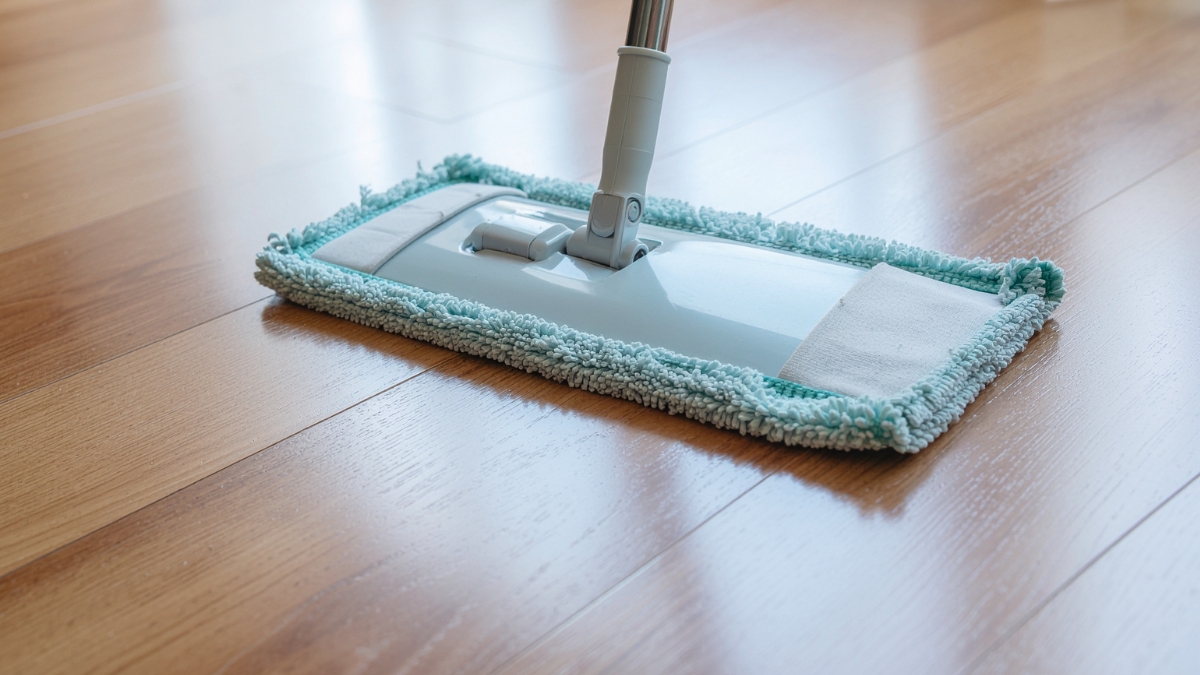
Clinical psychologist Holly Schiff is also interested in this field of research.
Earlier this year, she told Katherine Roth at the Associated Press that cleaning can be almost meditative if you slow down and focus on the sensory aspects of it.
Then, it becomes less like a chore, which may decrease well-being, and more like a mindfulness exercise, which can increase positive feelings and emotions.
"Repetitive, physical activities like cleaning can be regulating for the nervous system because they're predictable, structured, and give a clear sense of completion," explained Schiff.
Stress is known to trigger ritualized behaviors, like redundant, repetitive, or rigid hand movements.
Some people even use repetitive hand movements as coping strategies to deal with anxiety.
In experiments from 2015, 62 undergraduate students at Masaryk University in Czechia were randomly assigned to either a high-anxiety or a low-anxiety task.
In the high-anxiety task, participants had to present a decorative object to a panel of experts. Afterward, they had to clean the object.
Compared to those who experienced a low-anxiety task, participants who experienced the high-anxiety task used more repetitive movements while cleaning the object.
These movements were predicted by an increase in heart rate.
"Although the object was not symmetrical and different parts required different types of movements, participants in the high-anxiety condition kept applying similar movements," the researchers explained.
"In summary, our findings show that ritualization may be a spontaneous response to anxiety."

There may even be something stress-relieving about having your hands immersed in soap and hot water.
In 2022, experiments among more than 3,000 people revealed that after watching a stress-inducing physical scene, viewing a short video showing how to properly wash your hands somewhat alleviated anxiety.
What's more, after a mock job interview, participants who washed their hands showed a decrease in some physiological responses to stress.
Compared to static meditation, there is less rigorous research on meditative movements like washing, sweeping, vacuuming, or mowing.
It's hard to know whether these tasks help people cope with stress because of the physical movement or the satisfying results.
Gentle movement, a sensory focus, a predictable sequence, and a visible reward could all be contributing to better mental well-being.
In observational research, for instance, a more cluttered household significantly predicted lower well-being.
A 2009 study also found that mothers experienced less healthy cortisol levels when they considered their home environment cluttered.
Related: Living at High Altitude Appears to Rewire Your Brain, Study Finds
Some preliminary evidence even suggests that clutter in the bedroom can impact sleep.
But studies like these don't make it clear whether people with lower well-being or higher stress are simply less likely to clean, or whether clutter itself affects their mental health.
It could be a two-way road. An ordered mind may lead to more order in a person's surroundings, and vice versa.
"They are definitely interrelated," clinical psychologist Dawn Potter explained on the Cleveland Clinic's Health Essentials podcast in 2021.
"A lot of people do find cleaning to be very satisfying, but also to be a very good way of managing stress or anxiety.
"So a lot of people, when they are faced with other problems that maybe they can't address at the time, or they're just kind of overwhelmed, they find that cleaning helps them restore a sense of control."
It's like the Zen monks say: "Before enlightenment, chop wood, carry water. After enlightenment, chop wood, carry water."
If sitting cross-legged on the floor sounds too difficult or strange, why not pick up a rag and some Windex instead?
At worst, you end up with a clearer outward view. At best, you'll have a clearer inward one, too.
This article was fact-checked by Rebecca Dyer and edited by Rebecca Dyer. While we pride ourselves on our process, we are only human. If you spot a mistake, please let us know.