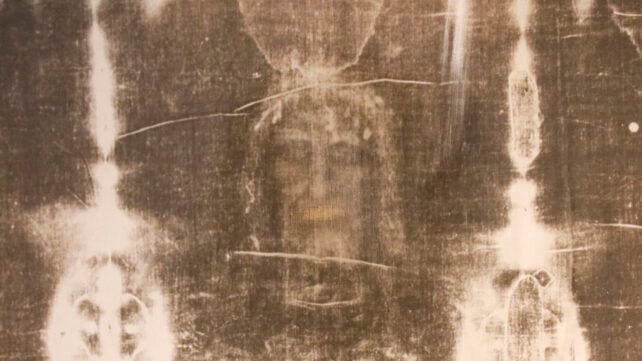
The Shroud of Turin has had a long and fascinating history since its existence was first recorded in historical documents in 1354, and there continues to be plenty of debate around what exactly this ancient artifact is.
A study published in Scientific Reports represents the most thorough DNA analysis of the Shroud to date, with an international team of researchers tracking all of the available genetic evidence that has settled on the cloth over the ages.
While the analysis doesn't tell us if this fabric was once wrapped around the body of Jesus or not, it does tell us more about the journey it's been on, and the effects that human repair and handling have had on it.
"The Shroud represents a rich archive of genetic information that has accumulated over centuries of human interaction and environmental exposure," says forensic scientist Noemi Procopio, from the University of Lancashire in the UK.
While DNA tests have been carried out on the cloth before, here the researchers went several steps further with a PCR-free, next-generation metagenomic sequencing method.
PCR-free means there was no artificial copying of DNA fragments (via a method called polymerase chain reaction), reducing the likelihood of bias.

Add in those other technical terms – the next-generation aspect (reading millions of DNA fragments in parallel), and the metagenomic approach (looking for DNA from any kind of organism rather than a single one), and you can see why it's more comprehensive than previous tests.
The analysis turned up a wealth of findings.
There was evidence of DNA from multiple human lineages, including from Europe and the Middle East, as well as genetic material from animals including dogs, cats, pigs, horses, cattle, and chickens.
There were also indications that the Shroud has come into contact with Mediterranean red coral, used extensively in the past for jewelry and decoration, as well as fragments of crops such as wheat and maize.
Elements of carrots, bananas, oranges, peanuts, and potatoes were also found.
Maize and peanuts are American crops, and bananas and oranges arrived in Europe along trade routes that opened late.
Taken together, Barcaccia and colleagues argue, the plant and animal traces point to contamination no earlier than the Late Middle Ages, in the centuries after Marco Polo and Columbus.
"While the DNA evidence cannot answer all the questions about the age or authenticity of the cloth, it provides novel insights into its biological history and demonstrates how advances in forensic science can unlock new information from historical artifacts," says Procopio.
Much of the human DNA that the team spotted matched the late Professor Pierluigi Baima Bollone. He's the researcher who back in 1978 collected the samples from the Shroud of Turin that this latest study reanalyzes.
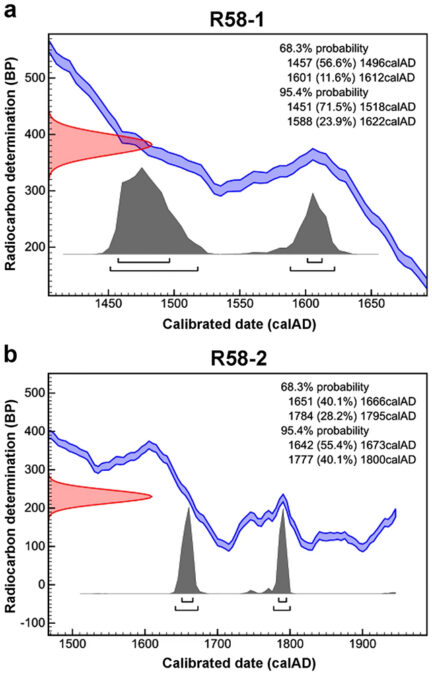
Outside of the DNA work, radiocarbon analysis of two threads collected from the Shroud's reliquary dated them to 1451–1622 CE and 1642–1800 CE, much later than the Shroud.
Those dates overlap with periods when the cloth is known to have been repaired: in 1534, after a fire at Chambéry, and again in 1694.
"Our findings constitute a novel and significant contribution to the field, thoroughly elucidating the biological traces left by centuries of social, cultural, and ecological engagement," write the researchers in their published paper.
There are still a lot of questions remaining about the origin and authenticity of the Shroud of Turin, but this latest analysis adds plenty of background context – and shows that as scientific techniques improve, we can learn much more about this famous piece of cloth.
Further insights might be gathered by comparing the findings here with other ancient textiles and artifacts, according to the researchers, and these advanced methods have again proved how effective they are at identifying DNA signatures.
"The Shroud of Turin continues to fascinate historians, scientists, and the public, and we're thrilled to reveal new information about the biological complexity preserved within samples collected almost 50 years ago by applying new cutting-edge forensic DNA technologies," says Procopio.
The research has been published in Scientific Reports.
This article was fact-checked by Rebecca Dyer and edited by Rebecca Dyer. While we pride ourselves on our process, we are only human. If you spot a mistake, please let us know.