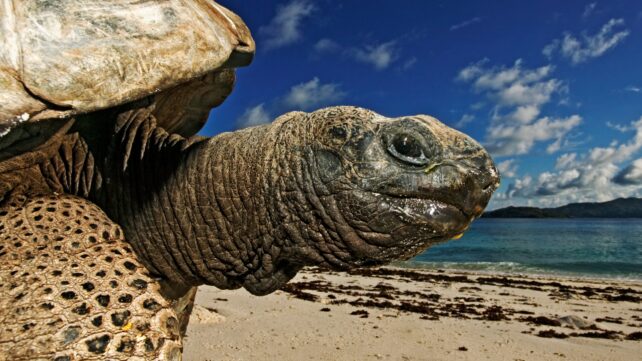
Before human explorers came along, the Seychelles archipelago was a haven for animals.
The islands' relatively peaceful history, prior to the Age of Exploration, is written into the DNA of the majestic Aldabra giant tortoises (Aldabrachelys gigantea).
Their chunky, armored shells provided them ample protection from any trouble they were likely to encounter on the isolated islands, though they had very few natural predators to contend with.
Ample food supply and little predation enabled them to reach famously ripe old ages, and all without much need for speed or aggression.
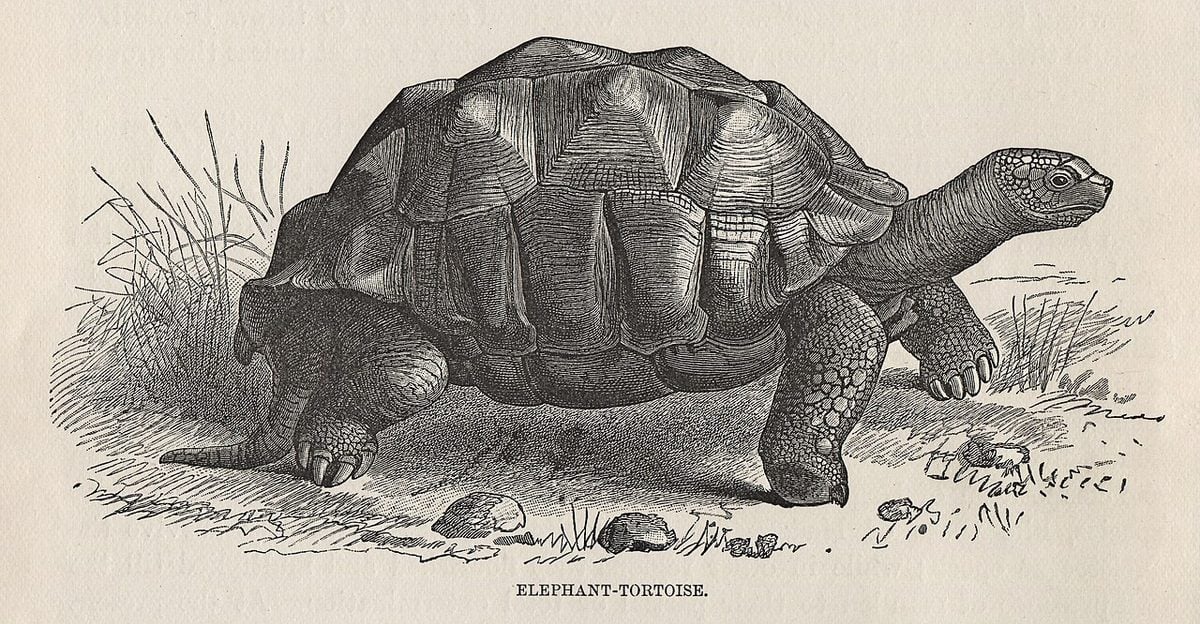

Then, in the 15th century, European explorers started showing up. And sailors. And even pirates, apparently.
On their way across the vast seas, this island full of giant, slow-moving tortoises was easy pickings for food.
With each new boatload of seafarers, the Aldabra giant tortoise population dwindled. By the 19th century, fewer than a thousand tortoises remained on Aldabra Atoll.
But you wouldn't know it, looking at the island's tortoise population today.
Recent surveys of the Aldabra Atoll have revealed the species has reached record-high numbers following decades of protection, outnumbering the Seychelles' human population for the first time in centuries.
The results of the atoll-wide population study have been published in Ecology and Evolution.
"More than 180,000 giant tortoises roaming freely on our atoll is proof of what long-term commitment to conservation can achieve," says conservation biologist Frauke Fleischer-Dogley, CEO of the Seychelles Islands Foundation and an author on the paper.
"This is wonderful news for Seychelles, for the world, and for everyone who has worked to protect Aldabra."
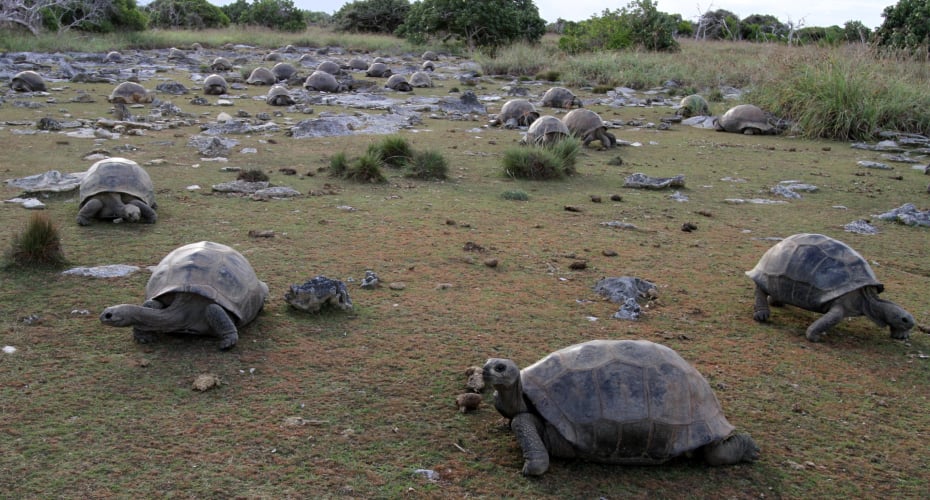
It's the first time the population's numbers have been rigorously surveyed since the 1990s. In 1981, Aldabra became a strict nature reserve to support the tortoises' recovery; in 1982, it was named a UNESCO site.
"Aldabra's giant tortoise monitoring program is one of the longest-running in the region, but the atoll's dense vegetation makes counting tortoises genuinely difficult in places," says island biologist Nancy Bunbury.
"By modeling what we didn't see, as well as what we did, we've produced the most reliable baseline yet for this iconic Seychelles species, establishing a benchmark we can use to track the population for decades to come."
Perhaps unsurprisingly, the tortoises were recorded flocking at the atoll's 'tortoise turf', open grasslands that are maintained by the reptiles' constant munching.
The tortoises may be safe from hungry sailors for now, but many other threats still remain.
The atoll is vulnerable to sea level rise and drought, as human fossil fuel use continues to change the global climate at an unprecedented rate.
Meanwhile, feral cats and black rats still abound on the atoll, preying on the tortoises' eggs and hatchlings.
"It's important to remember that the numbers provide a baseline – not an endpoint," says ecologist Dave Hudson of the University of Exeter in the UK.
"Hopefully we have provided the conservation managers the evidence they need to track future change and act early as the tortoises face increasing pressures from climate change, drought and invasive species."
The research has been published in Ecology and Evolution.
This article was fact-checked by Rachel Garner and edited by Peter Dockrill. While we pride ourselves on our process, we are only human. If you spot a mistake, please let us know.