
When a panic attack hits, it can be a scary, overwhelming, debilitating experience – but an effective new treatment could be on the way, in the form of an antibiotic.
It's already known that carbon dioxide (CO2) can induce panic attacks, as the brain senses signs of suffocation, and that brain immune cells known as microglia could be involved in triggering the emergency response.
That's where minocycline comes in. It's a common antibiotic with effects that include reducing inflammation and calming down microglia.
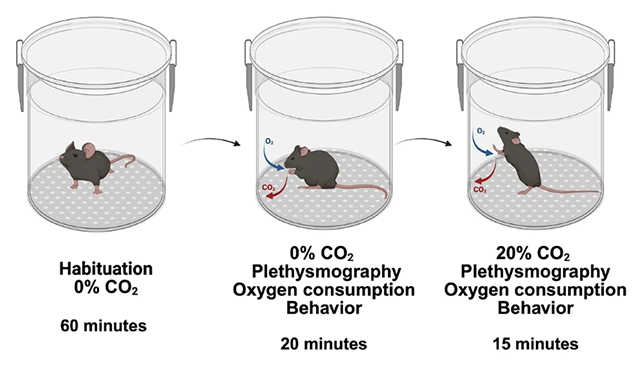
In the new study, researchers from institutions in Brazil wanted to join these dots and see if minocycline might be a suitable treatment for panic attacks. They tested a course of minocycline doses on mice and on 40 women and 9 men with panic disorder.
"In our experimental model, which uses carbon dioxide inhalation to induce a panic attack, the mice treated with minocycline for 14 days prior to the experiment showed a reduction in one of the panic-inducing responses," says biologist Beatriz de Oliveira, from São Paulo State University (UNESP).
"In humans, the treatment reduced the intensity of panic attacks triggered by CO2 inhalation."
In both the animals and the human patients, minocycline was tested alongside clonazepam (usually branded as Klonopin or Rivotril), the most commonly prescribed anti-panic medication.
After 14 days of treatment with either minocycline or clonazepam, mice were consistently less jumpy when exposed to CO2. In addition, the mice on minocycline showed slightly calmer breathing patterns and changes to their metabolism.

Further analysis of the mice supported the plan to target microglia. Bursts of CO2 did indeed cause these immune cells to become more active in the locus coeruleus, a brainstem region responsible for CO2 detection and breathing control. But this activation was dampened by the presence of minocycline.
Both treatments were effective in humans too, lowering the severity of their panic attacks based on a standard clinical assessment. In the minocycline group, there were also signs of protein changes linked to reduced inflammation.
"It's well known that some psychiatric conditions result from nerve cell inflammation," says biologist Luciane Gargaglioni, from UNESP.
"Since minocycline has an anti-inflammatory effect at low doses but not necessarily an antibiotic effect, the improvement in symptoms likely occurs through the reduction of inflammation. It's a different mechanism than that used by clonazepam, which acts by inhibiting specific receptors in the brain."
As minocycline is already approved as an antibiotic, the approval process for treating panic disorders should be quicker, and the doses used here were smaller than those typically used in antibiotic courses, which reduces the risk of bacterial resistance.
The hope is that minocycline could eventually be developed as an alternative to psychiatric medications such as clonazepam, which comes with some less-than-ideal side effects (including lower heart and respiratory rates).
More work still needs to be done before we can get to that stage though, including larger clinical trials and a closer analysis of the effect minocycline is having on the microglia.
The fact that the anti-inflammatory protein shifts observed in humans weren't observed in mice could be investigated further. It suggests there might be other mechanisms involved beyond the dampening down of microglia activity.
Related: What's The Difference Between Anxiety And OCD? Psychologists Explain
In the US, almost 5 percent of people are thought to have some kind of experience of panic disorder through the course of their lives, so millions of people worldwide could benefit from new treatments.
"The insights gained from this study on the pathophysiology of panic attacks could pave the way for the development of more precise and effective treatments for panic disorders," write the researchers in their published paper.
The research has been published in Translational Psychiatry.